Weird in pink

DAY 158 (10 SEPTEMBER) – Fustet (Cotinus coggygria) (Farnham, UK)
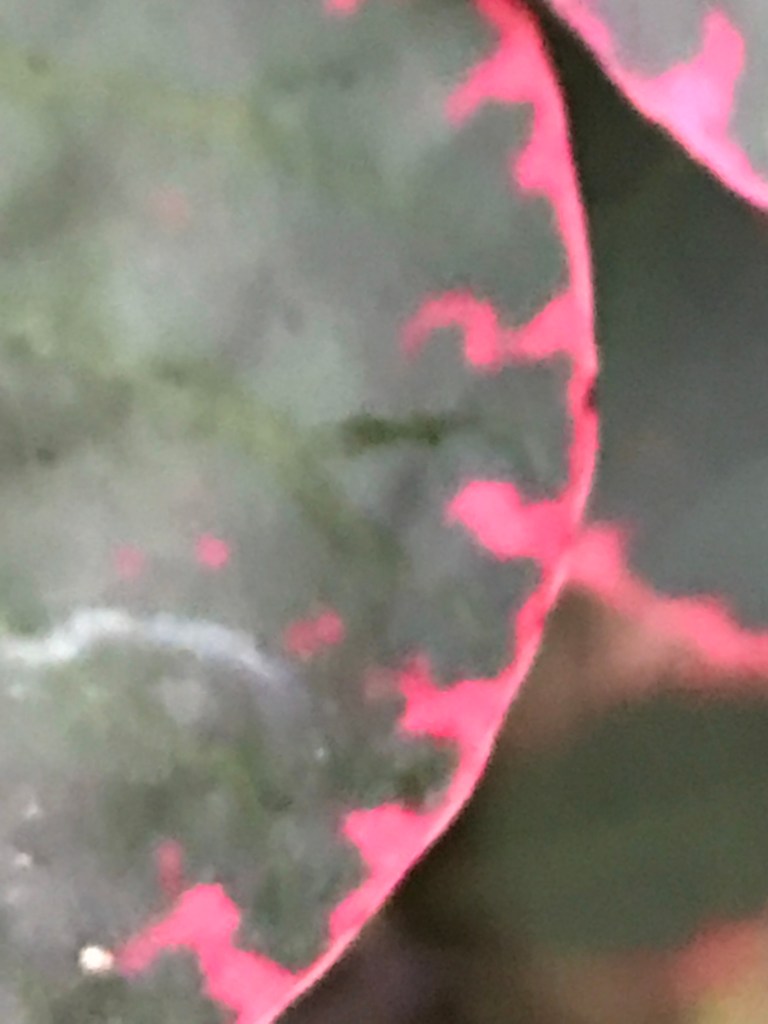
Back to dull Surrey skies today. A quick investigation of the garden as light was fading uncovered these bizarre leaves. Close up, the edges look like pink blanket stitch. Perhaps the start of a colour change for autumn.

“In late summer few hardy shrubs are more striking and beautiful than this”, says Trees and Shrubs Online. Well they should know. I have a hunch ours turn purple a bit later, but I’ll monitor them keenly.

Wetland substitute

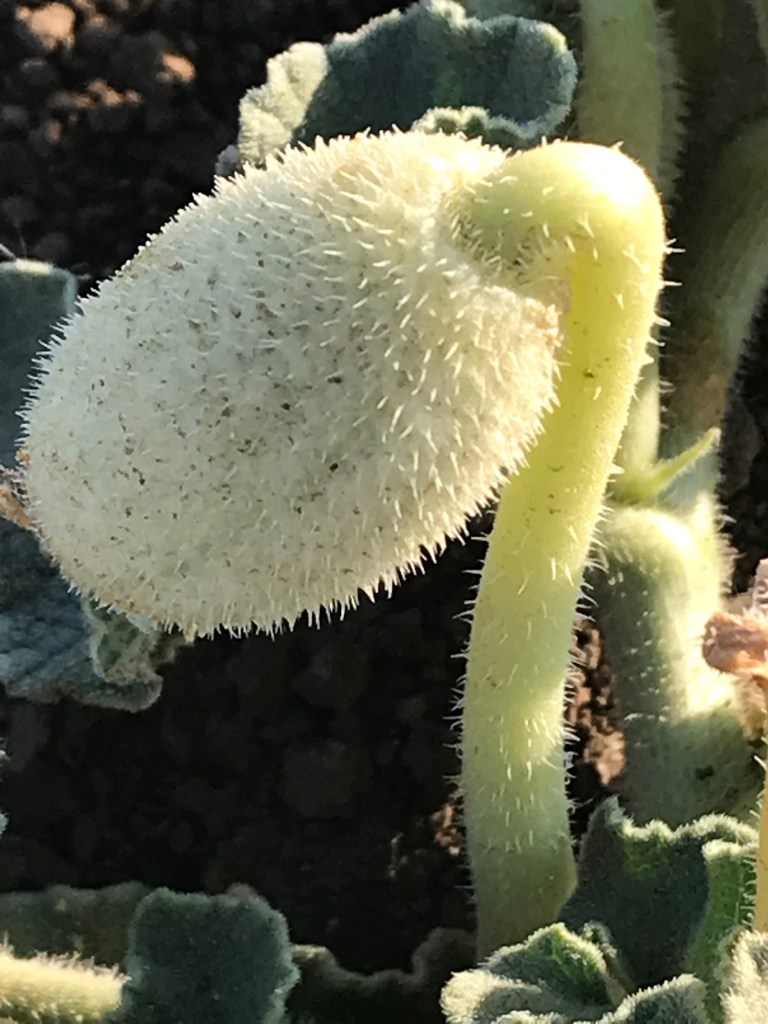
DAY 157 (9 SEPTEMBER) – Exploding cucumber (Ecballium elaterium) (La Janda Wetlands, Spain)

I made one of my regular visits to the local wetlands today, hoping to find interesting birdlife. There were huge flocks of white storks, cattle egrets, cranes, the occasional lone bird of prey and some very colourful small birds balancing on the tops of long grasses – African stonechats I think. But all impossible to capture with an iPhone camera of course.

So I settled for this strange plant – which turns out to have a strange habit. When ripe, it squirts out a stream of liquid containing its seeds. Hence its name. Hmmm.

Vertigo plant

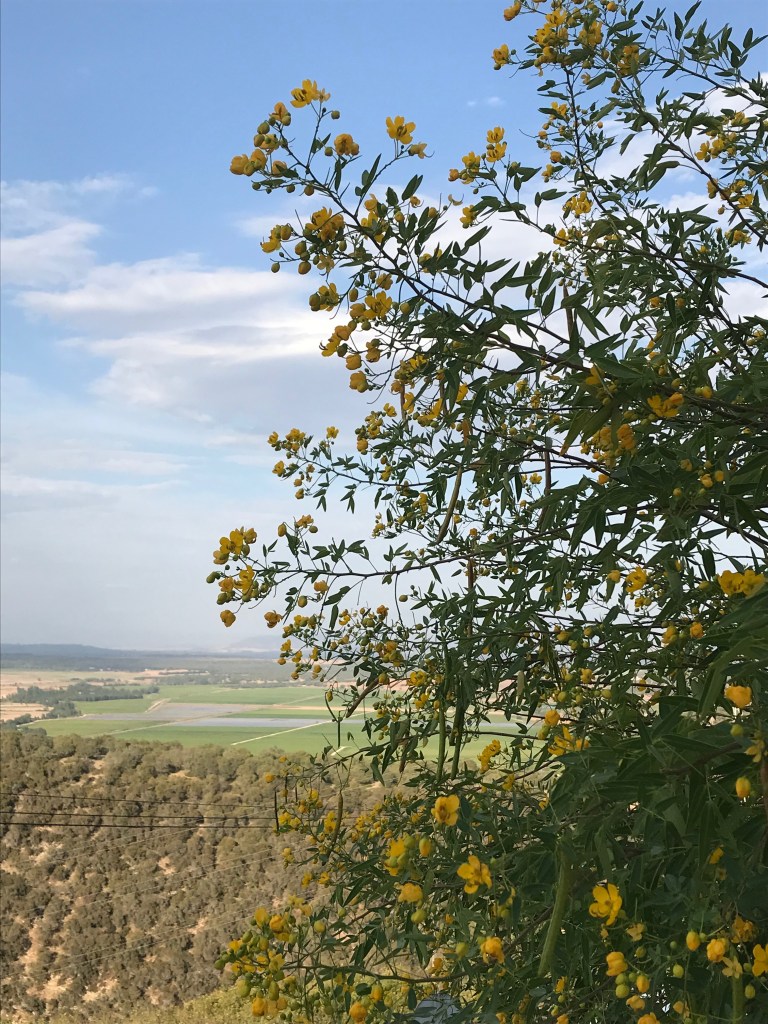
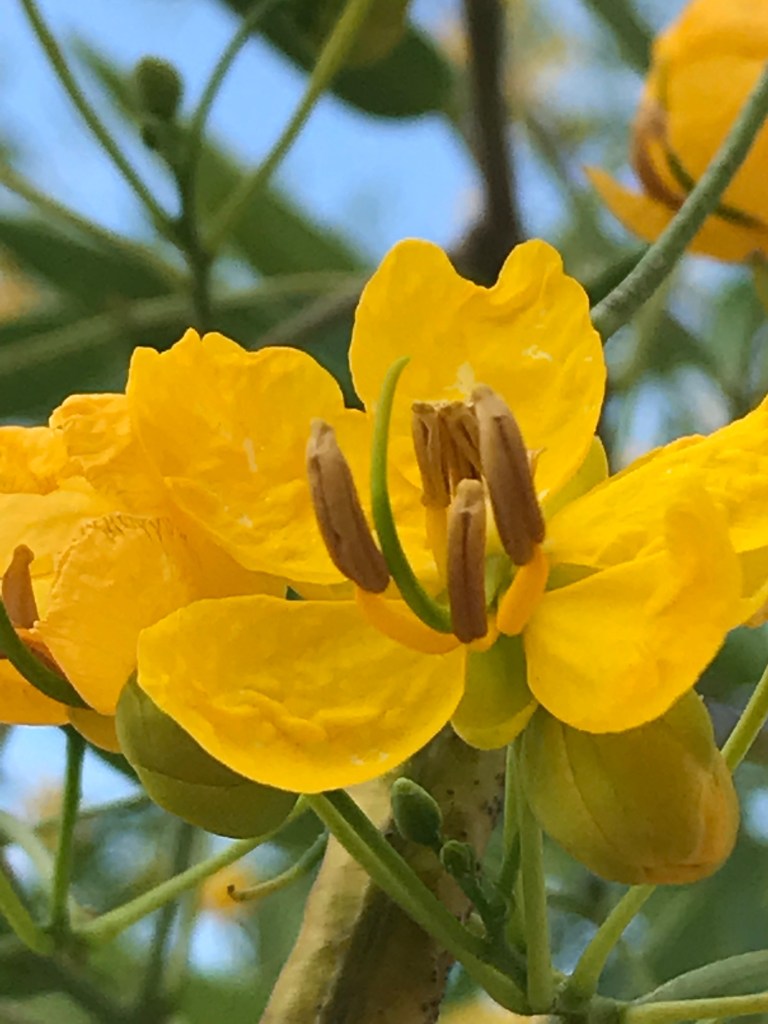
DAY 156 (8 SEPTEMBER) – Sjambok pod (Cassia abbreviata) (Vejer, Spain)

Thought I was going to topple over taking these pictures. This town is full of steep streets but this one makes it genuinely hard to stand up. These lovely yellow flowers are attached to the side of a house (presumably lived in by some people with excellent balance).

As suggested by their common name sjambok pod, they are native to Eastern and Southern Africa.

Flowers for a hot day

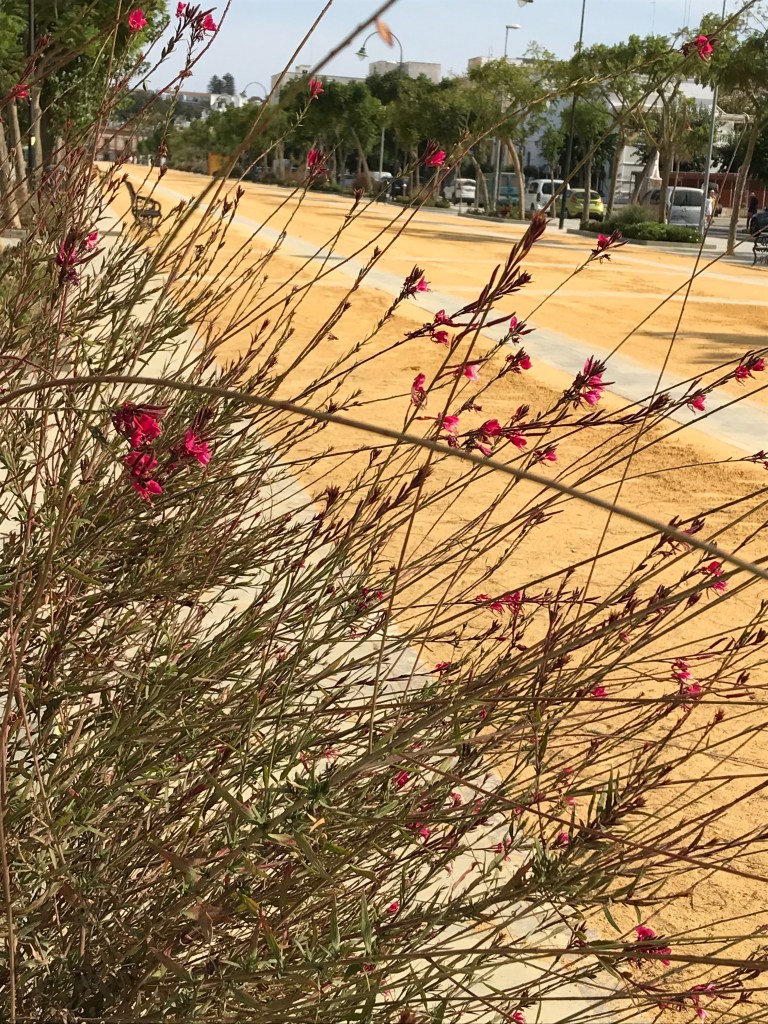
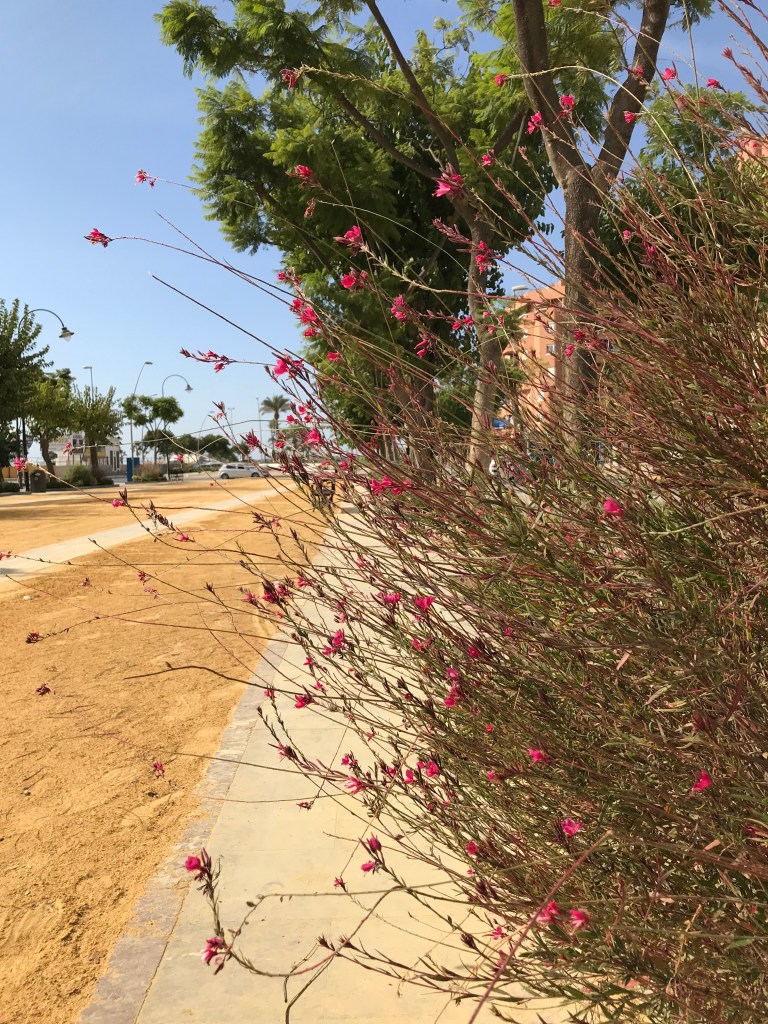
DAY 155 (7 SEPTEMBER) – Baby sage (Salvia microphylla) (Sanlúcar de Barrameda)

I love this grand boulevard that links the old town of Sanlúcar de Barrameda with the estuary of the Guadalquivir. Entering the town, you pass through winding avenues of jacarandas – here in bloom today (which must be a second flowering I think). And this boulevard is the ideal place to park and contemplate.

Lining it down one side are many of these baby sage bushes, throwing out dainty pink flowers set against the sandy thoroughfare.

I found it grows wild in Arizona and Mexico. Sanlúcar certainly felt like Arizona today, with 36 degrees beating down onto the mouth of the famous river.

Ancient fruit

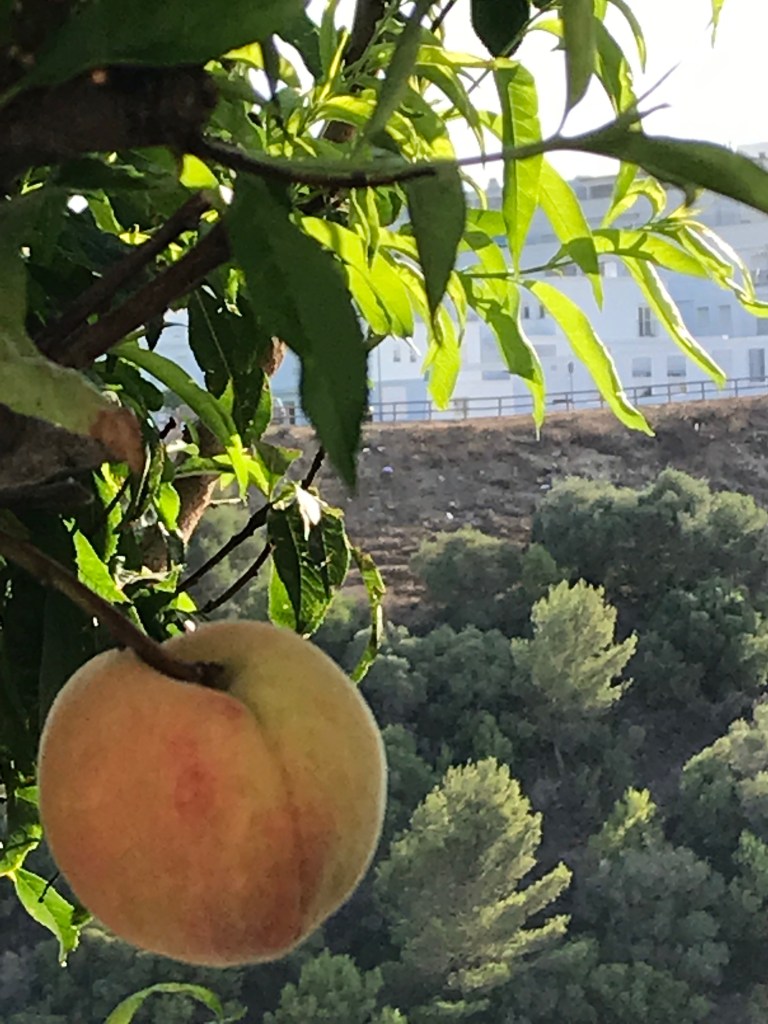
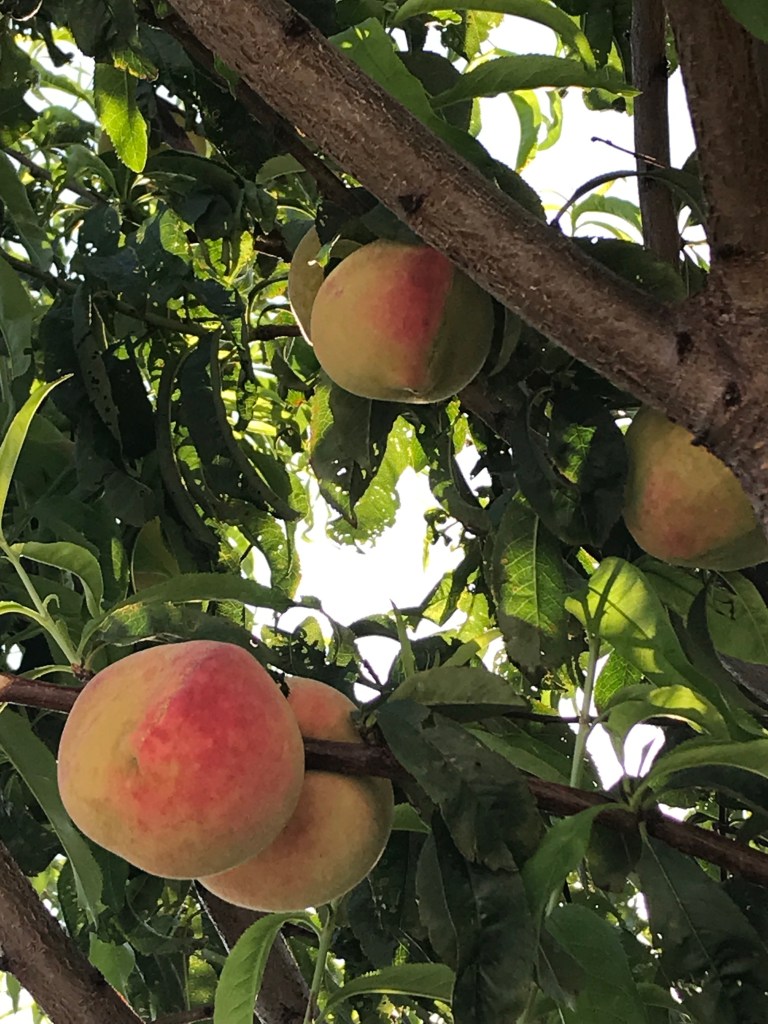
DAY 154 (6 SEPTEMBER) – Peach tree (Prunus persica) (Vejer, Spain)

These fast ripening peaches hang from a tree belonging an Englishman whose home overlooks not only the wasteland that divides the old town here from the new, but also the Moroccan coast.

I learnt today that the word ‘peach’ comes from a widespread belief that the tree is native to ‘Persia’. But others say the domestication of the peach began as early as 6000 BC in the Zhejiang Province of China. And the oldest artistic representation of the fruit was by the Romans in the 1st century AD in Herculaneum.

Mustard by the sea

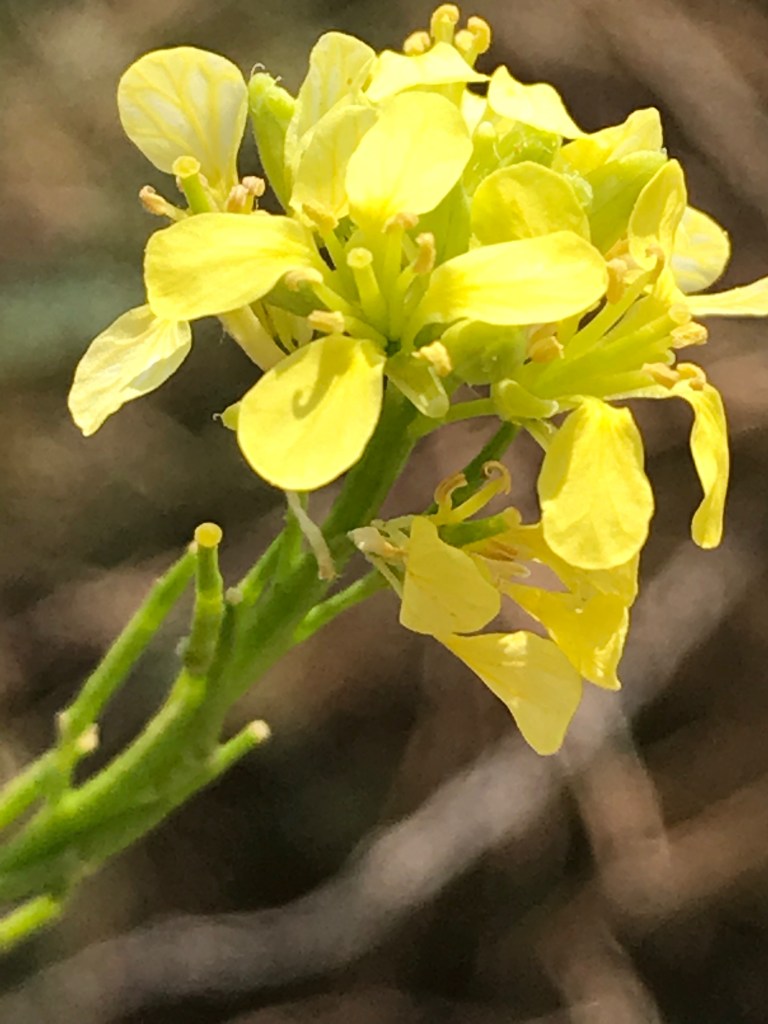
DAY 153 (5 SEPTEMBER) – Field mustard (Sinapis arvensis) (Zahora, Spain)

Leaving the beach on a very hot afternoon, I saw these tiny yellow field mustard flowers lining the dusty path on the dunes. They’re also known as charlock and California rape.

They are typically found in the fields of North Africa (almost visible today if it weren’t for the heat haze), Asia and Europe. They prefer sunny places at an altitude of 0-1,400 metres above sea level. These were probably one metre above, so they just qualified.

Chain saw plant

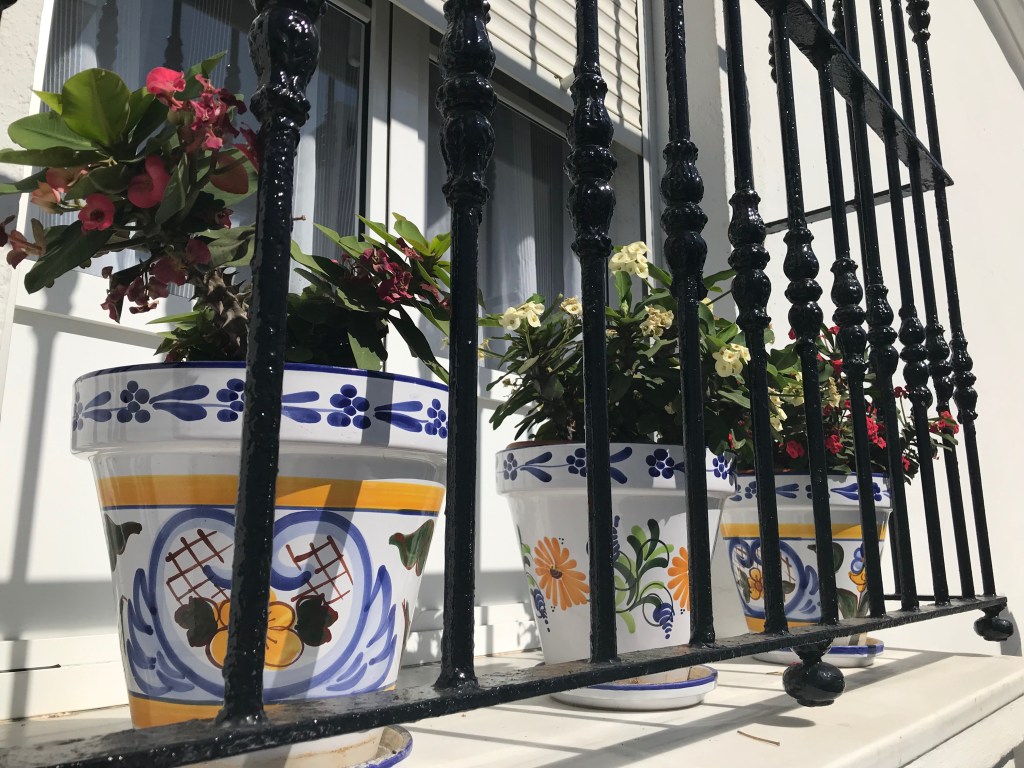
DAY 152 (4 SEPTEMBER) – Christ’s thorn (Euphorbia milii) (Vejer, Spain)

I saw this typical Andaluz balcony on the way back from the fruit shop. At first glance, these jolly pots looked to have geraniums in them (as most do). But as I drew close I made a horrible discovery. Spikes.

These euphorbia are native to Madagascar. The sap, if ingested, apparently causes severe stomach pain and irritation of the throat and mouth (though it’s hard to imagine who would get that close to try it…)

If plant choice is a reflection of character, I hope I never meet the balcony’s owner.

Butterfly favourite

DAY 151 (3 SEPTEMBER) – Chinese hibiscus (Hibiscus rosa-sinensis) (Vejer, Spain)

Found this scruffy hibiscus today in front of a mysterious and much-guarded window. And I uncovered some interesting hibiscus trivia:

  1. It’s also known as shoeblackplant, as an extract from the flower is used to shine shoes in India and China.

2. The largest butterfly in the Western hemisphere (the endangered homerus swallowtail) feeds on its nectar.

3. Not only is it the national flower of Malaysia, it’s also the symbol for the Fusion of Haitian Social Democrats party.

Historically Arabic

DAY 150 (2 SEPTEMBER) – Aubergine (Solanum melongera) (Vejer, Spain)

Excited and amazed in equal measure to discover that these delicate white and mauve flowers belong to the wild aubergine. Great clumps of them are strewn across the hillside here.

There was no sign of the actual ‘berry’ (yes, it is officially berry rather than vegetable), though the wild ones are less than 3cm in diameter so easier to miss!

We know the plant was grown throughout the Med by Arabs in the early Middle Ages. Ibn al-Awwam, an Andalusian Arab living in Seville in the 12th century, wrote a book on agriculture in which he described how to grow aubergines. The Spanish term berenjena is derived from the Arabic word for aubergine al-badinjan.

Pod disguise

DAY 149 (1 SEPTEMBER) – Sea daffodil pods (Pancratium maritimum) (Trafalgar, Spain)

These strange pods caught my eye as I made my way today along a path that turns from dust to sand as it nears the beach. Bordering the famous bay of Trafalgar, they nestled on a crispy bed of burnt out leaves.

So I was shocked to find they belong to the striking white-flowered sea daffodil I featured in my 10 July post. Exciting how nature re-invents itself.

These pods later burst and release black seeds – so I may be back!