Aussie energy

DAY 148 (31 AUGUST) – Crimson bottlebrush (Callistemon citrinus) (Vejer)

These bright loo-brush trees are so much fun. This one is opposite a local supermarket. I wasn’t surprised to learn they are native to Australia – as so many of the plants here in Andalucia seem to be.

They were introduced to England in 1770, though I don’t remember ever seeing one there…

Indigenous Aussies used the flowers for a natural energy drink and the oil, according to one source, can bring “a tranquil healing vibration” to a room. Hmmm.

Dune sculpture

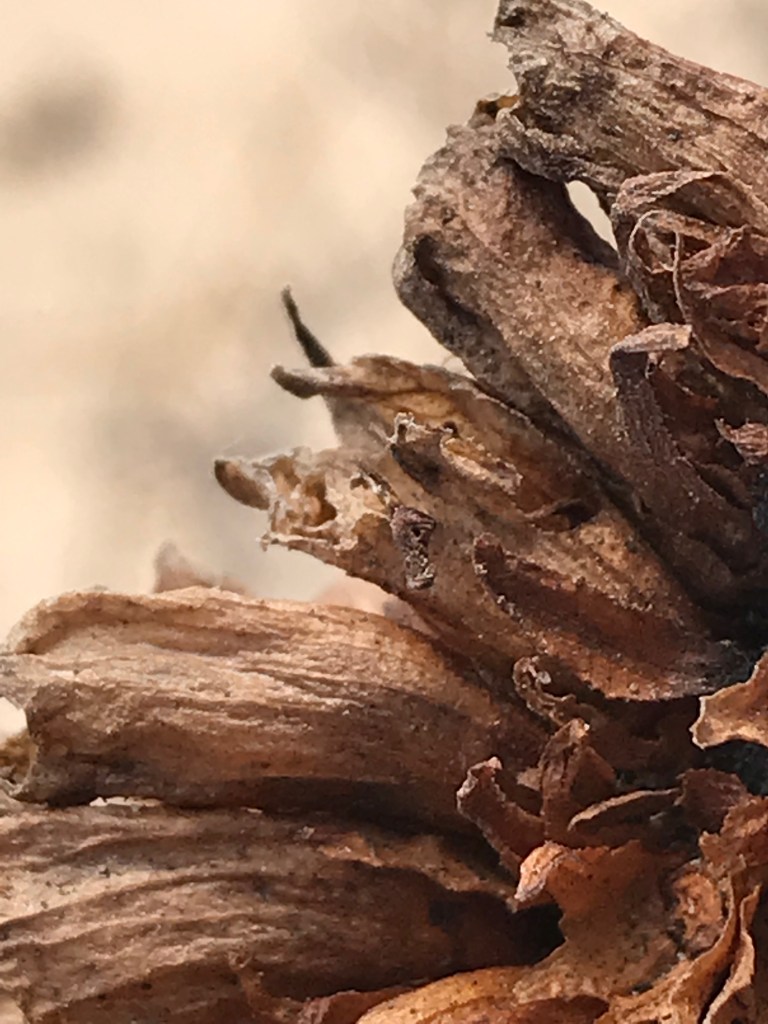
DAY 147 (30 AUGUST) – Common mullein (Verbascum thapsus) (El Palmar)

At this time of year, it’s hard to find plants in these parts that aren’t dead and crispy. At least these are quite sculptural, dotted at the back of the beach. Alternative common names are Adam’s rod, shepherd’s club and, rather disturbingly, cowboy toilet paper.

Each plant has hundreds of capsules, and each of these contains more than 700 seeds – which take quickly in dry, sandy and gravelly ground.

Mexico purple

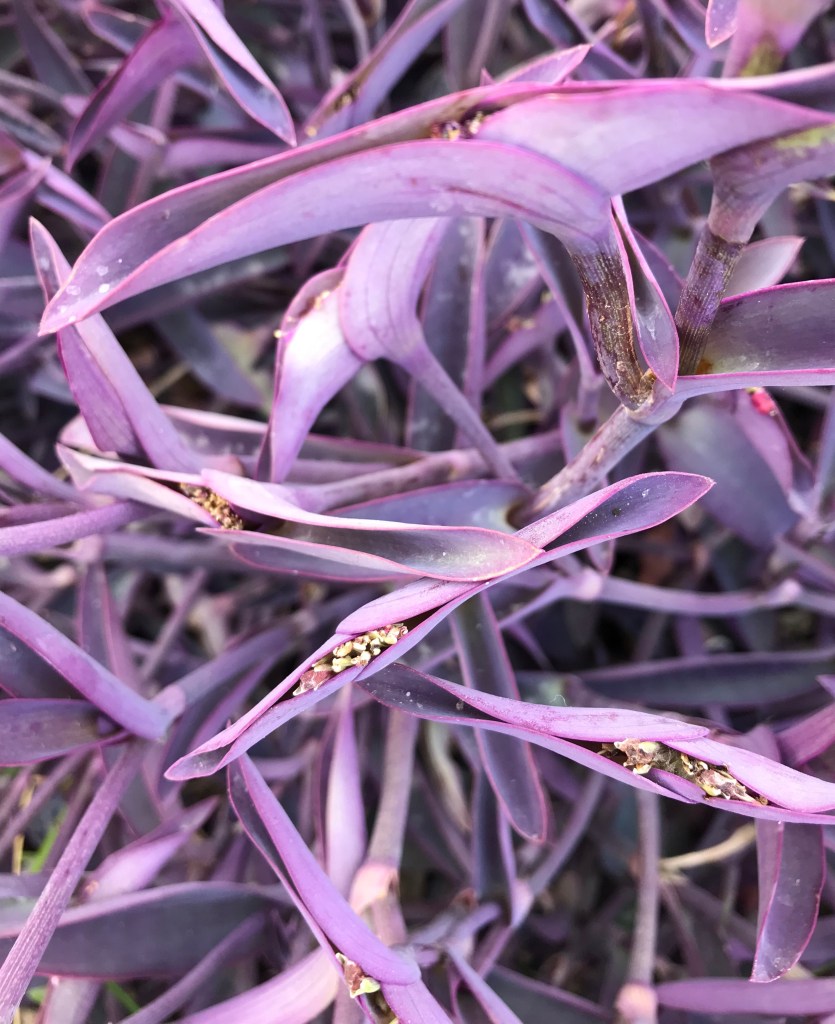
DAY 146 (29 AUGUST) – Wandering jew (Tradescantia pallida ‘purpurea’) (Jerez)

My first encounter with this dramatic plant – bordering the pool at an expensive hotel in Jerez. It’s native to the Gulf Coast of Mexico and does not tolerate cold conditions or shade. It was a baking day here as it basked beside a whitewashed wall, so a happy plant. (Apparently you can’t describe a plant as ‘happy’ in Spain – they don’t go in for our tendency to humanise at all).

I’ve become a bit obsessed with the bird-like shape at the top of the left hand picture. It even seems to have two eyes peeping out across its very long beak. It reminds me of a cartoon bird from a film. Could it be Zazu from The Lion King?

Fascinatingly repellent

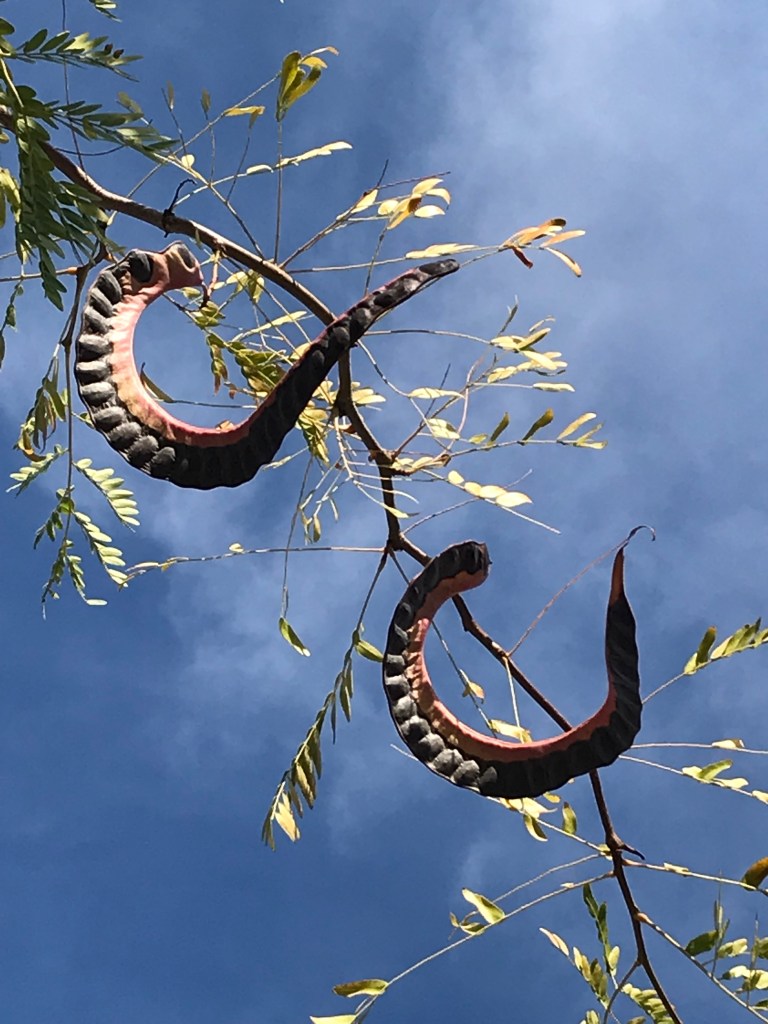
DAY 145 (28 AUGUST) – Honey locust (Gleditsia triacanthos) (Vejer de la Frontera)

Gosh. Where to start with this one? If it’s berry season in the UK, it seems to be pod season here.

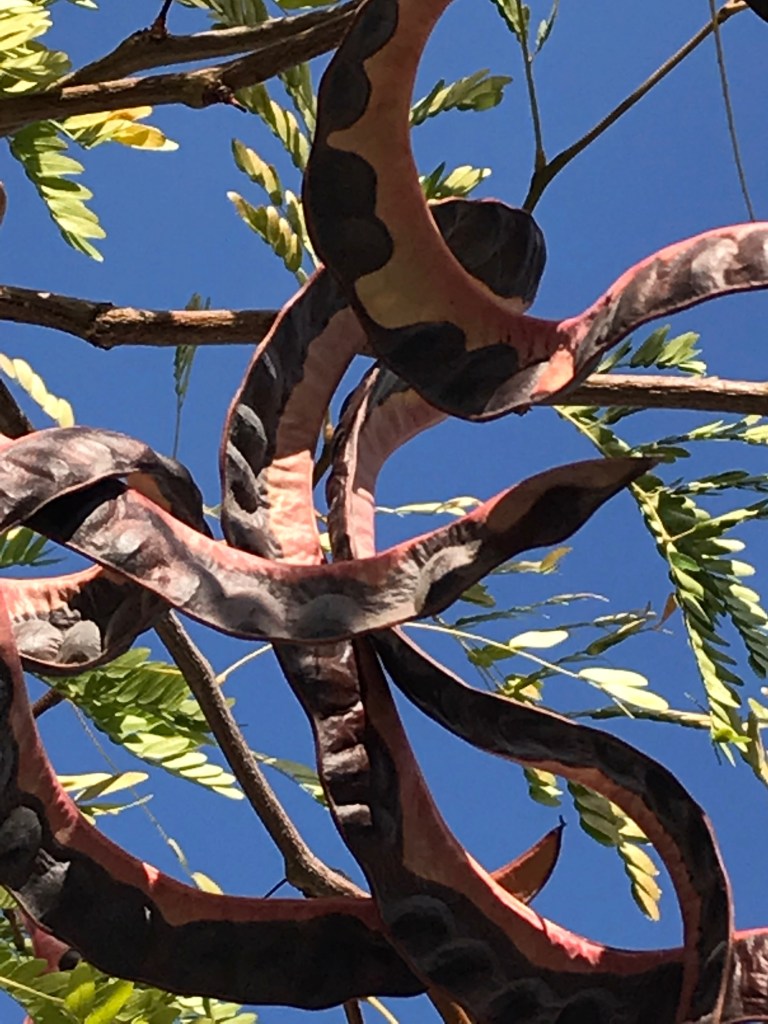
From a distance these twisted legumes look like snakes hanging out (in the literal sense) at siesta time. On closer inspection they reminded me of giant squid tentacles or rows of unbrushed teeth. They’re nothing if not eye-catching.

I’m not clear why this tree is called honey locust (also three-thorn acacia by the way), but it’s common in Spain, France, Italy and Germany – though not seen in the UK.

International weed

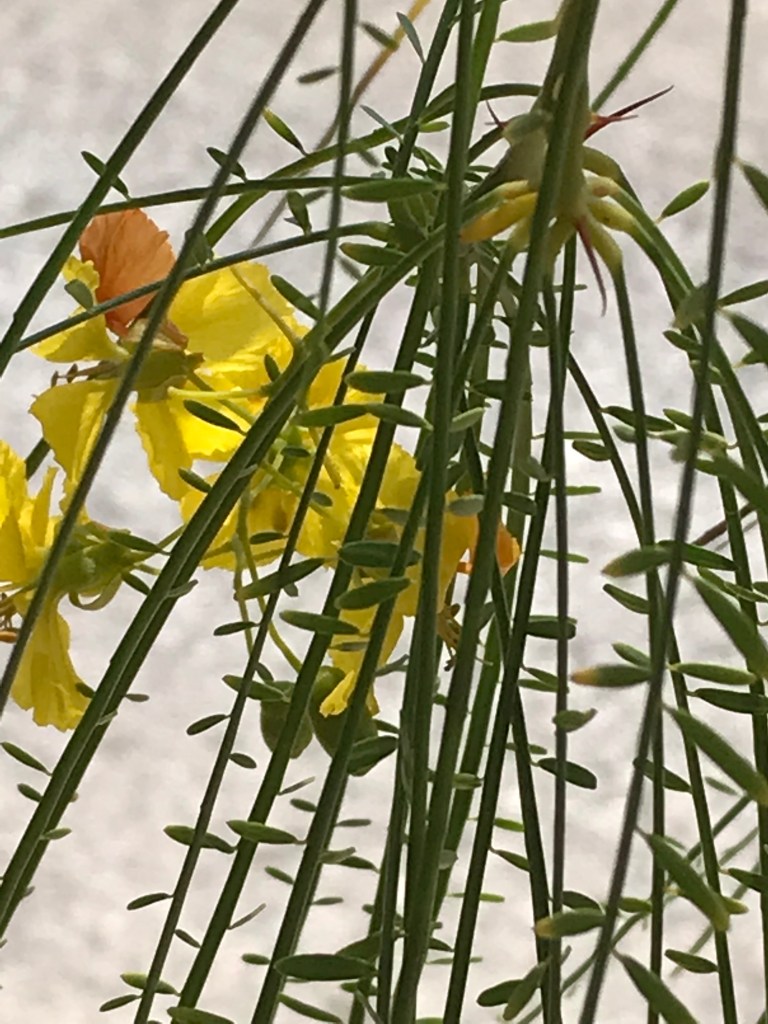
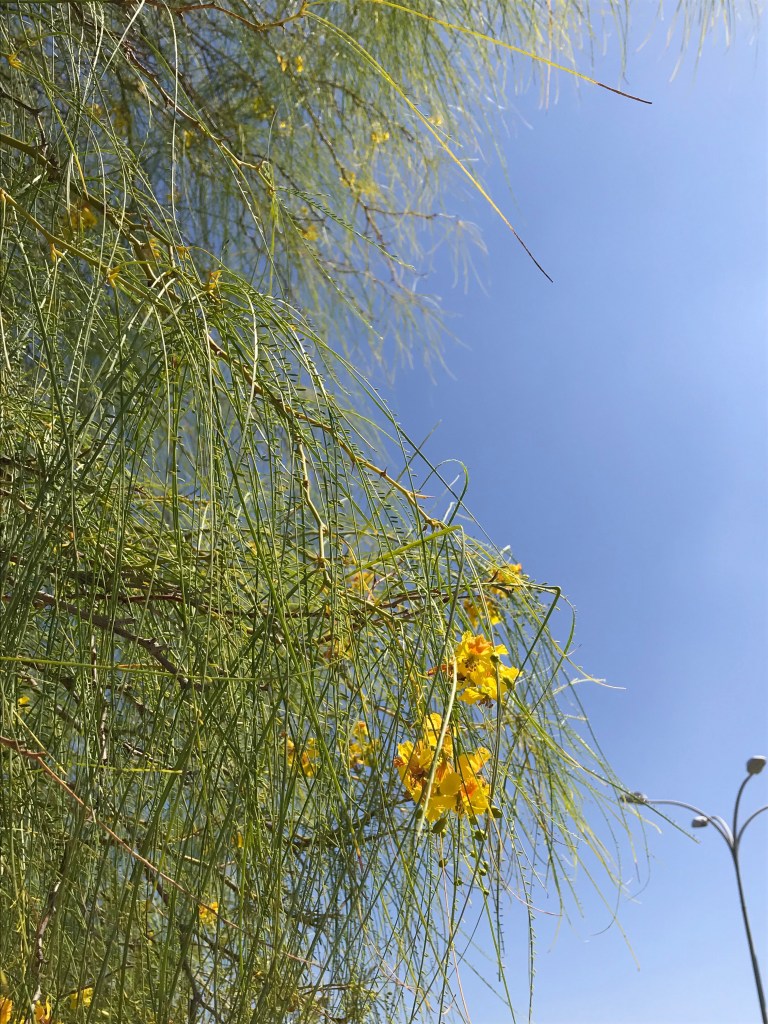
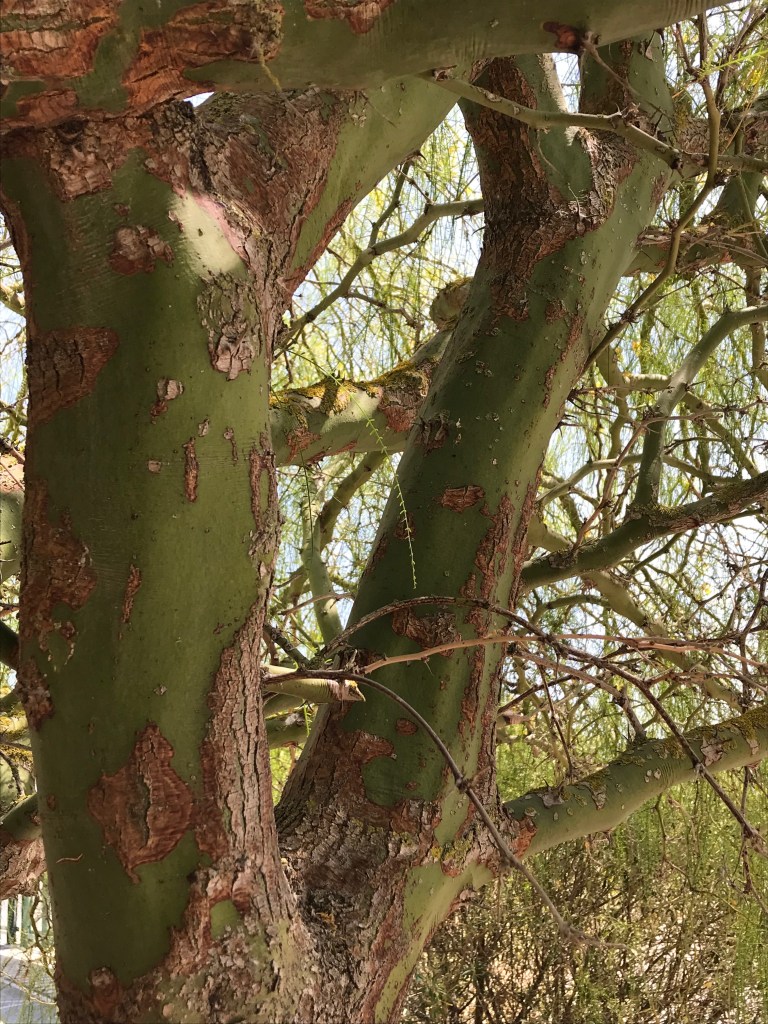
DAY 144 (27 AUGUST) – Jerusalem thorn (Parkinsonia aculeata) (Jerez, Spain)

Arriving back in Spain today, I noticed this wispy tree bordering the airport car park. Spain does wisps better than the UK. Perhaps it’s a hot climate feature. But most remarkable was its bright green trunk. And weird, too, were its pendulous stalks.

The multinational Jerusalem thorn (also known as Barbados flower fence and Mexican palo verde) is described in Australia as a “Weed of National Significance”. Which is almost like calling a human being ‘a prize wally’. Apparently the Aussies aren’t keen because the trees bunch together forming thickets that prevent native animals and livestock from accessing watering holes.

I like it, whatever they say.

Nice, but silly name

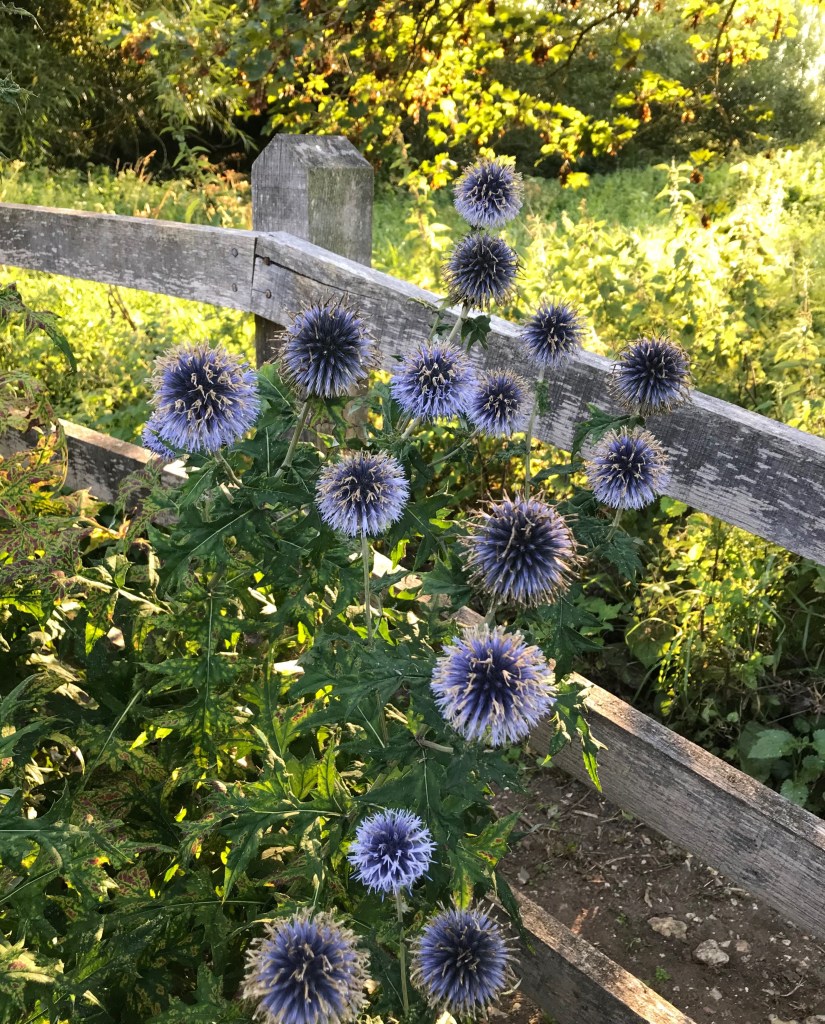
DAY 142 (25 AUGUST) – Globe thistle (Echinops ritro) (Farnham)

Echinops ritro sounds like a backwards sentence. As in “I evol stnalp htiw a tib fo amard, ekil echinops ritro, t’nod uoy?” Who makes up these Latin names anyway?

The most surprising fact is that the globe thistle is part of the sunflower family. And the most encouraging facts are that, according to the BBC Gardening site, it can be grown by ‘beginners’ (like me) and that it’s deer-resistant. This is important around these parts, where deer have a habit of roaming freely.

Confectionary tale

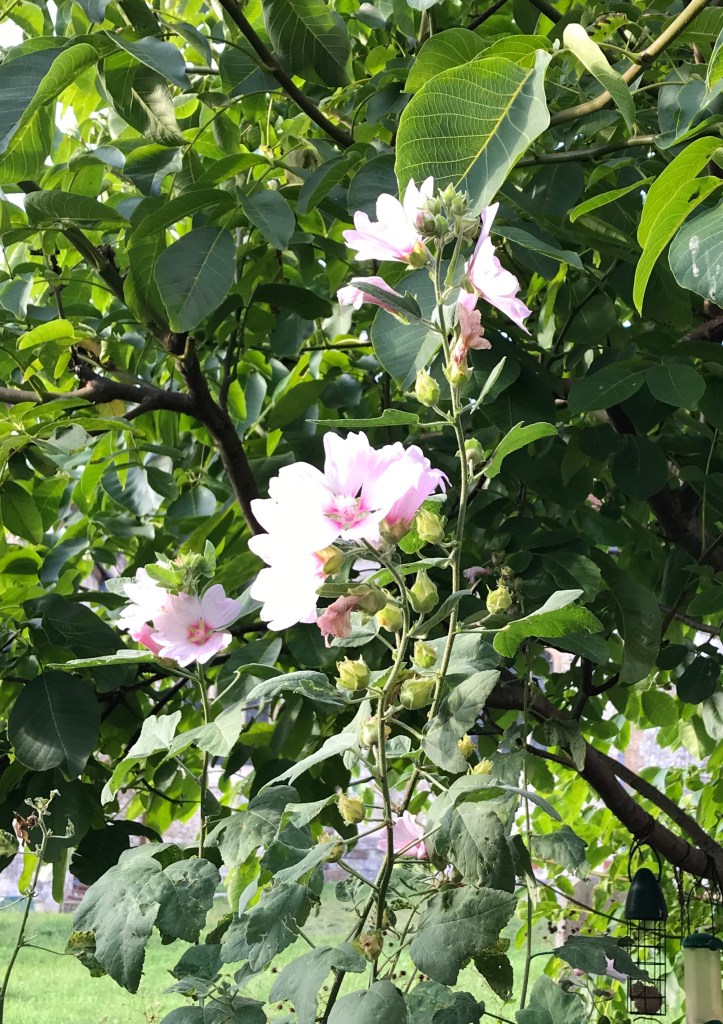
DAY 141 (24 AUGUST) – Marshmallow (Althaea officinalis) (Farnham)

Found these flowers growing on the edge of the churchyard this evening. It’s been a hot day and they were wide open, showing off their delicate shades of pink.

The marshmallow (I didn’t know there was a flower of that name) blooms in August and September. Then flat, round fruits appear known as ‘cheeses’.

The flowers and young leaves are edible. The root extract is used in pâté de guimauve in France, made with egg white meringue and flavoured with rose water. This is similar to modern day marshmallows – but these no longer use the plant extract.

Elizabethan cure

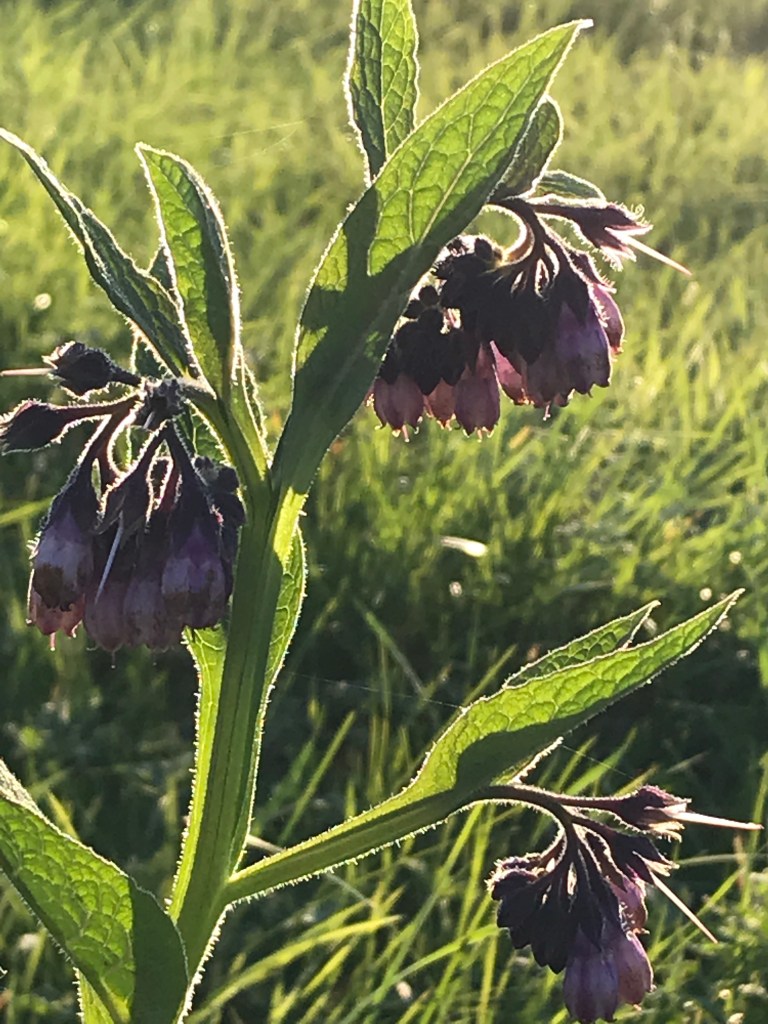
DAY 140 (23 AUGUST) – Comfrey (Symphytum officinale) (Farnham)

I couldn’t help admiring this plant. There it was all alone in the middle of the water meadows, standing proud, surrounded only by grasses. Its expressive flowers, subtle colours and huge hairy leaves made me love it more.

Comfrey, for some reason, made me think of Shakespeare. Not that I am so familiar with the texts as to remember many plant names. But it turns out the Elizabethans (and many since) did in fact use it for healing wounds and, in combination with liquorice, to treat lung disorders.

So maybe it does come up in someone’s soliloquy – I will keep searching.

Late bloomer

DAY 139 (22 AUGUST) – Weigela (Weigela florida) (Farnham)

Another plant I had barely noticed, making a late summer statement in our garden. I love its bold colour and scruffy style. The plant identification site I use claims it’s weigela – but that is meant to flower from late spring. Perhaps it’s a little behind the times. But I’m grateful.