Fern of exaltation

DAY 108 (22 JULY) – Sword fern (Nephrolepsis exaltata) (Vejer, Spain)
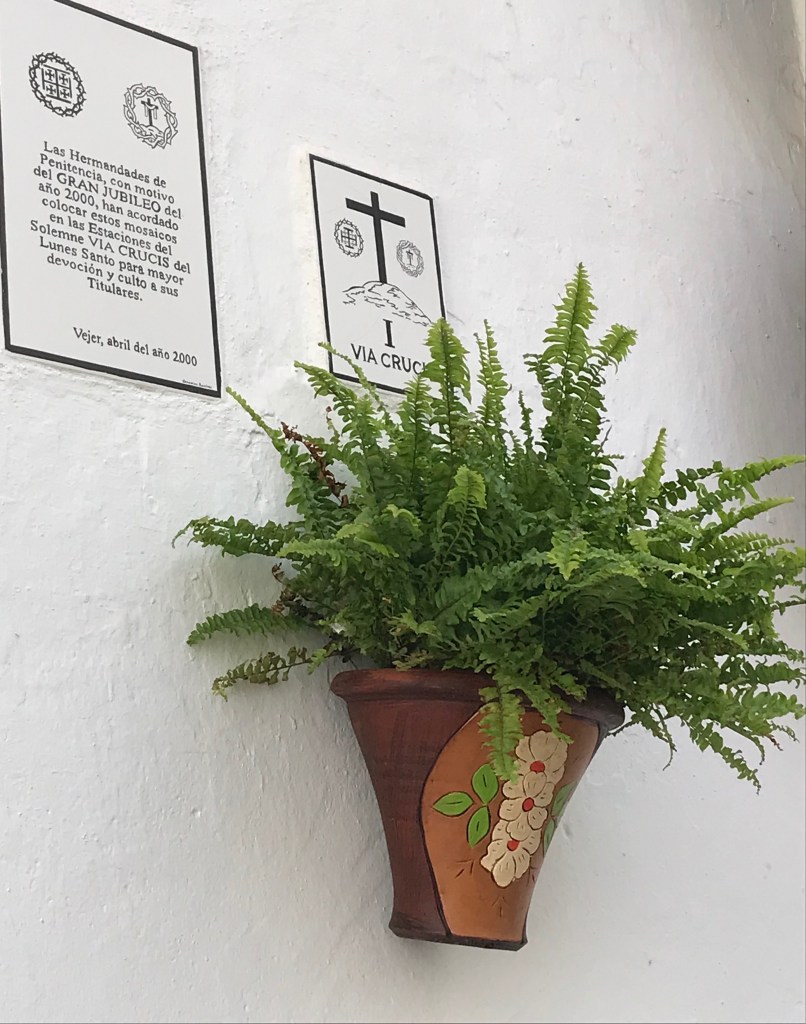
On a whitewashed wall in the church square hangs a hand-painted pot with a sword fern. Above it are two plaques. One explains that to celebrate the year 2000 AD, the local ‘fraternity of penitents’ decided to put up markers for the Stations of the Cross, which the penitents follow on the Monday of every Easter Week. The other indicates the first Station. So the Latin name nephrolepsis exaltata sounds oddly apt.

I hadn’t the realised the sword fern was native to the tropics before. In this baking hot and dry square it is clearly being tended by a dedicated carer.
Restaurant decoration

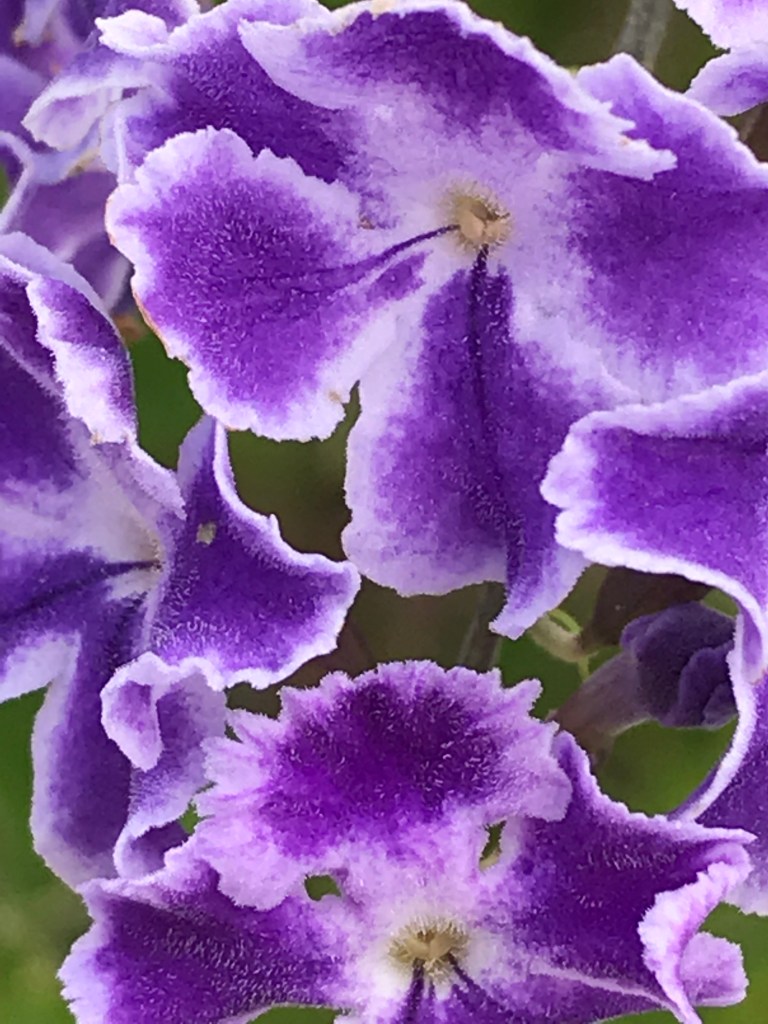
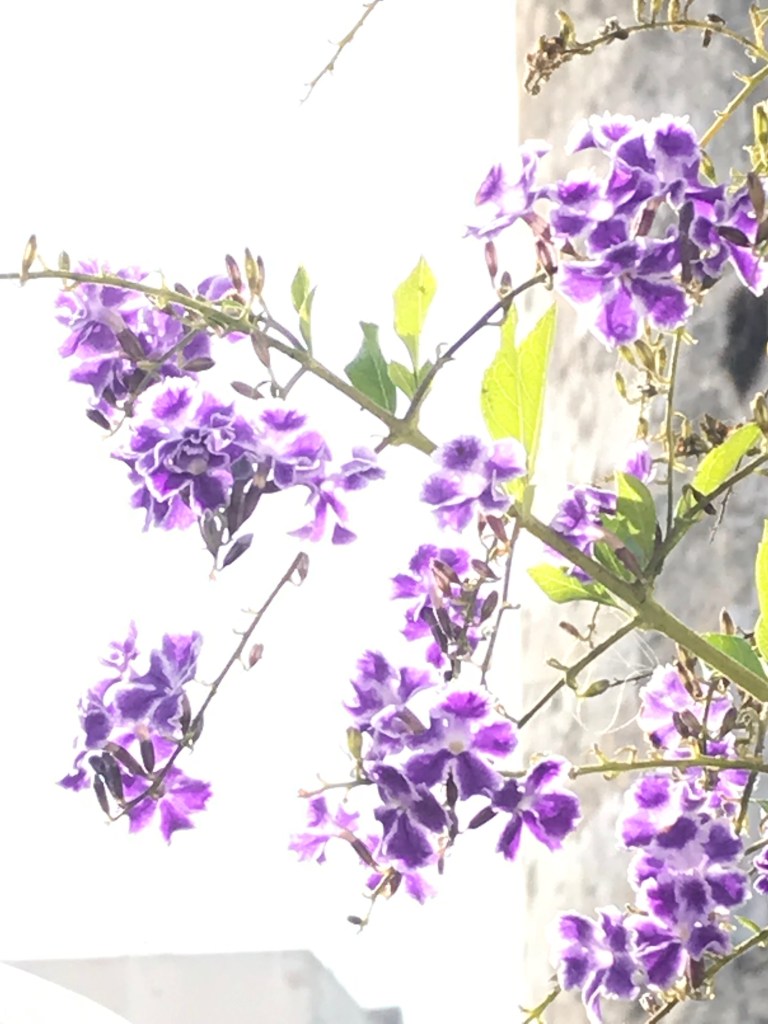
DAY 107 (21 JULY) – Skyflower (Duranta erecta) (Vejer, Spain)

This flimsy plant with bright purple flowers hangs over the local church wall, decorating the outdoor restaurant beneath.

Apparently it’s native to Mexico (another one), South America and the Caribbean. Also found in many tropical and sub-tropical parts of the world, it’s known as mavaetangi in Tonga, which means tears of departure. No idea why.

Its blossoms attract butterflies and hummingbirds. But no sightings of hummingbirds yet…

Fir at risk

DAY 106 (20 JULY) – Spanish fir (Abies pinsapo) (Vejer, Spain)

It’s not very Spanish to put explanatory signs in public places, or indeed anywhere. Unlike in the UK where it is a thriving national custom, of course. But a plaque on the wall in front of this striking tree overlooking the valley to the north of Vejer tells us: ‘Abies pinsapo, sembrado en 1980, especie a proteger’. So it was planted in 1980 and is a protected species.

Reading more, I find it’s native to southern Spain (in the Grazalema mountains for example) and to the Moroccan Rif mountains – and particularly at risk from forest fires. Considered by some as the Andalusian regional tree, I think its long cylindrical cones look like potatoes stuck vertically on a Christmas tree. But don’t tell the locals.

Nocturnal wonder

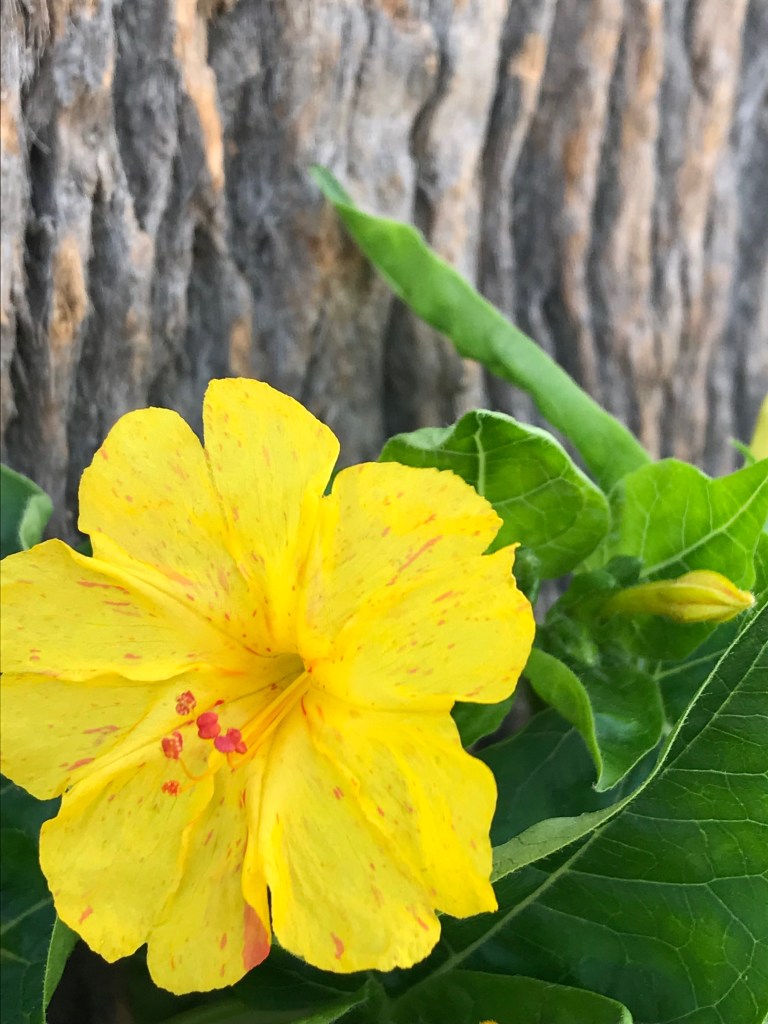
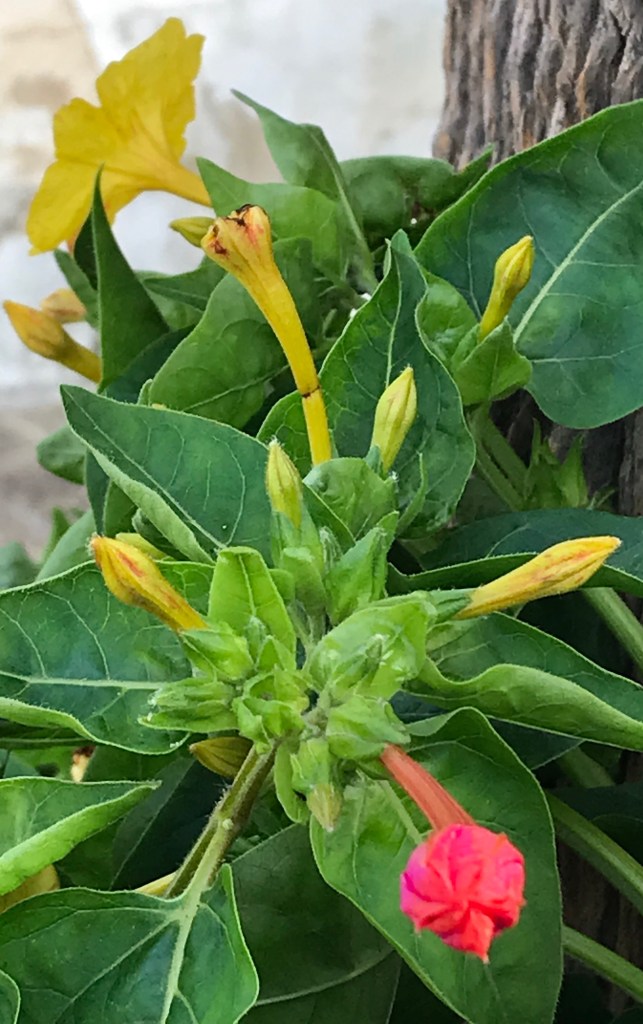
DAY 105 (19 JULY) – Beauty of the night (Mirabilis jalapa) (Vejer, Spain)

Nestling at the foot of a palm tree, this wasn’t the most gorgeous plant I’ve seen (in spite of its name), but what I noticed were the flowers in two totally different colours.

It’s native to tropical South America and also known as ‘Four o’clock flower’ because its flowers open in the late afternoon, at dusk or in cloudy weather. Then it produces a strong sweet fragrance that lasts all night.

I saw one of my Spanish cousins today, who said he’d noticed a flower that smelt especially lovely in nearby Conil. It’s known locally as don Diego de noche and was the same one I photographed. Must have been telepathy.

Crevice climber

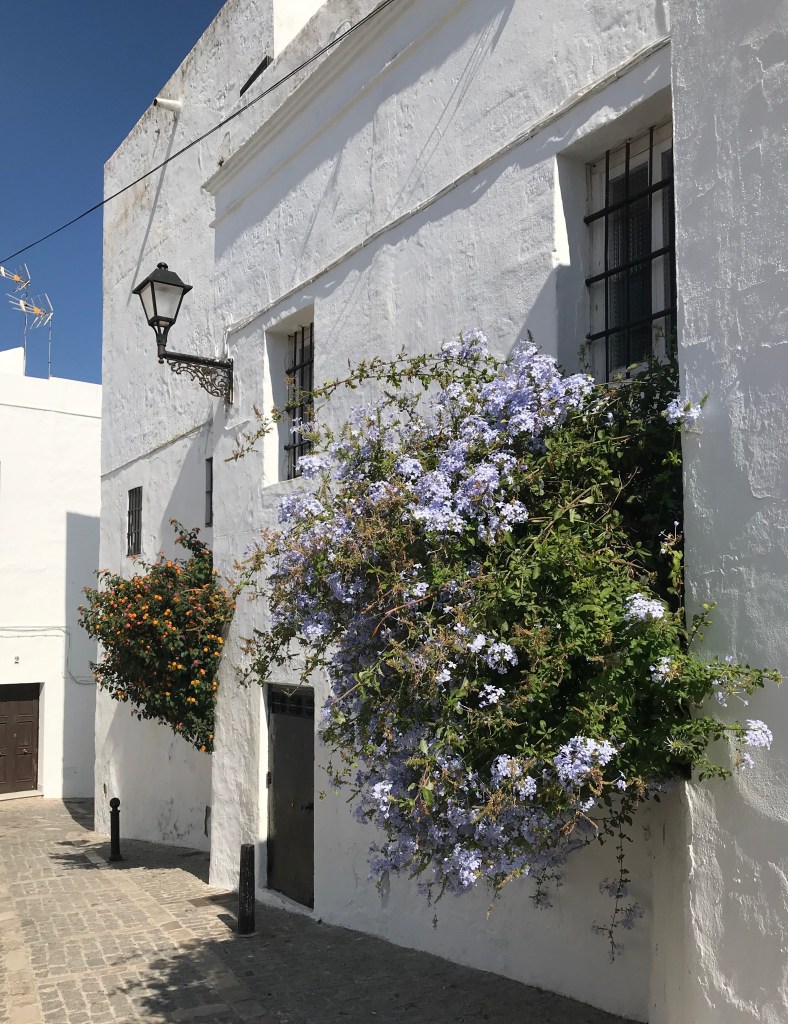
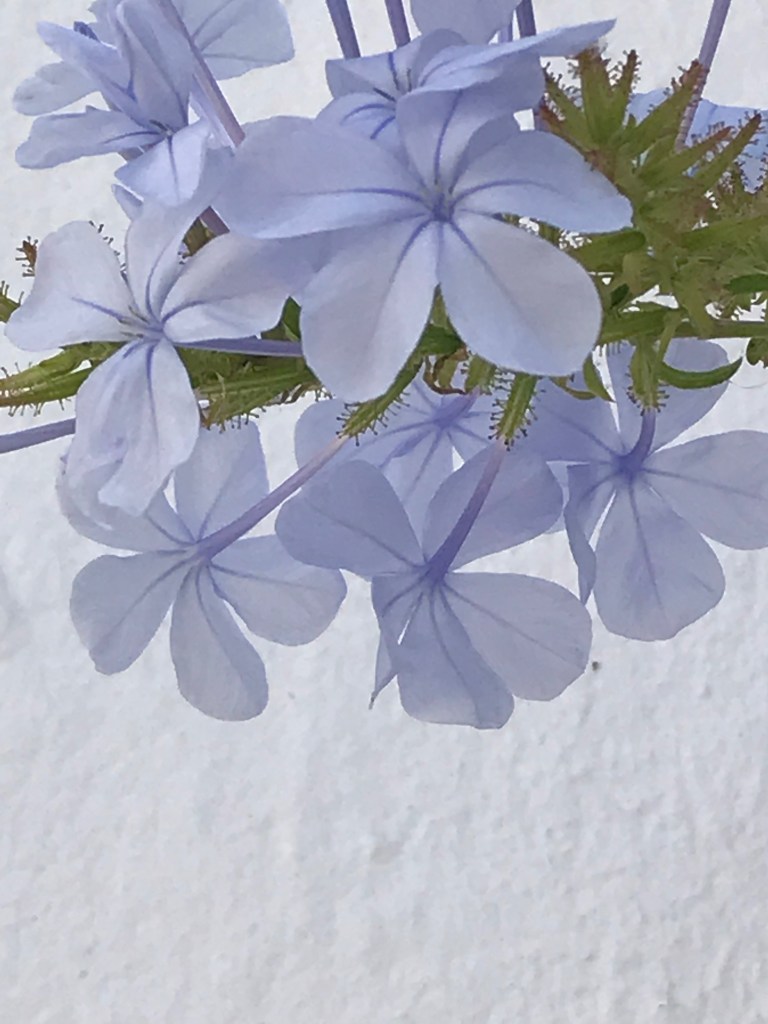
DAY 104 (18 JULY) – Blue plumbago (Plumbago auriculata) (Vejer, Spain)

The wind in Vejer is very strong, especially the Levante that blows across from Africa. It may help to explain why so many plants just take root in the crevices of houses in the old town.

Here are two side by side, but it’s the blue plumbago or blue jasmine (jazmín azul as they call it here) that is so lovely – even as it starts to fade. Native to South Africa (also called Cape leadwort), it was believed to combat the effects of lead poisoning. The name comes from the Latin ‘plumbum’.

Guernica in the sun

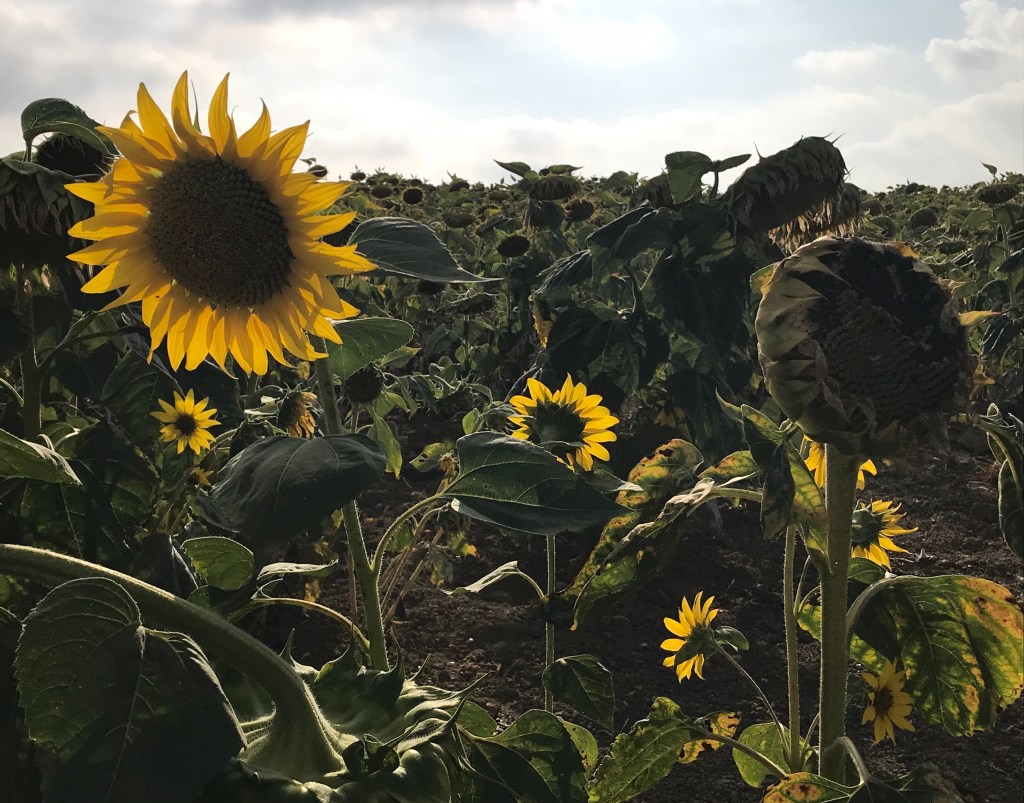
DAY 103 (17 JULY) – Sunflower (Helianthus annuus) (Conil, Spain)

Extraordinary how a field of sunflowers in mid to late summer can resemble a dark battle field. One or two brave ones stand proud among the twisted dead and dying. It almost reminds me of Picasso’s Guernica.

And I think it’s a myth that they turn towards the sun. Most I’ve seen locally turn away, perhaps like the Spanish themselves seeking shade.

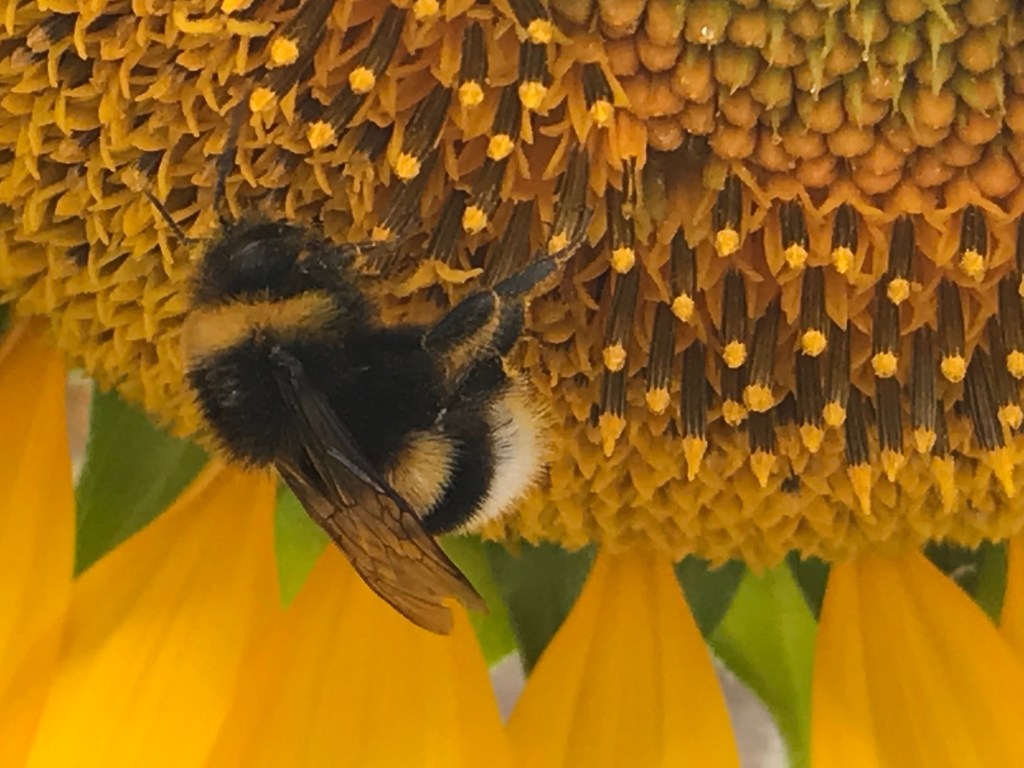
In the centre of each flowerhead are numerous tiny individual five-petalled flowers arranged in a spiral.

This bumblebee in tucking into the central section of what look like oozing liquorice sticks. And who can blame him?

Moth likes red

DAY 102 (16 JULY) – Heartleaf iceplant (Aptenia ‘Red Apple’) (Medina Sidonia, Spain)

This is one of my favourite squares in the province of Cádiz – in the centre of historic Medina Sidonia with the grand town hall in the background. In the foreground, a pot with an ordinary looking succulent and small red daisy-style flowers.

Then a flurry of tiny moths appeared and it got interesting. The plant was difficult to identify but I think it’s an aptenia, native to South Africa but widely seen in warm, coastal areas of the Mediterranean, the Canary Islands, California and Australia.

As for the moths, the one I focused on was so small that when it settled I thought I’d got excited by a piece of paper. But my wonderful lens told me otherwise. No idea what it is, but maybe a Spanish carpet moth?

Sweet poison

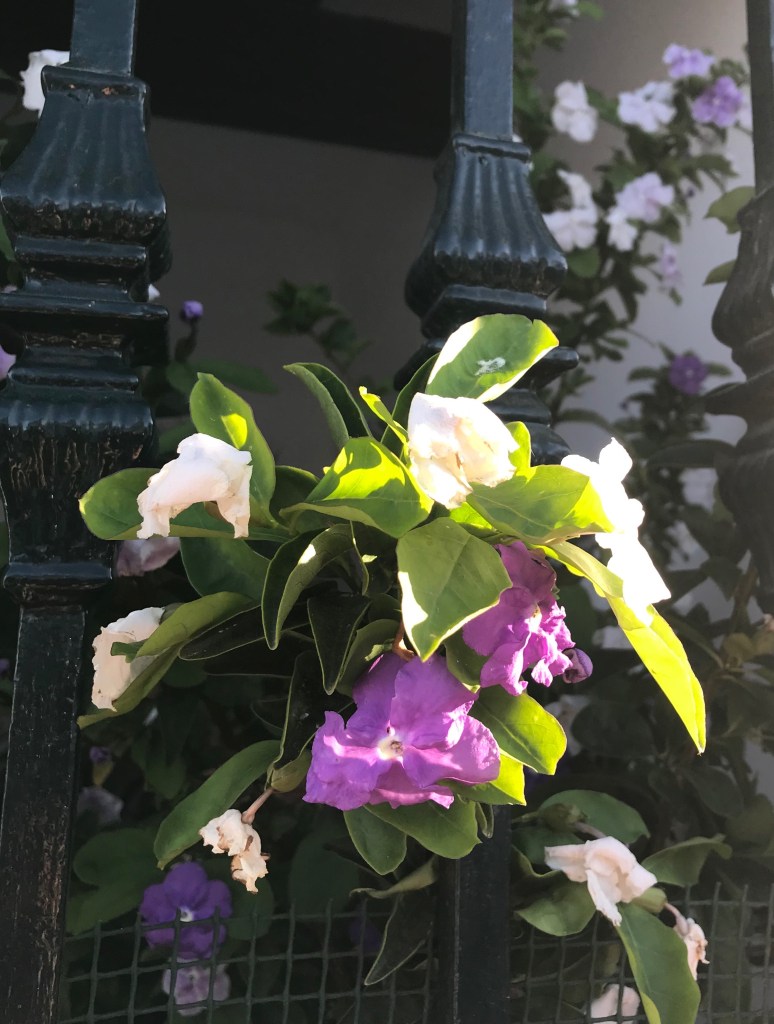
DAY 101 (15 JULY) – Manacá (Brunfelsia uniflora) (Vejer, Spain)

Walking up a street of new houses this evening, this unusual purple and white plant caught my eye peeping through the railings. But more dramatic was its sweet scent. Known as a manacá or raintree, oil from its flowers is used in perfumes.

It is native to parts of South America and was traditionally used in the Amazon area by shamans and curanderos to produce a hallucinogenic drug. Part of the nightshade family, its poison is similar to strychnine. And a presumably related fact is that in the US state of Louisiana (there always has to be one, doesn’t there?) it is illegal to grow it other than for ornamental purposes.

Ouch

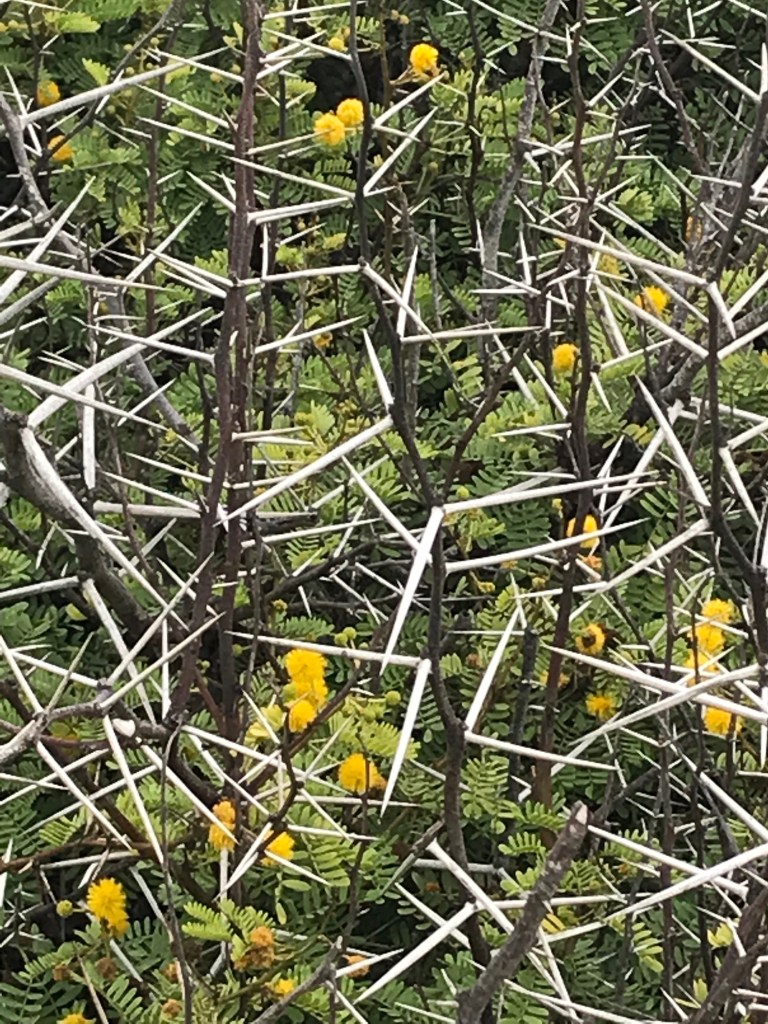
DAY 100 (14 JULY) – Prickly acacia (Vachellia farnesiana) (El Palmar, Spain)

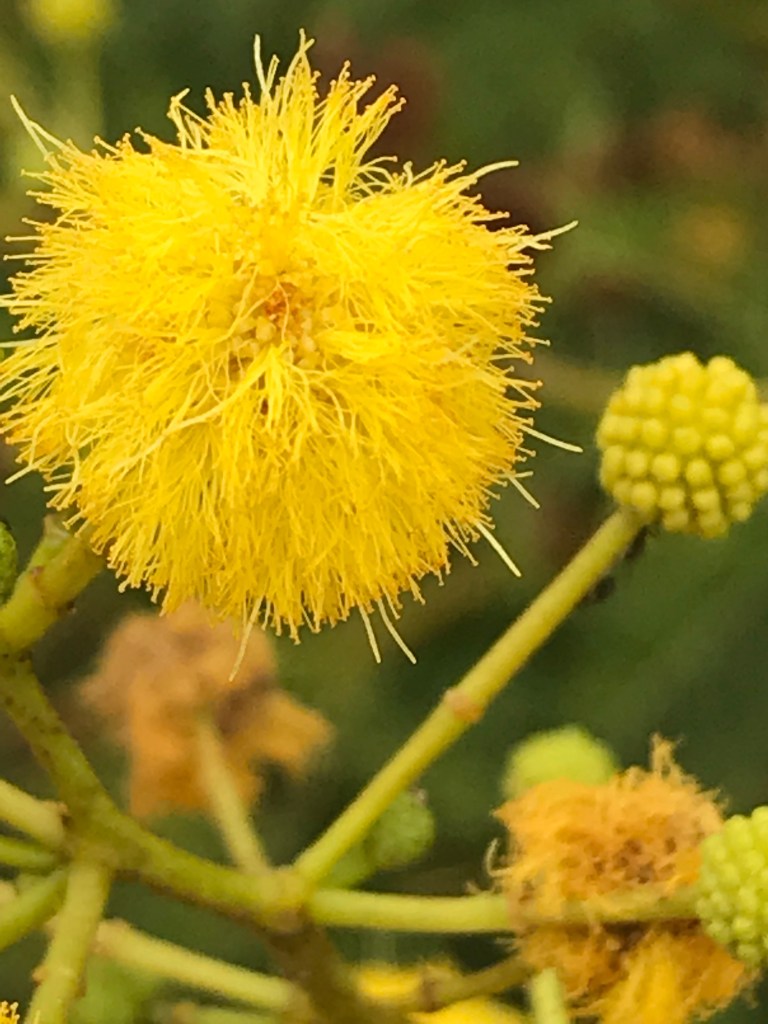
This isn’t a bush you want to land in when your parachute goes off course. It may have little yellow pompom flowers, but the base of each leaf has a pair of thorns…

I found this one at the back of the beach today. The most unexpectedly thing about it is that it owes its Latin name farnesiana to the Farnese Gardens in Rome. The bush was first imported to Italy from Santo Domingo and planted by the famous Farnese family. Not quite sure I understand what they saw in it…

Old door, vespa, tree

DAY 99 (13 JULY) – Indian rubber tree (Ficus elastica) (Vejer, Spain)

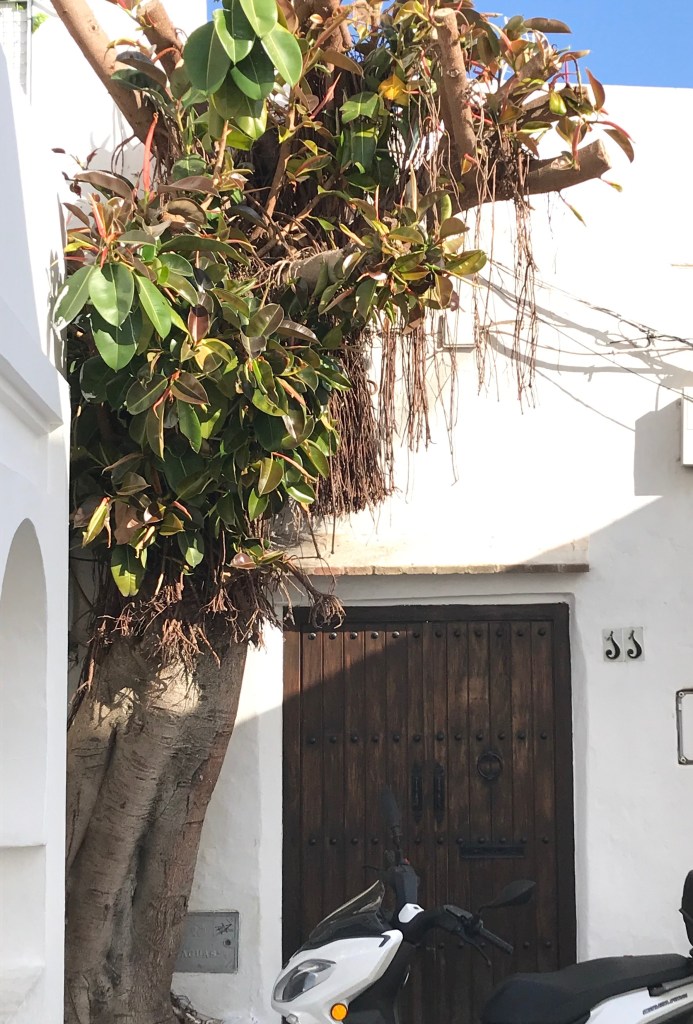
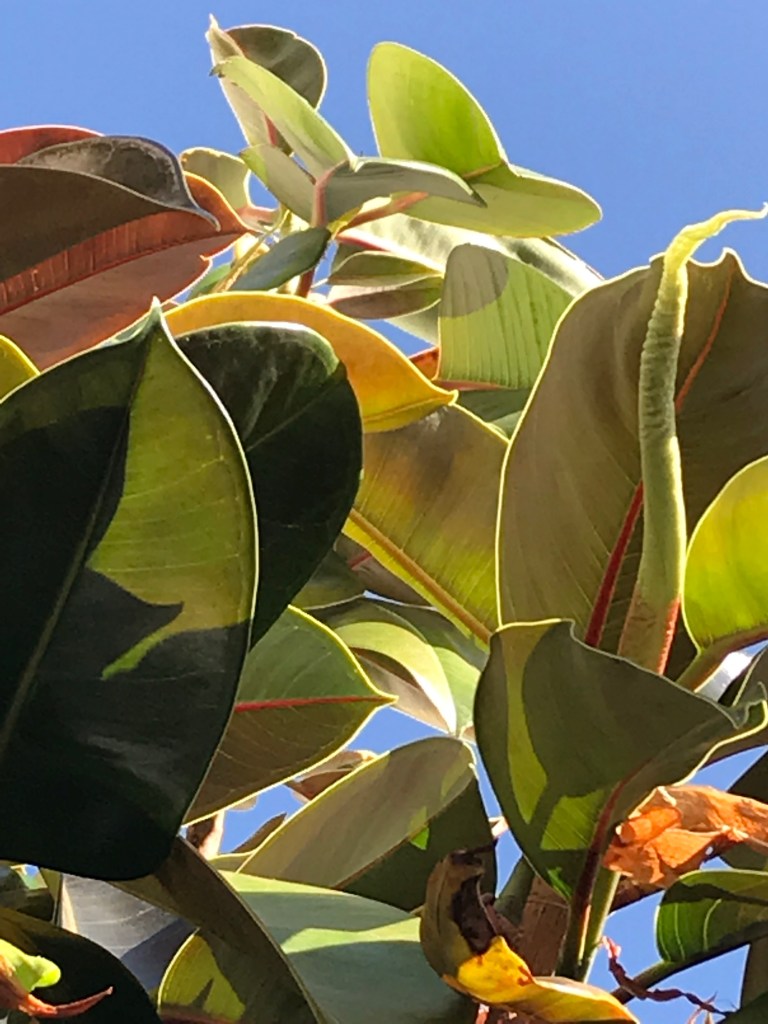
Overhanging this lovely old door – with vespa parked outside – is a mess of a tree. But on closer inspection it offers up some great colours and shapes. The long spikes are in fact sheaths housing new leaves.

This rubber tree is native to South and Southeast Asia, but also naturalised in Sri Lanka, the West Indies and Florida. In Europe, we find it in sheltered gardens of the Cote d’Azur and on the Italian and Spanish coasts.