DAY 228 (19 NOVEMBER) –Fustet (Cotinus coggygria) (Farnham)
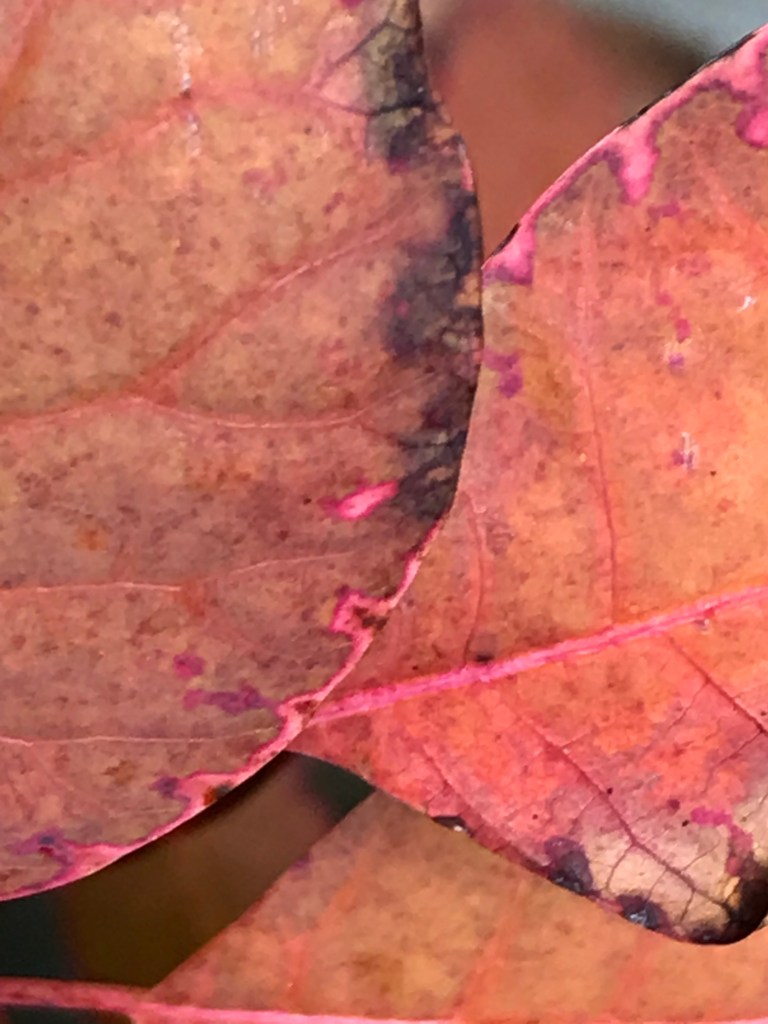
The same leaves I posted on 12 September, which were green then – but with the pink border they still have. Very strange.
A visual journey through the Financial Year 2019-20 by Jenny Rivarola
DAY 228 (19 NOVEMBER) –Fustet (Cotinus coggygria) (Farnham)
The same leaves I posted on 12 September, which were green then – but with the pink border they still have. Very strange.
DAY 227 (18 NOVEMBER) – Pansy (Viola tricolor) (Farnham)

I liked the juxtaposition of the bright rounded pansy and the more sombre angular sycamore leaves. All in a planter along Castle Street. Autumn has a habit of arranging the living and the dead in a harmonious way.
DAY 226 (17 NOVEMBER) – Persian Ironwood (Parrotia persica) (Winkworth Arboretum)

Well if I couldn’t find an interesting tree at Winkworth Arboretum, where could I? It wasn’t just the unusual leaves but the particular ‘squatness’ of this tree that caught my eye. It had a sort of bonsai shape but of course in a bigger tree.
Turns out to be native to northern Iran and southern Azerbaijan, but curiously named after a German naturalist called Georg Friedrich Parrot. It’s popular as an ornamental tree because of its autumn colours (so there we are) and its smooth patterned bark.
DAY 225 (16 NOVEMBER) – Common strawberry (Fragaria x ananassa) (Farnham)
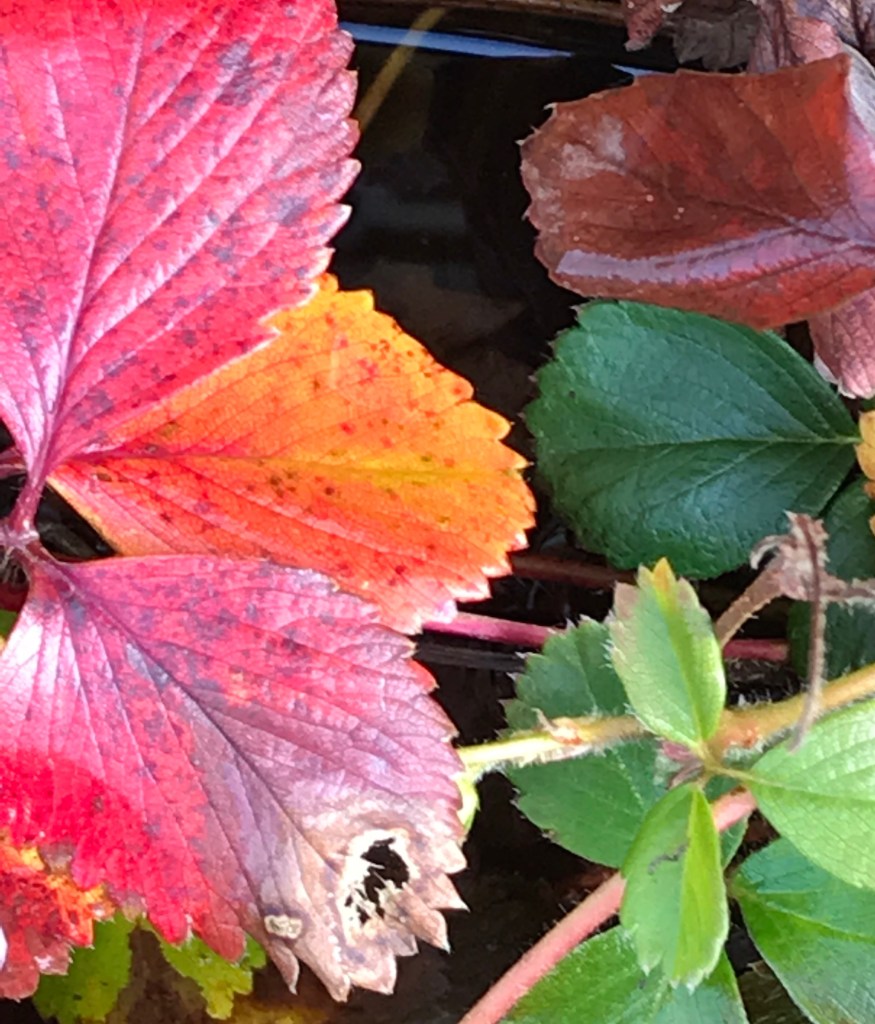

I liked these multi-coloured leaves in a terracotta pot in front of the terracota building at the Farnham Pottery today. They matched beautifully. But I had real doubts about this being a strawberry plant (as my usual site suggested). Until… I saw the very strawberry-like form at the bottom of the right-hand picture. Well, well.
DAY 224 (15 NOVEMBER) – Missing sector orb weaver (Zygiella x-notata) (Farnham)
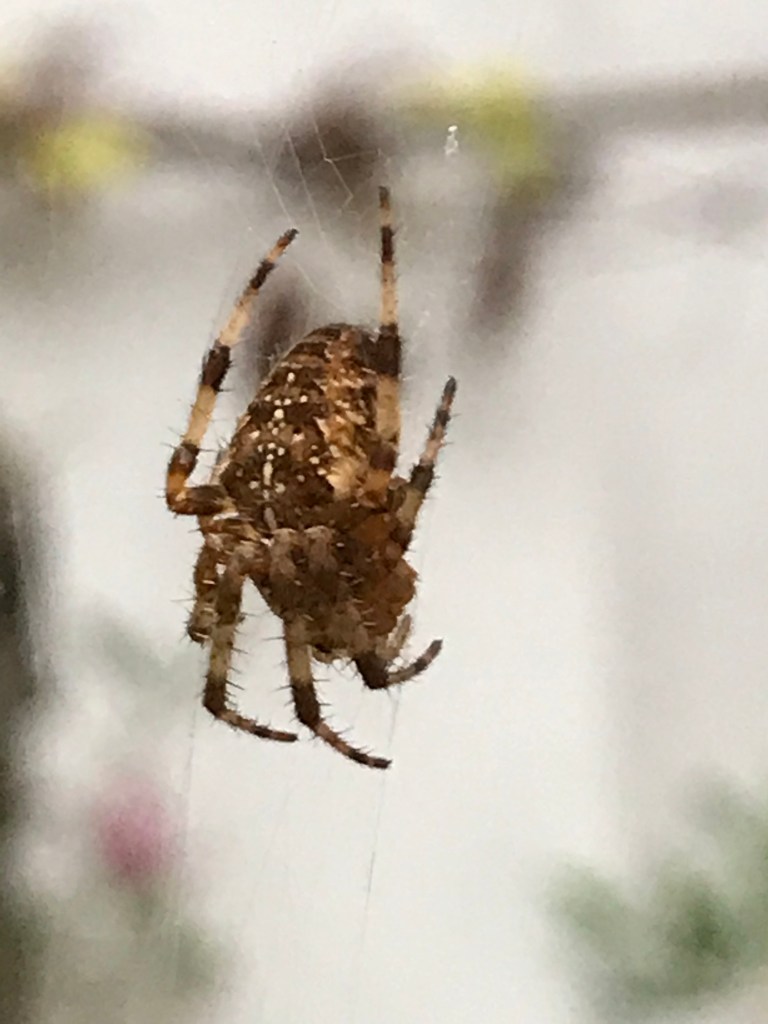
Managed to walk straight into a web spun by this spider across our internal courtyard today. Having identified it by its stripey legs, I tried to find out why it has such a specific common name. But all I could find was ‘because it spins an orb web with a missing sector’. Ah, that’ll be it then.
I wonder if the Latin name inspired David Bowie?
DAY 223 (14 NOVEMBER) – Mountain grape? (Berberis aquifolium) (Farnham)

Gosh, the sight of these bright flowers against a sunny sand-coloured wall made me think I was back in summer. But the real mystery is what they are. Plantnet says they are mountain grape, but they are supposed to flower in spring, and don’t seem to grow on long spears like this. Anyone?
I don’t care – I loved them anyway.
DAY 222 (13 NOVEMBER) – Ginkgo biloba (Ginkgoeceae) (Farnham)
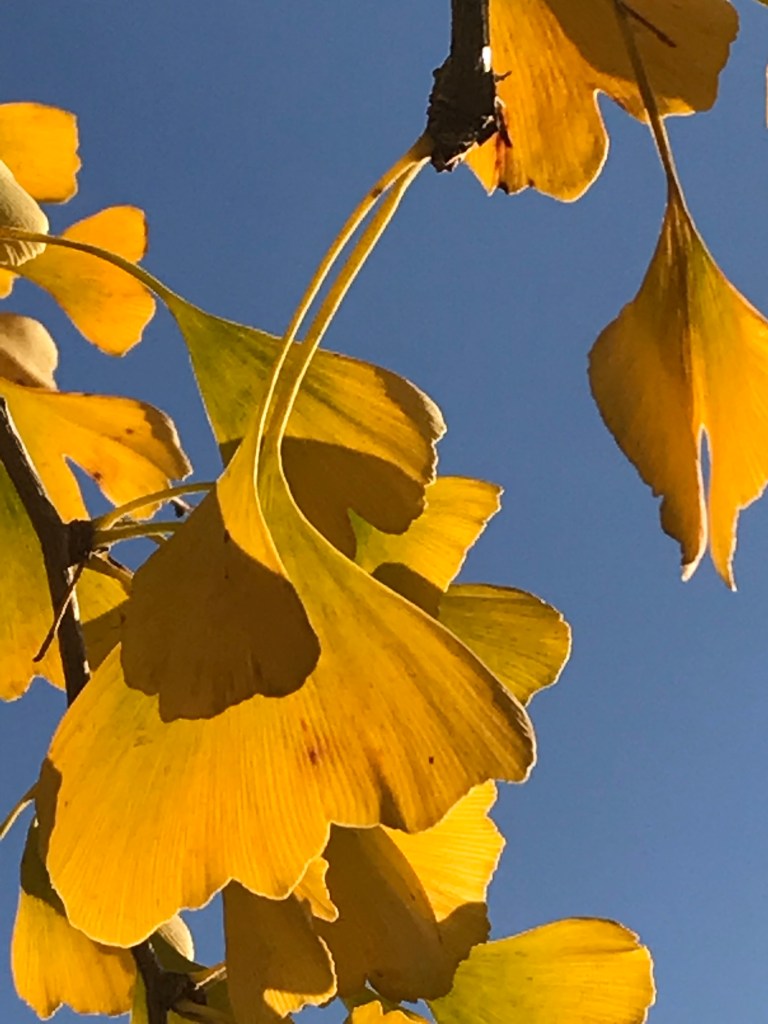
Ahhh. A sunny morning stroll across the meadow offered up these fascinating leaves I hadn’t noticed before. No doubt because they’re more striking than when green in summer.
It turns out they are the only leaves in this fan shape. Not only that, the ginkgo (native to China) is the only surviving species of the Ginkgophyta family – making it officially a living fossil.
DAY 221 (12 NOVEMBER) – Virginia sumac (Rhus typhina) (Hog’s Back, Surrey)

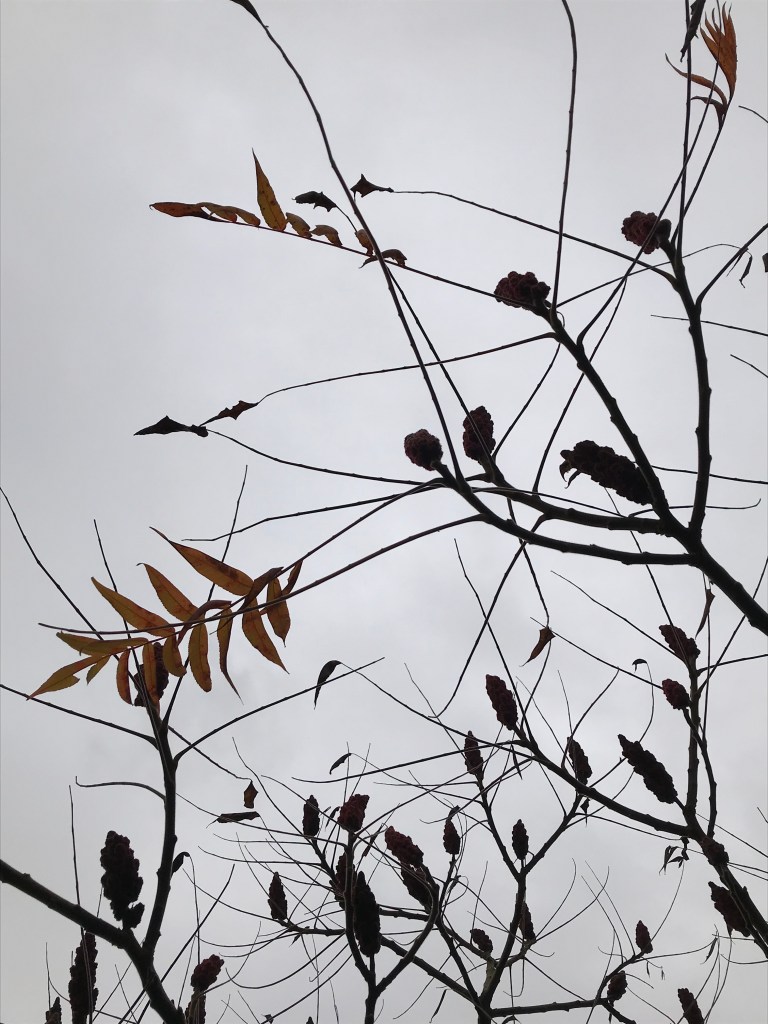
Found myself unavoidably at the Hog’s Back Hotel today. And in haste could only find this tree in the grounds with candle-like flowers (or fruits?). Close up they are densely-packed red tufty things and quite ugly. They turned out to belong to a Virginia (or staghorn) sumac, which I didn’t recognise at the same species I’d snapped earlier in the year. Ericus Torner’s description: ‘ramis hirtis uti typhi cervini’ means ‘the branches are rough like antlers in velvet’. Yes, well maybe.
DAY 220 (11 NOVEMBER) – Thunberg’s barberry (Berberis thunbergii) (Farnham)
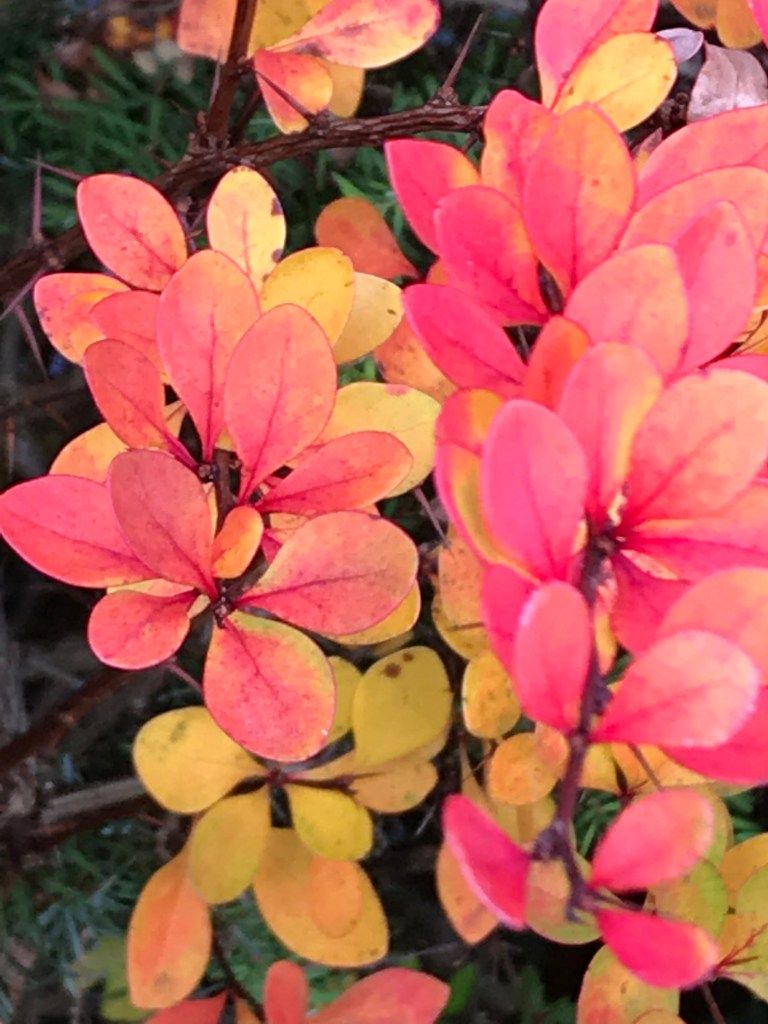

When I was a child I thought hedges were privets, because that’s what ours was and pretty much all the hedges in the road were that kind. It’s been one of the many pleasures of this blog to discover so many that aren’t. Like this barberry looking a lot better in autumn than in summer. I read they are meant to have fruits, but not sure when…
DAY 219 (10 NOVEMBER) – Winter jasmine (Jasminium nudiflorum) (Greater London)

My mother’s winter jasmine stood out beautifully today against her racing green water butt. It’s native to China where it is known as ‘yingchun’ – which means “the flower that welcomes spring”. I wish.
 365 DAYS OF NATURE