Apples, after rain

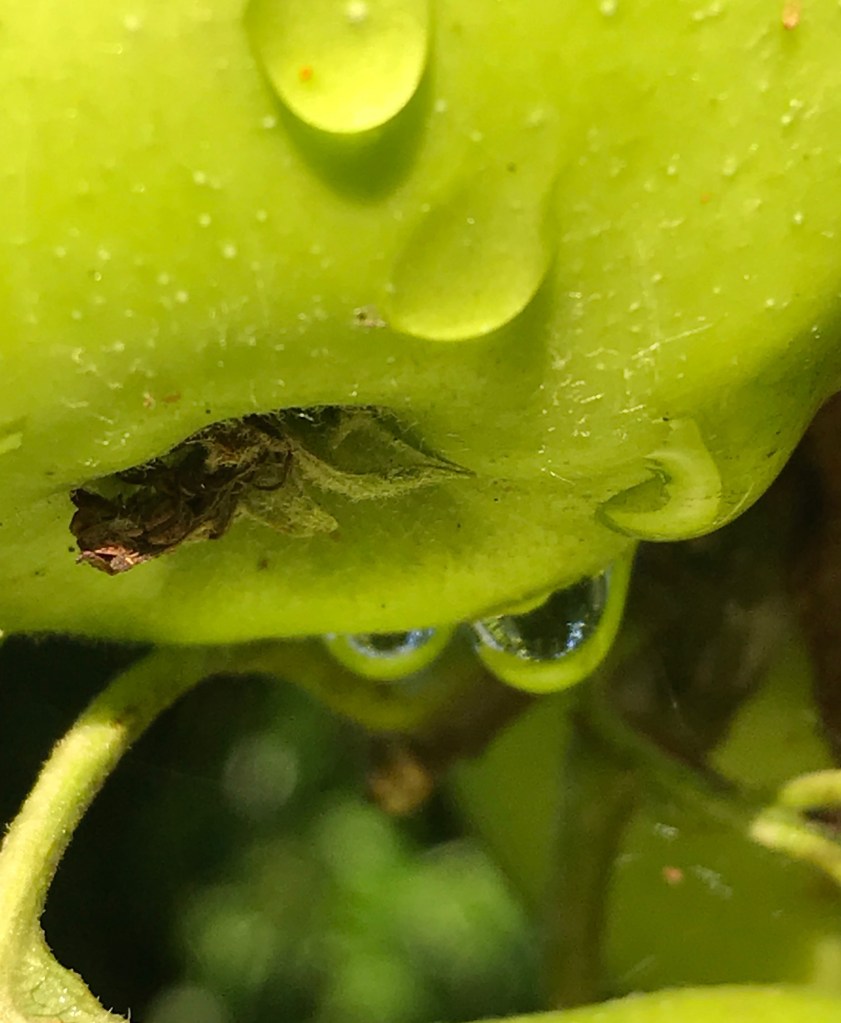
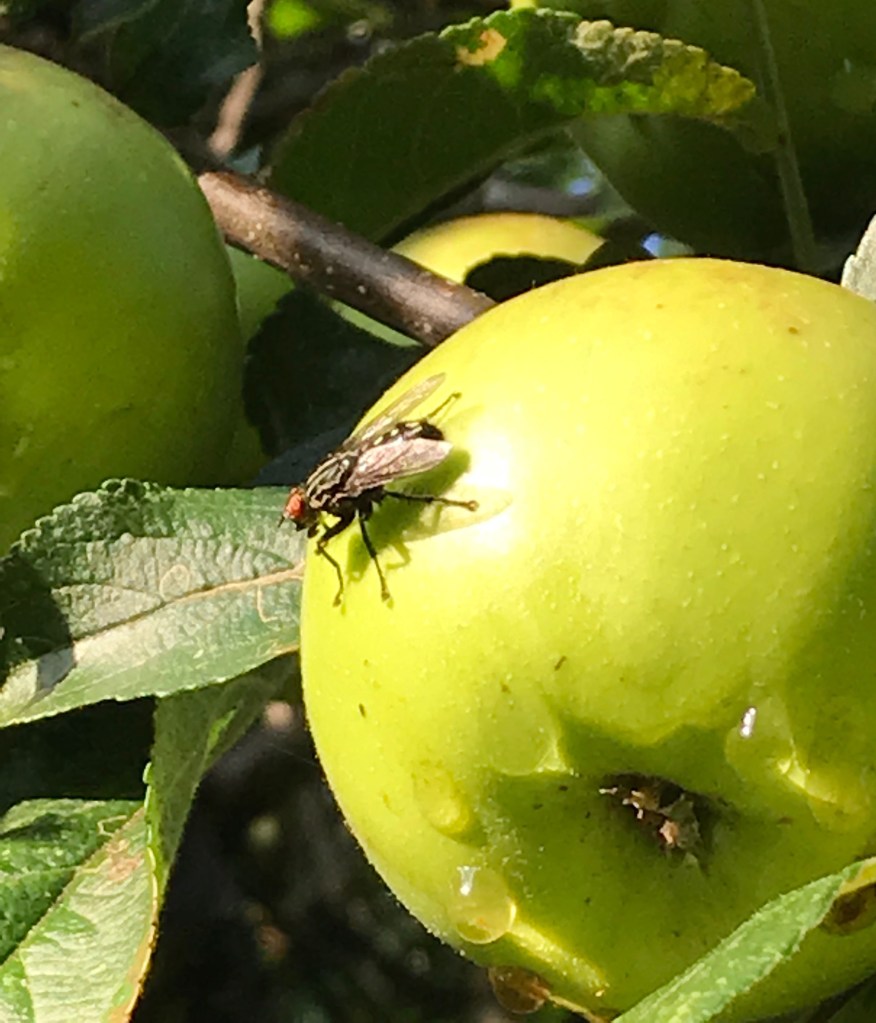
DAY 116 (30 JULY) – Apple tree (Malus domestica) (Greater London)

“There were ten thousand thousand fruit to touch,
Cherish in hand, lift down, and not let fall.
For all
That struck the earth,
No matter if not bruised or spiked with stubble,
Went surely to the cider-apple heap
As of no worth.”

Excerpt from After Apple-Picking by Robert Frost

Canal deco

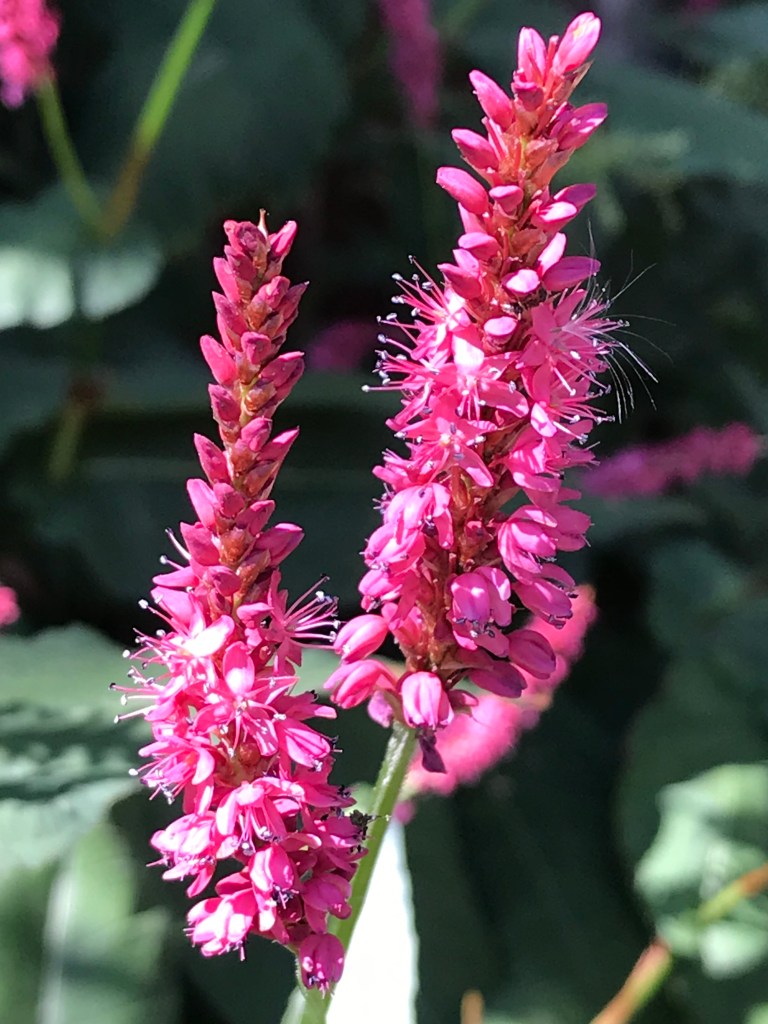
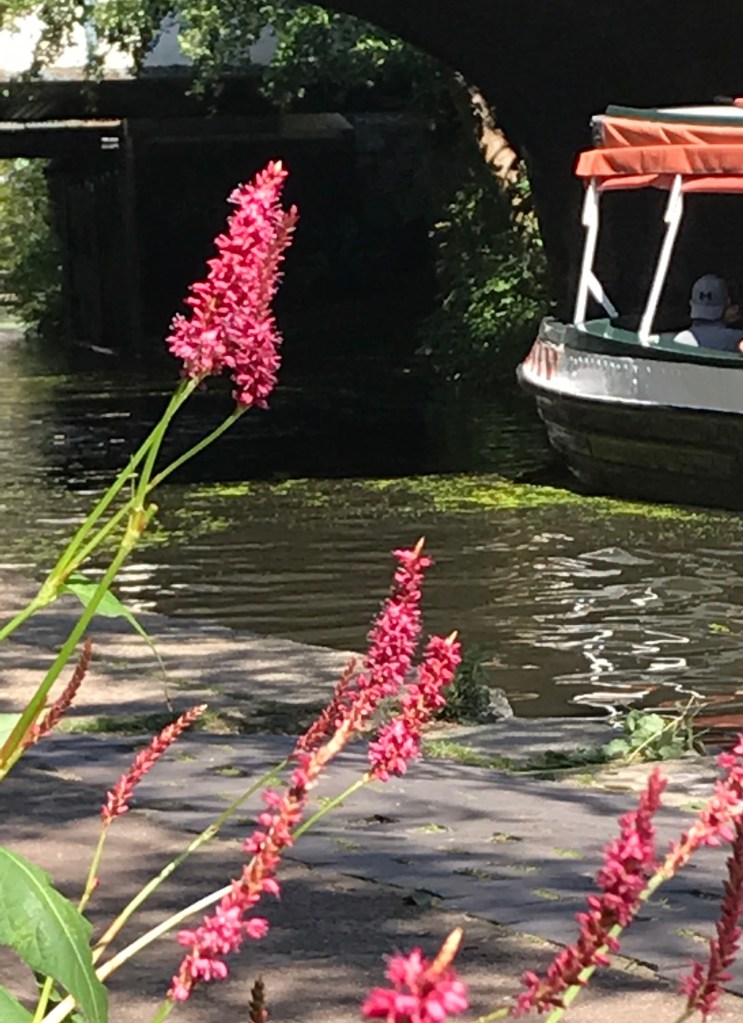
DAY 115 (29 JULY) – Princess feather (Persicaria orientalis) (Regent’s Canal, London)

There were moorhens cheeping among the moss on this hot afternoon on the canal by Camden Lock. A tattoed man with a pale belly sunbathing on a narrowboat deck. Other boats empty, letting their scattered flower pots do the talking. Cyclists. Joggers. Musicians. Lovers. Tourist rides up and down, parting the viscous green water.

And these spear-headed flowers, thin but bright, leaning into the unfolding scene. Their common names include: Gentleman’s cane and Kiss-me-over-the-garden-gate. And in Spanish: Cordón de cardenal (Cardinal’s braid). I quite like the Swedish, too: Purpurpilort, with two dots on the ‘o’ of course to make that special Scandi-sound.

Courtyard queen

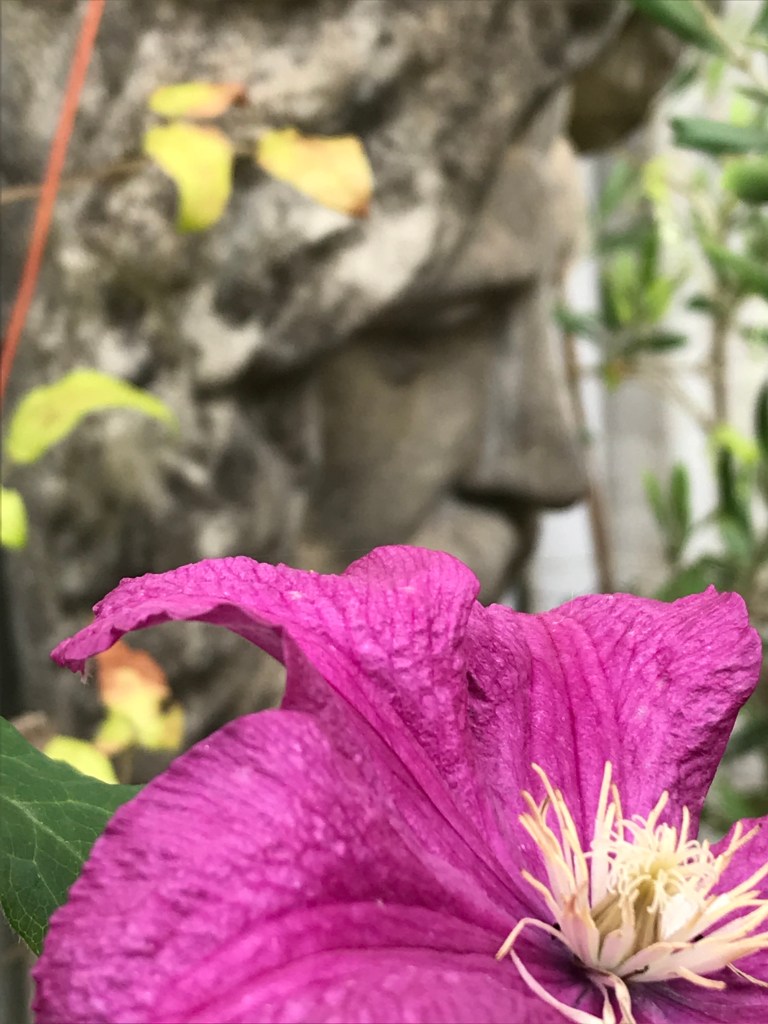
DAY 114 (28 JULY) – Clematis Remembrance (Farnham, Surrey)

Returning to Surrey, I find this clematis ‘Remembrance’ out-dazzling other plants in our internal courtyard. I’m sure there’s a story behind the name, but I can’t find it…

Native to China, the clematis (a surprise member of the buttercup family) reached Japanese gardens by the 17th century, and English ones by the 18th. I’m sure they are arranged more beautifully in Japan than in our laissez-faire garden…

Sparrows and daggers

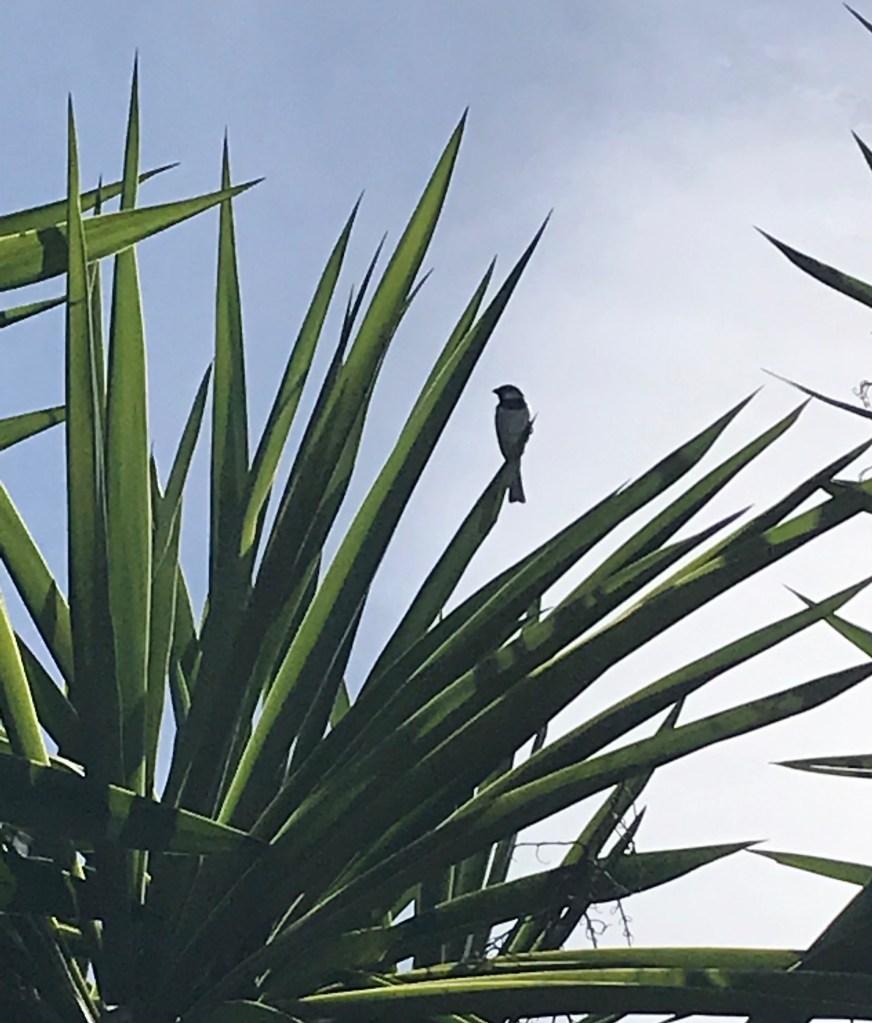
DAY 113 (27 JULY) – Spanish dagger (Yucca gloriosa) (Jerez airport, Spain)

As we returned our hire car at the airport, I noticed these ice-cream-cone white flowers on the giant yucca trees. But more impressive was the deafening bird song, with hundreds of sparrows perched or fluttering among the dagger leaves.

Sociable snails

DAY 112 (26 JULY) – Mediterranean coastal snail (Theba pisana) (La Janda wetlands, Spain)

I returned to the La Janda wetlands to observe the wonderful variety of birdlife… and got distracted by these snails. They like to attach themselves to tall grasses and don’t seem to care how crowded it gets.

There they bask, blissfully unaware they are a very popular tapas disk in these parts. But when I started reading the local recipe, I vowed never to try them. It starts something like this:

  1. Put the live snails in flour so they can clean themselves thoroughly inside
  2. Wash them 4 or 5 times with water and vinegar, then again with water so that they release all their mucus and dirt
  3. Boil them alive, until their heads pop out and they are truly dead

I’ll just stick with gazpacho.

Hymn to an almond

DAY 111 (25 JULY) – Almond tree (Prunus dulcis) (Vejer, Spain)

All trees are wonderful things. Then there are some trees that are especially pleasing. I may have been influenced by the whole scene. An old farmhouse, a tree, a wheelbarrow and a donkey – like a painting. But I don’t think so. There are two or three of these trees together, and I couldn’t stop looking at them. This one with its split trunk, the way it leans gently both ways. Its pale, flickering leaves. And its perfect proportions in the small corner on the edge of town where it finds itself.

Then the almonds, waiting in their yellow velvet cases for the right moment to offer themselves up. There’s so much made with almonds here. Cold soups with garlic, chicken dishes, afternoon pastries with almond cream, almonds with hard crunchy cases in white, mauve and sky blue, Christmas sponges. This is almond country. And this piece of land has almonds at its centre.

Of course the Spanish are not alone in revering the almond. It was one of the earliest fruit trees, domesticated as long ago as the Bronze Age. There was evidence of almond trees at the archeological site at Numeria in Jordan. And an almond was even found in Tutankhamun’s tomb.
Windmill bouquet

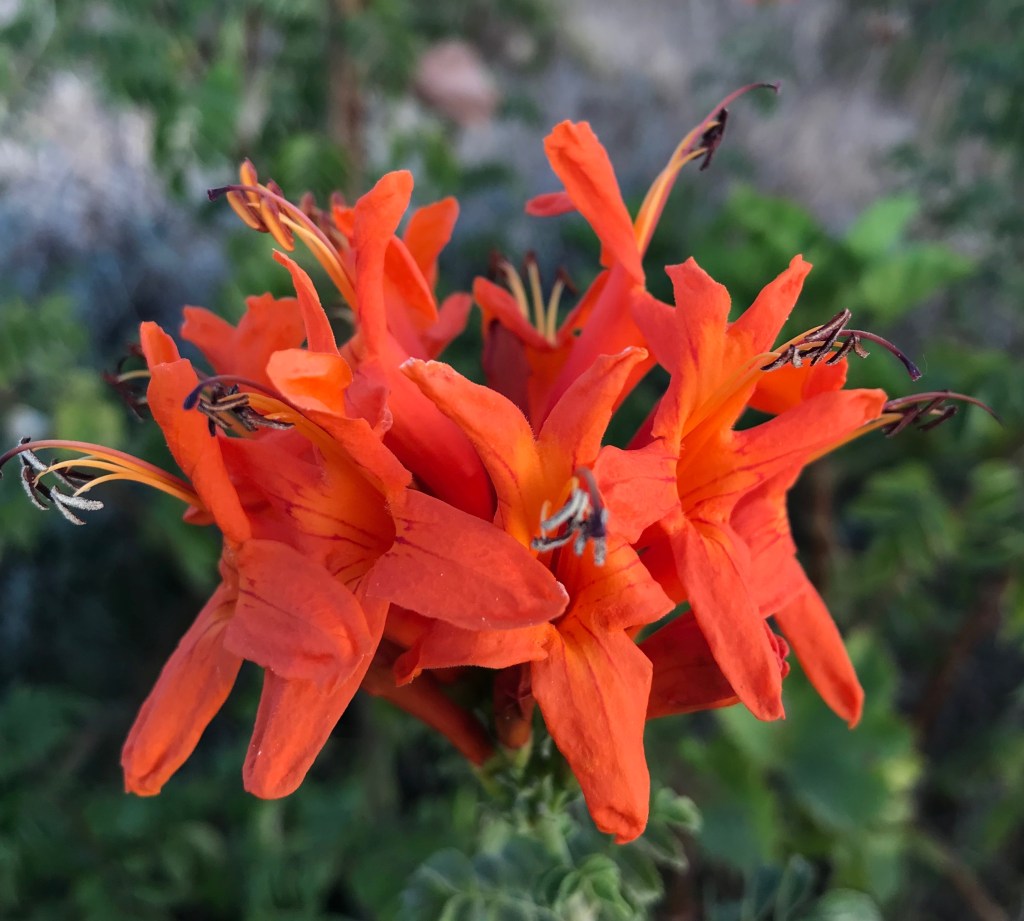
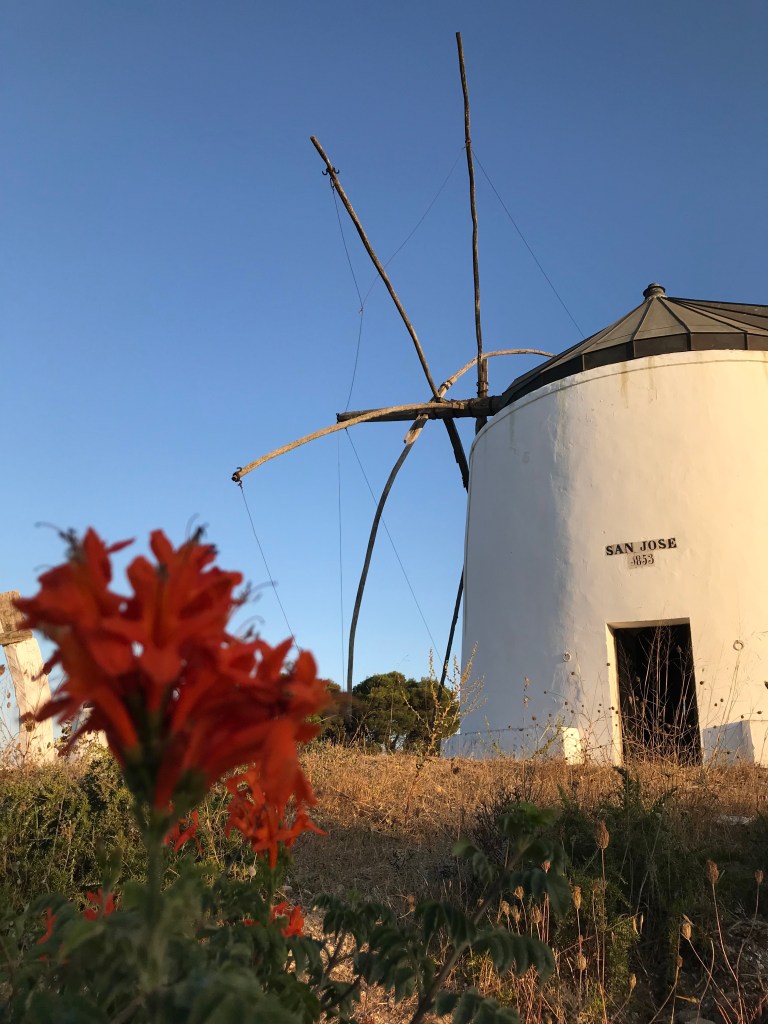
DAY 110 (24 JULY) – Cape honeysuckle (Tecoma Capensis) (Vejer, Spain)

It’s becoming more challenging to find wild plants that are still alive in the intense heat of an Andalusian late July. Here a cape honeysuckle stands alone amid the crispy grasses that surround this old windmill.

It’s native to South Africa, Swaziland and Mozambique – but somehow found its way to this southern tip of Spain. No relation to ‘real’ honeysuckle, by the way, in spite of the name.

Birds on a wire

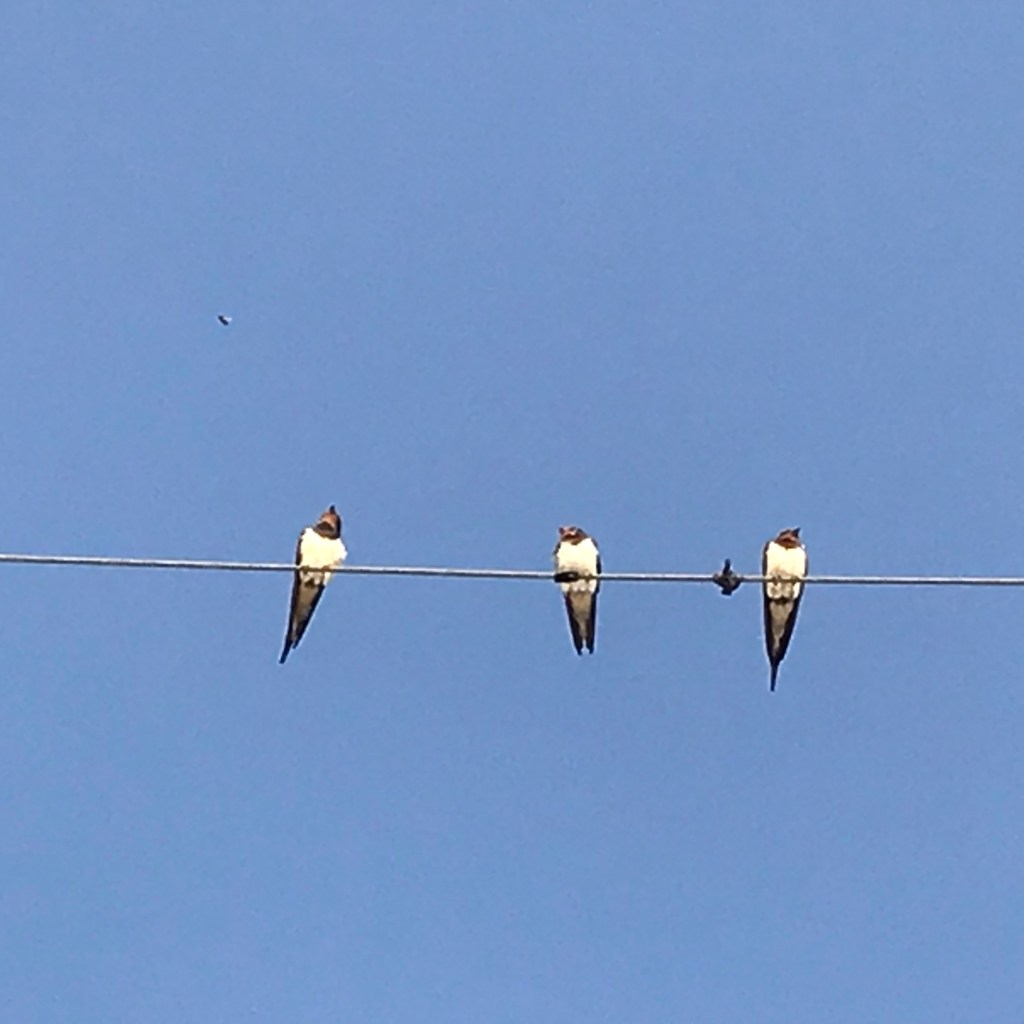
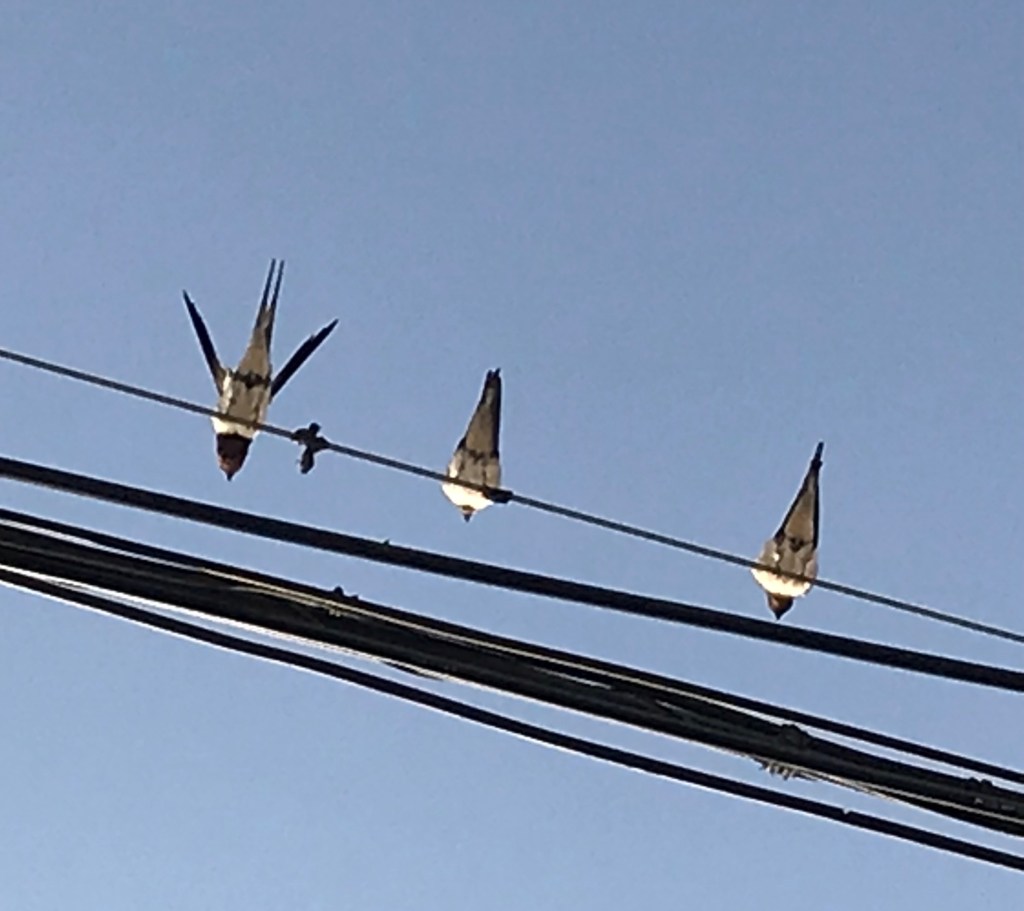
DAY 109 (23 JULY) – Swallow (Hirundo rustica) (Vejer, Spain)

Two of these three swallows have spotted a breakfast snack flying above them. They have no idea Boris Johnson has just been elected PM, and I wish I didn’t know either and could be one of them looking over the valley. I saw them on an early morning walk after delivering some documents to the town hall as it opened. The sun was already very hot.

I love how birds gather in early morning as part of their routine. These swallows are abundant summer visitors to urban areas in Andalucia. I did worry, though, that I couldn’t see their famous red throats… But I’m sure they aren’t swifts.

Fern of exaltation

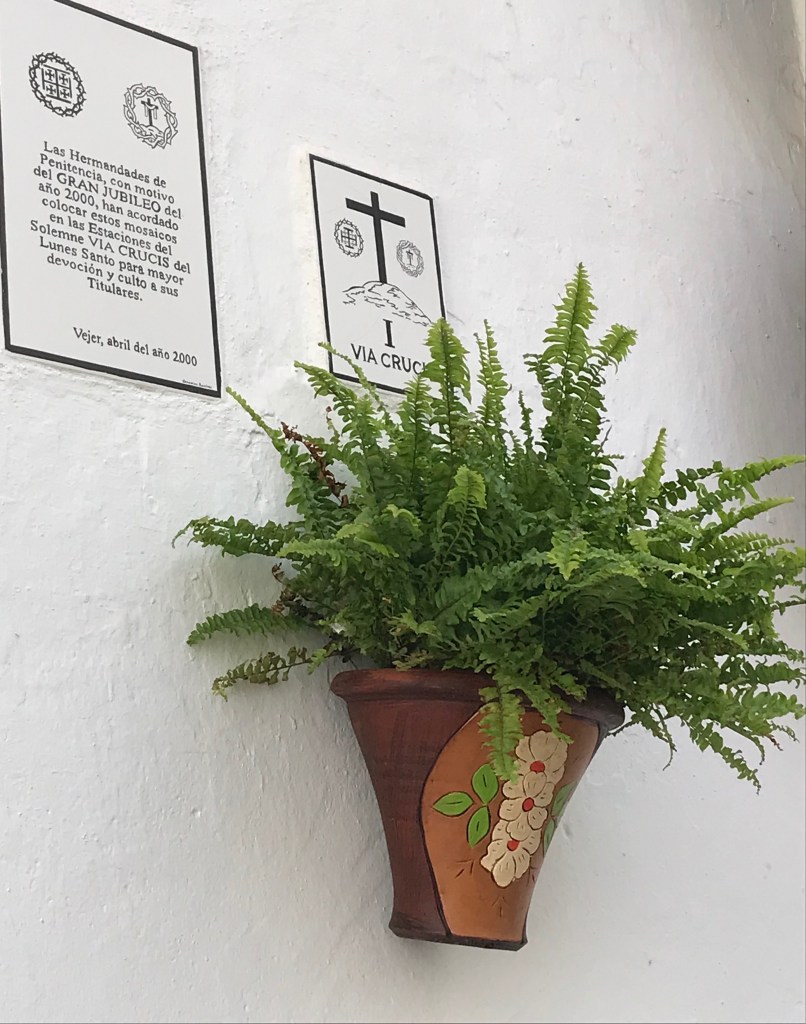
DAY 108 (22 JULY) – Sword fern (Nephrolepsis exaltata) (Vejer, Spain)

On a whitewashed wall in the church square hangs a hand-painted pot with a sword fern. Above it are two plaques. One explains that to celebrate the year 2000 AD, the local ‘fraternity of penitents’ decided to put up markers for the Stations of the Cross, which the penitents follow on the Monday of every Easter Week. The other indicates the first Station. So the Latin name nephrolepsis exaltata sounds oddly apt.

I hadn’t the realised the sword fern was native to the tropics before. In this baking hot and dry square it is clearly being tended by a dedicated carer.

Restaurant decoration

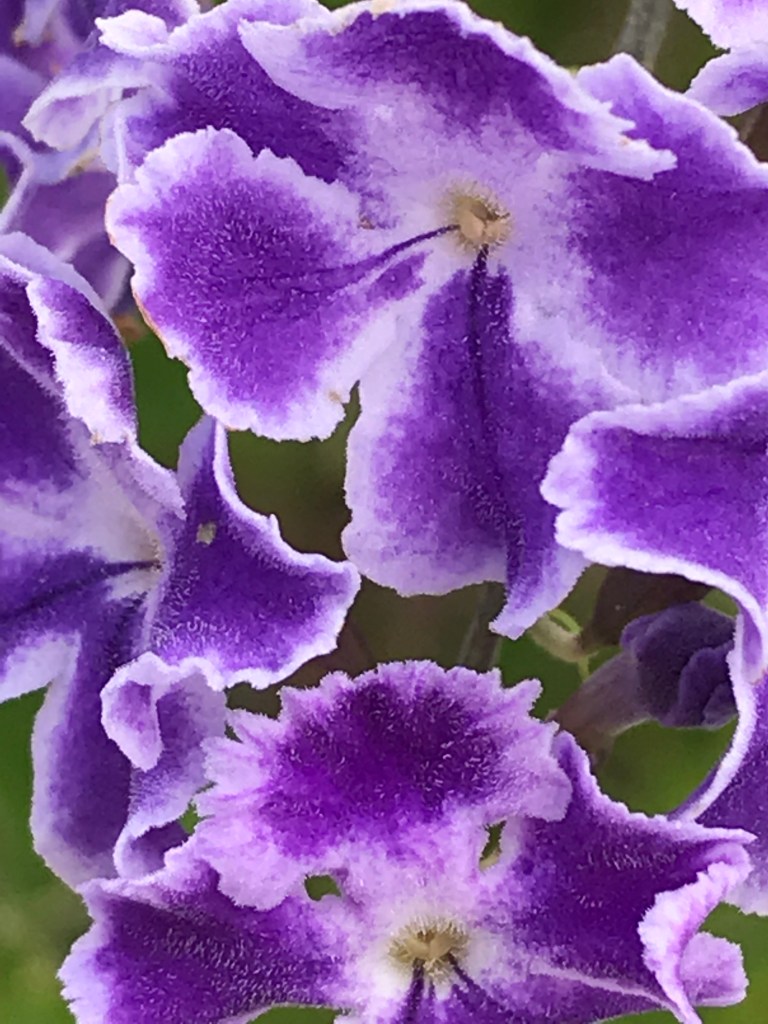
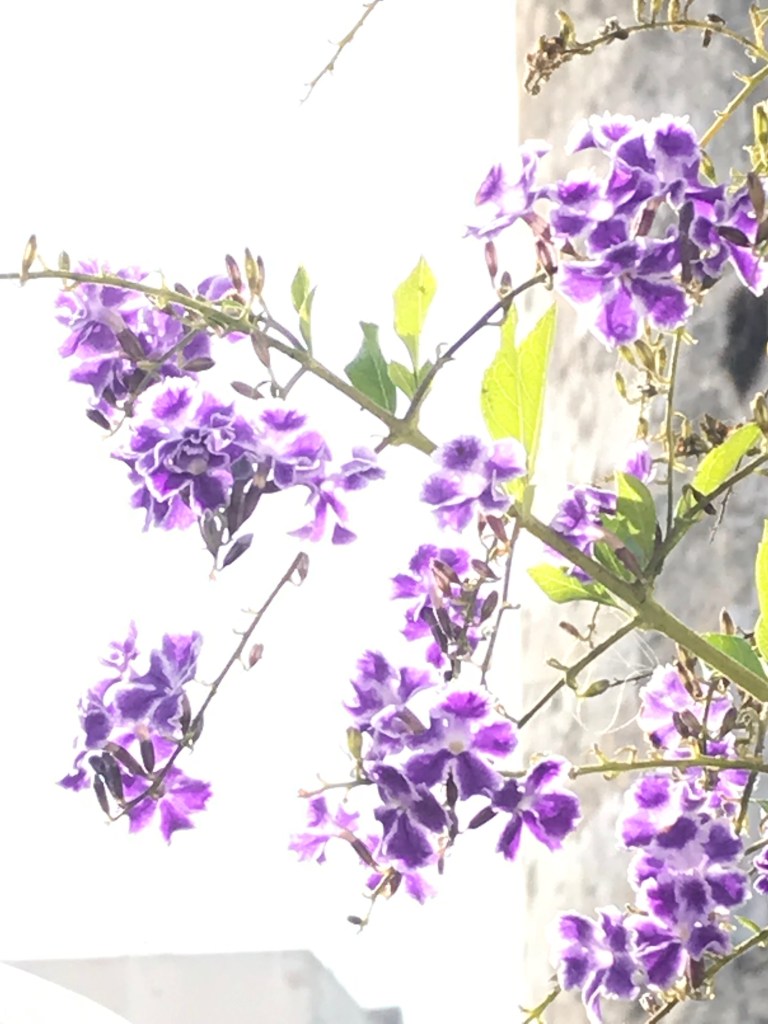
DAY 107 (21 JULY) – Skyflower (Duranta erecta) (Vejer, Spain)

This flimsy plant with bright purple flowers hangs over the local church wall, decorating the outdoor restaurant beneath.

Apparently it’s native to Mexico (another one), South America and the Caribbean. Also found in many tropical and sub-tropical parts of the world, it’s known as mavaetangi in Tonga, which means tears of departure. No idea why.

Its blossoms attract butterflies and hummingbirds. But no sightings of hummingbirds yet…