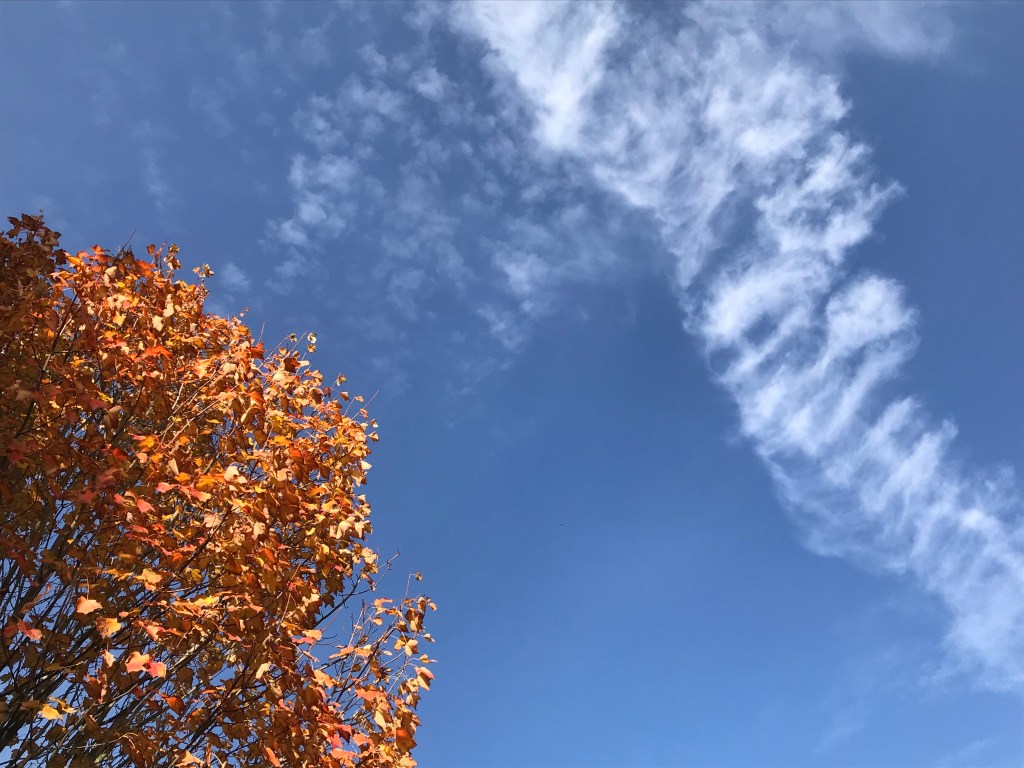
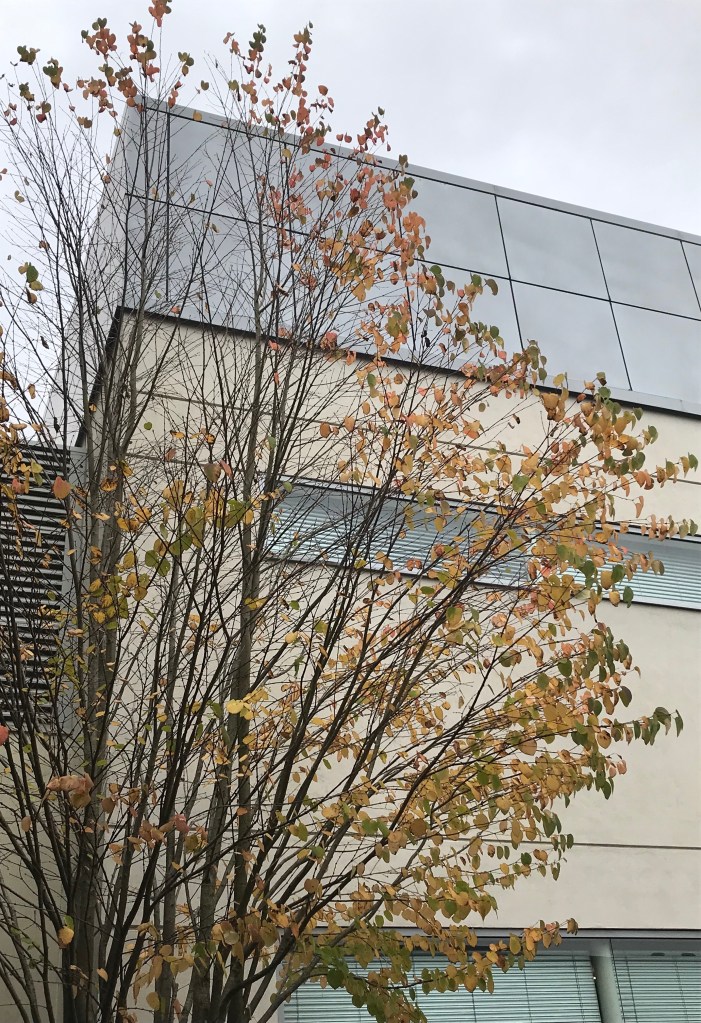
DAY 188 (10 OCTOBER) – Red maple? (Acer rubrum) (Farnham)
I couldn’t take my eyes off this young tree in our local meadow. It seemed further into autumn than most others. I was sure it was a sycamore, but the identification site I use insists it’s a red maple. Even the clouds lined up in parallel. And the bark made its own pink and grey painting.
DAY 187 (9 OCTOBER) – Livelong (Hylotelephium telephium) (Farnham)
Just when I thought I’d photographed every plant in our garden, I dashed out on another rain-filled day and found this. A succulent with striking flowers that I’d not really noticed.
Other common names are, intriguingly: frog’s stomach, harping Johnny and witch’s moneybags.
DAY 186 (8 OCTOBER) – Late cotoneaster (Cotoneaster coriaceus) (Farnham)
Ah … another autumn arrangement thrown together and just asking to be photographed.
These berries are loved by blackbirds and thrushes, so that’s good. Even better, the flowers that appear in early summer provide bees with much-needed nectar during the ‘June gap’. I had never heard of this, but it’s the period between the abundance of spring pollen and the return of nectar in herbaceous borders later in the summer.
DAY 185 (7 OCTOBER) – European spindle (Euonymous europaeus) (Farnham)
Spotted these disturbing berries on a bush by the art college today. It’s unusual for nature to offer such clashing colours, so I wasn’t surprised to find these are poisonous.
Best thing about them is their other common names: fusanum, ananbeam and shemshad rasmi (Iranian).
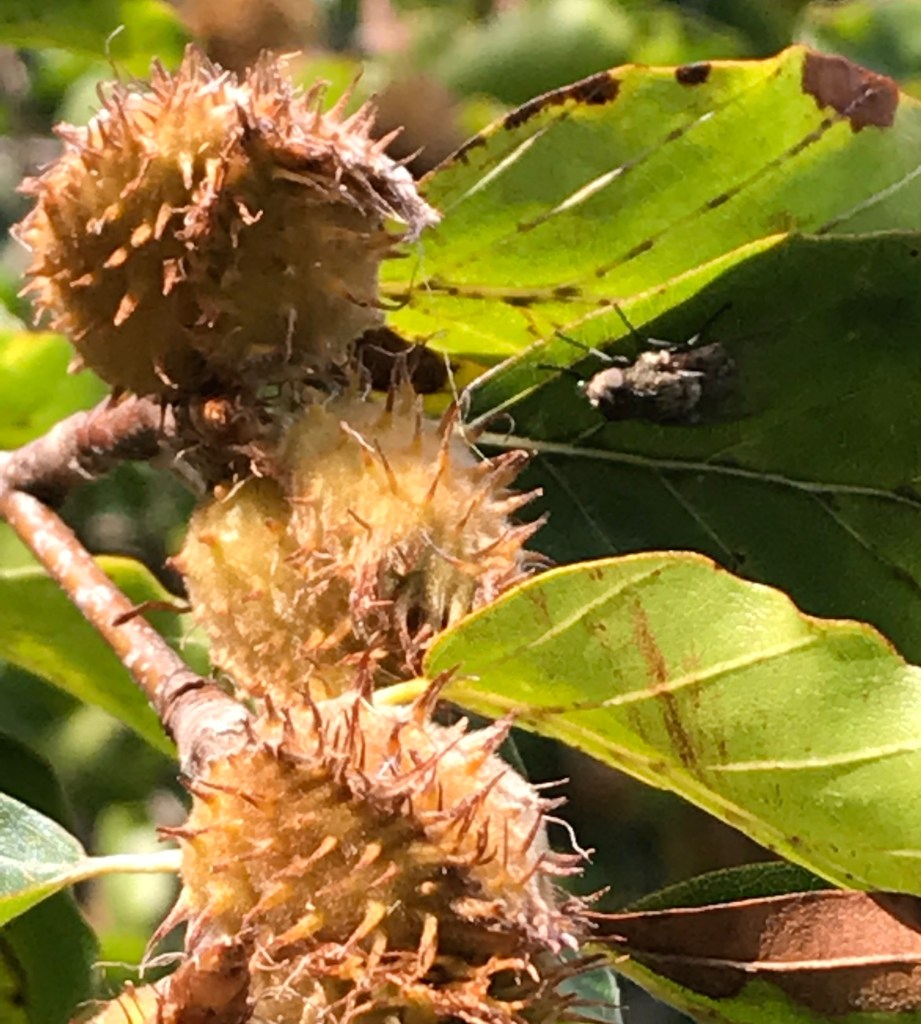
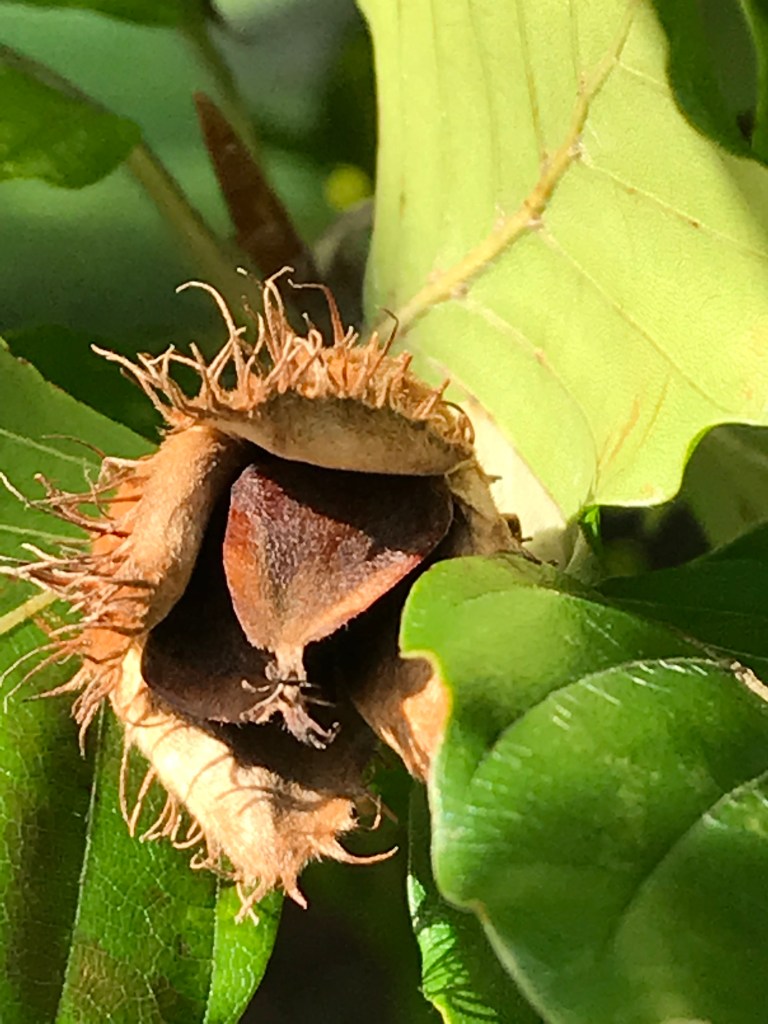
DAY 184 (6 OCTOBER) – Beechnuts (Fagus sylvatica) (Farnham Park)
I think these are the first nuts of this blog. I found loads of them on the beech trees in Farnham Park during a sunny break from the rain. Apparently they are edible, though bitter. And the oil extract stimulates hair growth, as their hirsute appearance seems to suggest.
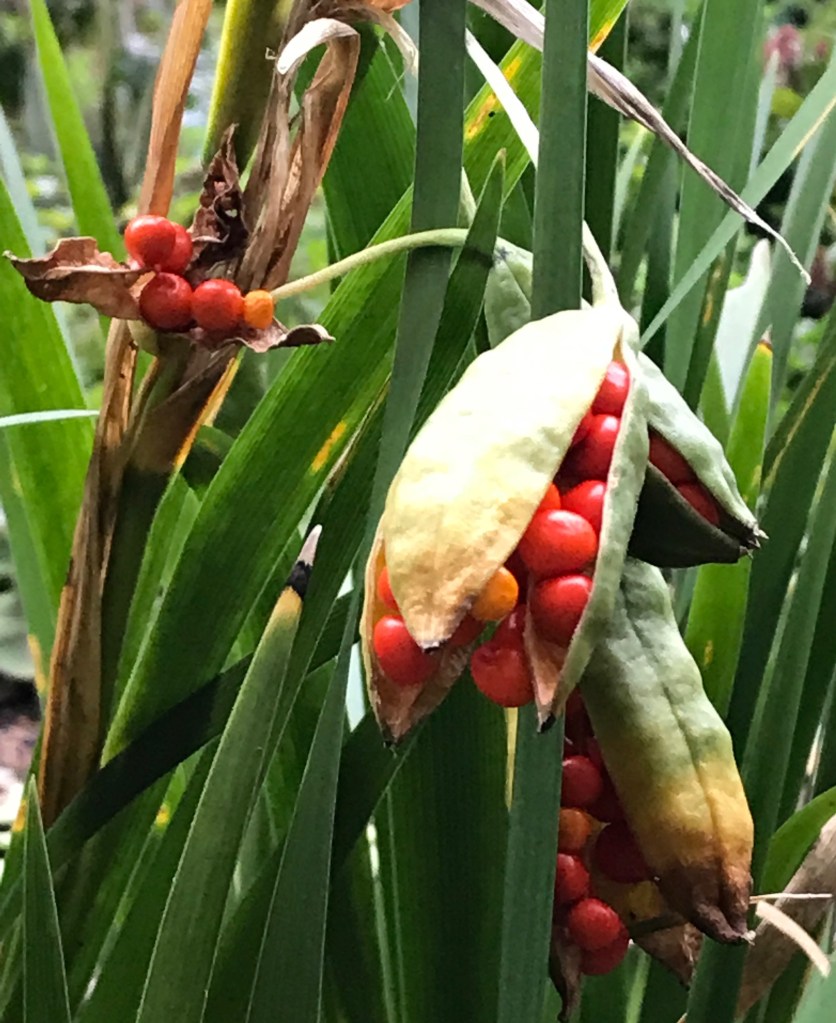
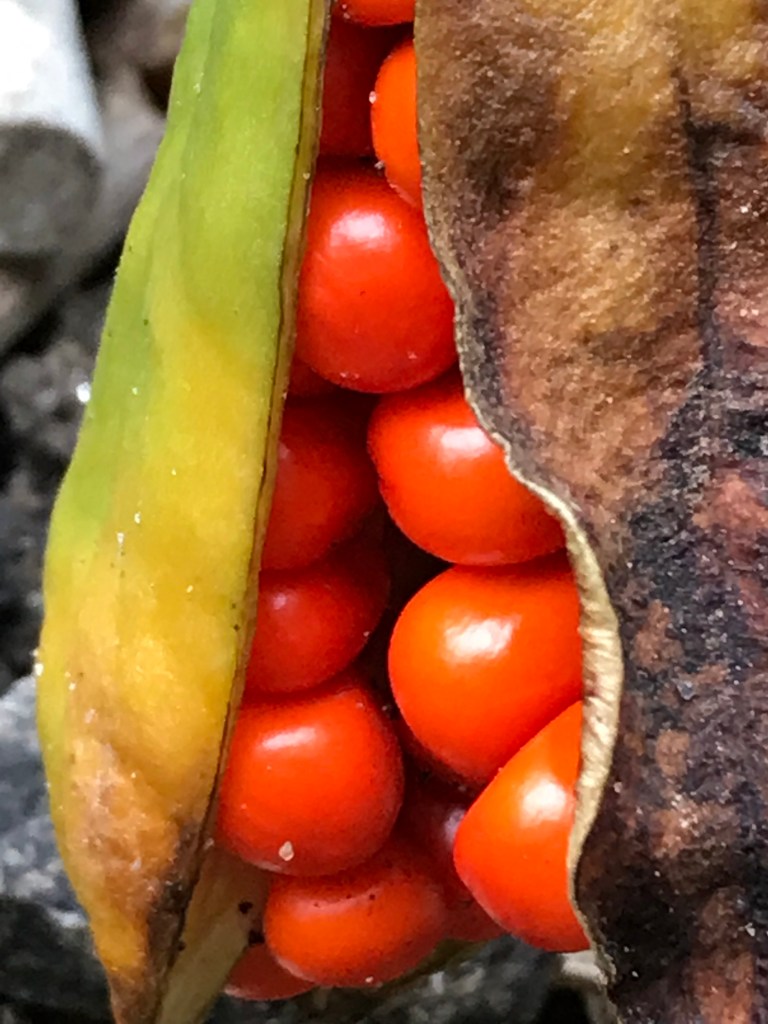
It’s typical of London to find a splendid church lurking somewhere behind an unprepossessing high street. Nipping out from the London Spanish Book Fair in the crypt of the elegant St Peter’s (Liverpool Grove), I found an intriguing garden surrounding the church. And almost immediately these alien-looking seed pods.
I was surprised to learn they’re stinking iris, as I didn’t notice an unpleasant smell. It’s also known as the roast beef plant, as the leaves when crushed are supposed to smell of roast beef. I can think of worse things.
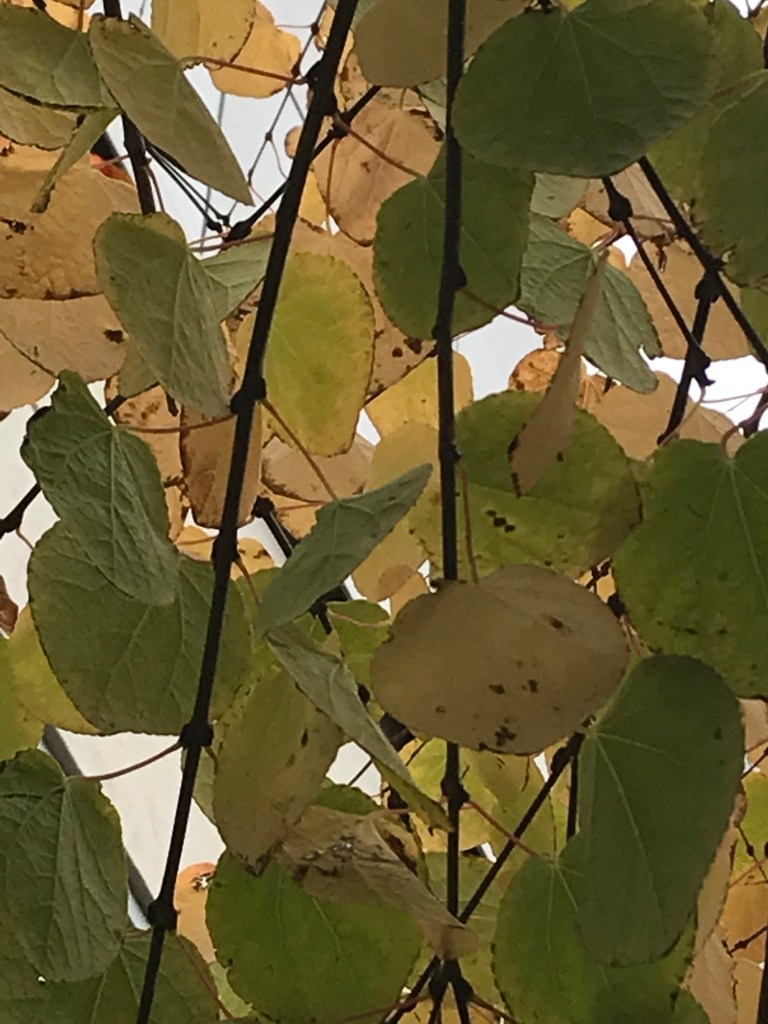
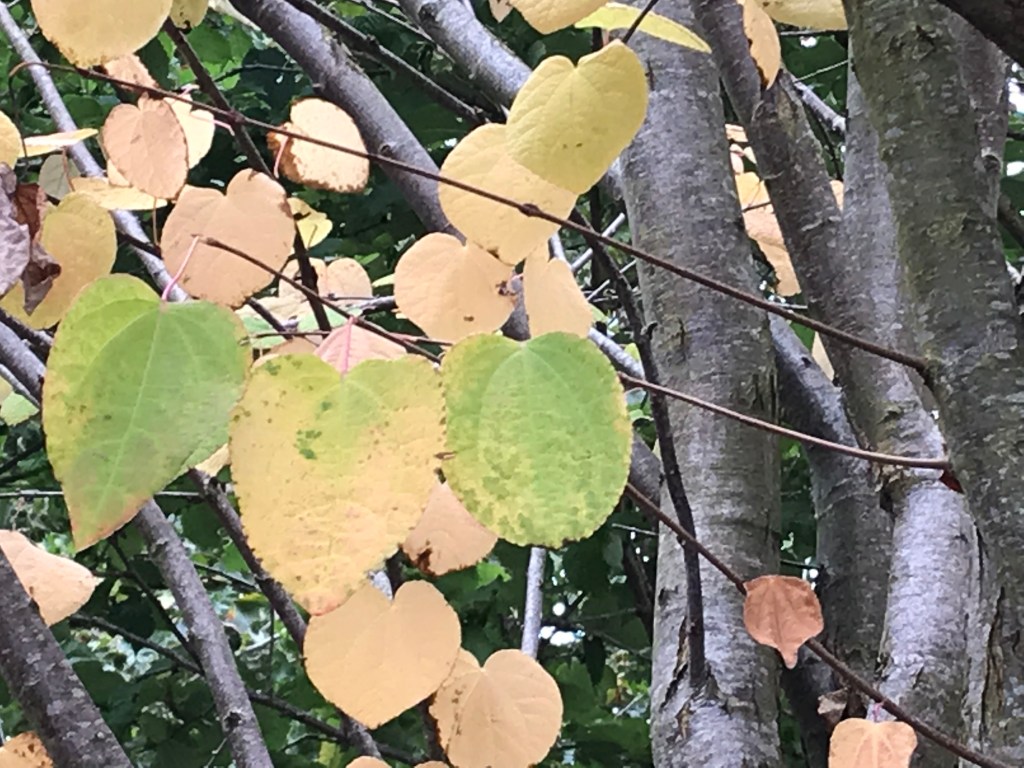
DAY 182 (4 OCTOBER) – Hearts of Gold (Cercis canadensis) (Farnham)
One of the joys of doing this nature blog is that occasionally someone comes up and starts a conversation when I’m taking photos. Today a lady passing by said “Oh, I love that tree! I watch it all the year round”. It was difficult to do it justice, but the disc-like leaves fascinated me. They were delicate, and hanging sparsely like decorations.
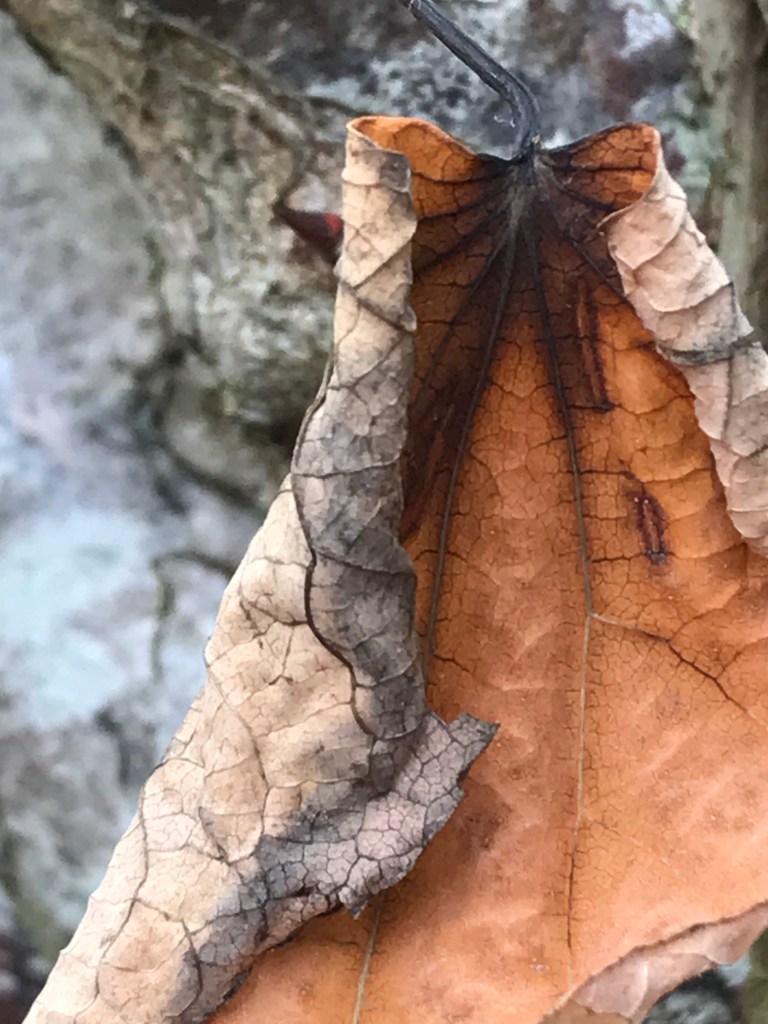
I discovered the leaves begin pale yellow in spring, become yellow-green in summer, and turn to a richer golden yellow in autumn. Apparently there are crimson, pink or white flowers in spring – I missed this completely. But I think I might prefer it just understated, as it is now. And with the odd dead leaf too.
Oh, and it’s native to the eastern half of North America – and the state tree of Oklahoma.
DAY 181 (3 OCTOBER) – Woodbine (Parthenocissus quinquefolia) (Farnham)
Walking in Farnham Park, these colours stopped me in my tracks. So hard to believe this is the same plant I wrote about on Day 87 (1 July) – although that one was clinging to a restaurant wall. Woodbine or Virginia creeper. It was hideous and sinister then. But now breathtakingly handsome and flowing randomly across other bushes in the park.
DAY 180 (2 OCTOBER) – Coneflowers (Rudbeckia fulgida) (Farnham)
Some plants look most interesting on the turn. These coneflowers (or black-eyed Susans) are a bit bright and uniform for my taste in summer – but I love the drying, dark purple flower heads and curling petals among the surviving yellow ones.
They’re named after Olof Rudbeck and his father Olaus Rudbeck, both professors of botany at Uppsala in the late 17th, early 18th centuries. Olaus founded Sweden’s first botanic garden. Skal, Olaus!
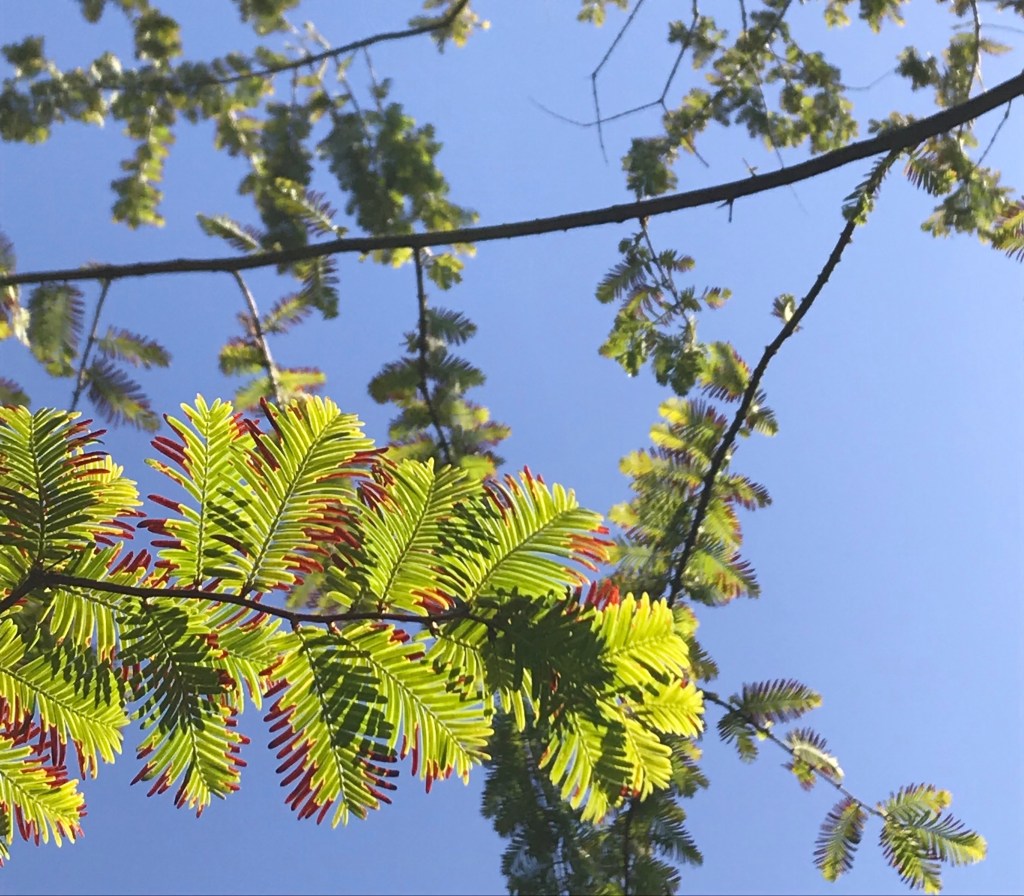
DAY 179 (1 OCTOBER) – Dawn redwood (Metasequoia glyptostroboides) (Farnham)
Do I hear an outcry? According to the plant identification website I use, this is a dawn redwood. But what makes that unlikely is they are endangered and only to be found in south-central China. And that’s a long way from Farnham Library gardens, the home of this lovely tree.
So I am stumped (pardon the pun). But whichever way it is very beautiful, especially the red tips of the leaves signalling October in.






 365 DAYS OF NATURE