Wall mantle

DAY 178 (30 SEPTEMBER) – Buisson ardent (Pyracantha coccinea) (Farnham)
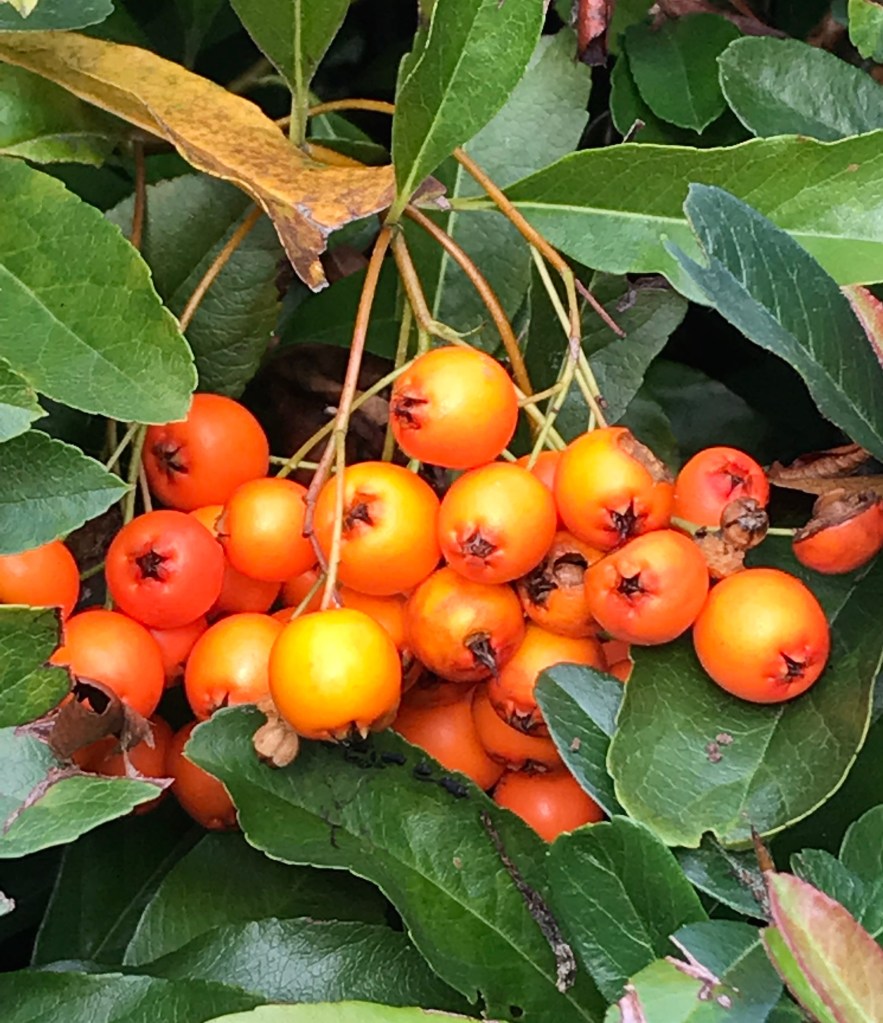
Doing this blog during autumn is absorbing in a different way from summer. There is far more colour. Summer was predominantly green. But more than anything I am enjoying the changing forms and the haphazard style of nature’s compositions.

Some leaves, still a minority, are becoming crispy. Fruits and flowers are beginning to turn in on themselves. And there’s an untidiness in everything, a lack of order, that is often photogenic.

Take this buisson ardent (French for ‘burning bush’). Some of the fruit is still firm but there is rotting around the edges. And in the second picture a dying leaf hangs carelessly across, caught in a spider’s web.

According to the oddly named website Pollen Atlas, this plant likes “evergreen woods clearings and sunny hedges”. What a lovely image. But I’ve only ever seen it hiding ordinary walls.
Cottage colour

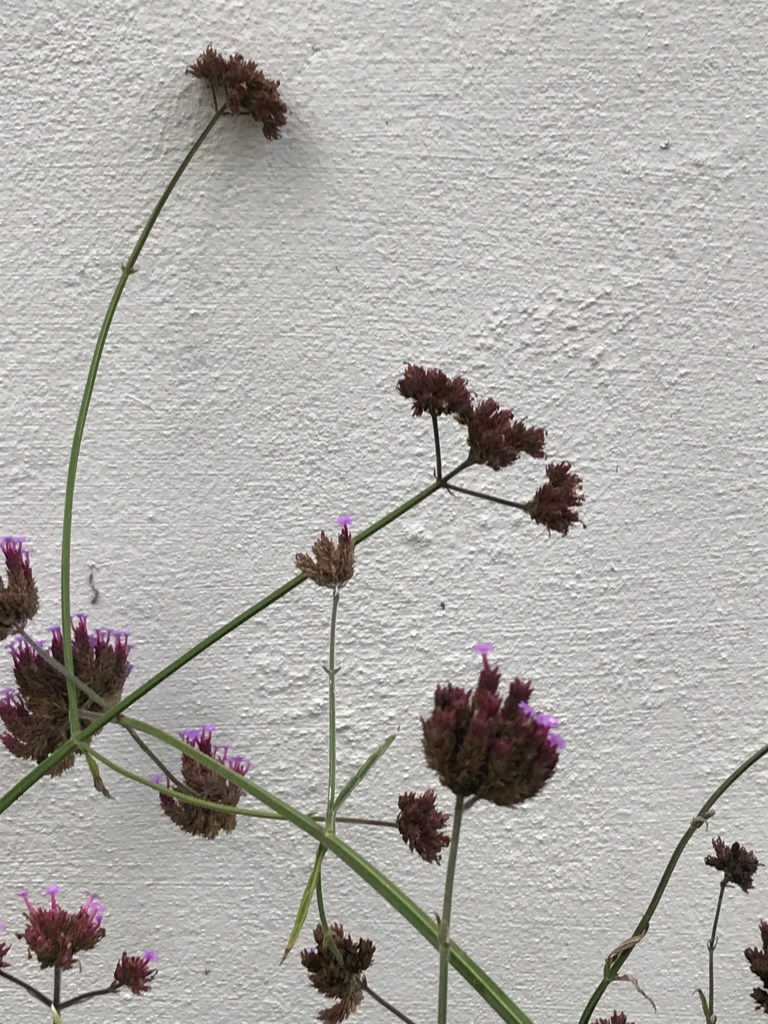
DAY 177 (29 SEPTEMBER) – Argentine vervain (Verbena bonariensis) (Farnham)

Strange what close-up images can do. This lovely long-limbed vervain drapes itself elegantly against my friend’s whitewashed cottage wall. I like the blend of live and dried flower heads. But when viewed through the powerful lens of my iPhone, it is suddenly stubby.

As the name suggests it’s native to parts of South America. Bonariensis means from Buenos Aires. Obvious when you know. And verbena is Latin for ‘sacred bough’: the leafy twigs were carried by priests, used in wreaths and druidic rituals, and for medicine.

Nectar heaven

DAY 176 (28 SEPTEMBER) – Ivy (Hedera helix) (Farnham)

I stopped at an unremarkable-looking bush this morning, because of the delicious smell of honey around it. And I wasn’t the only one drawn to these flowers. It seems the entire local population of worker honey bees and bumblebees thought it was the best place to hang out.

It turns out ivy nectar and pollen are used to make ivy honey, described on one website as “strong and somewhat unpleasant” at first but, they say, it tastes better with time. It is said to have antibacterial qualities, good for both coughs and gastritis.

The nectar is, well, nectar for the countless bees, as it’s available late summer to late autumn – when other food sources are scarce.

Pinot Farnham

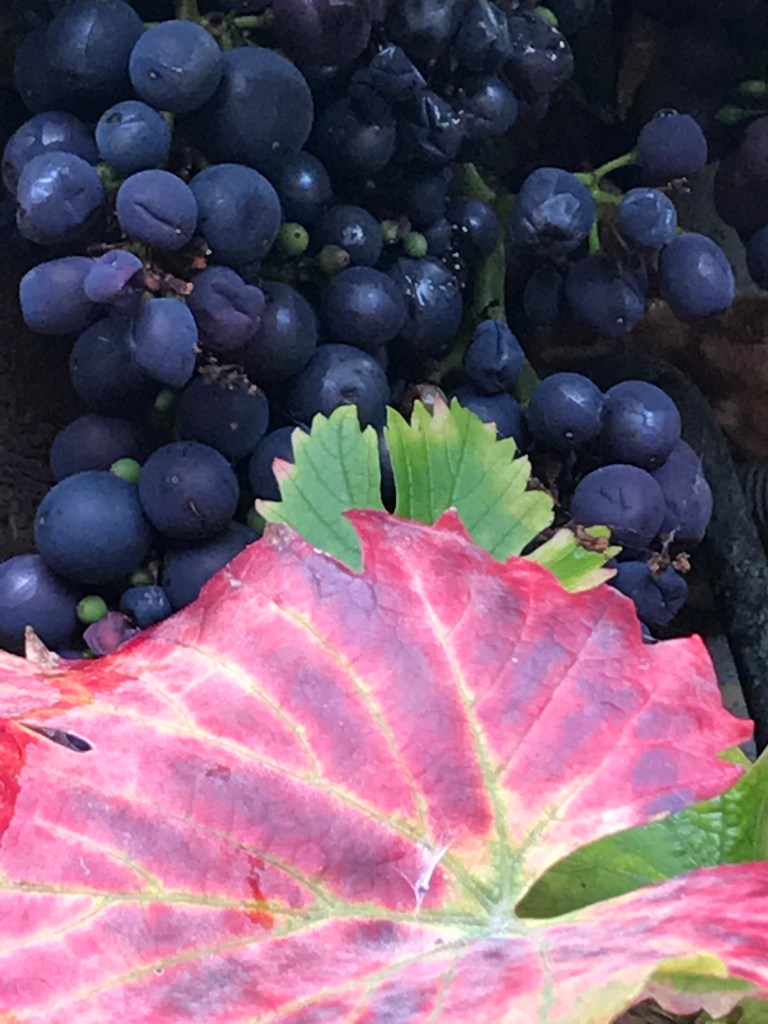
DAY 175 (27 SEPTEMBER) – European grape (Vitis vinifera) (Farnham)

Was so surprised to suddenly see this gorgeous vine in a suburban driveway, that I found myself trespassing to get a better shot. Oops… I love the juxtaposition of the healthy, bursting grapes and the red autumn leaf.

Mixed media

DAY 174 (26 SEPTEMBER) – Fustet (Cotinus coggygria) (Farnham)

I was so taken with this collage of colour and texture that I didn’t realise it was another fustet (or smoke tree) plant (featured recently in this blog). Hadn’t seen the nut-like seeds before. They must be another feature of autumn.

Chilean beauty

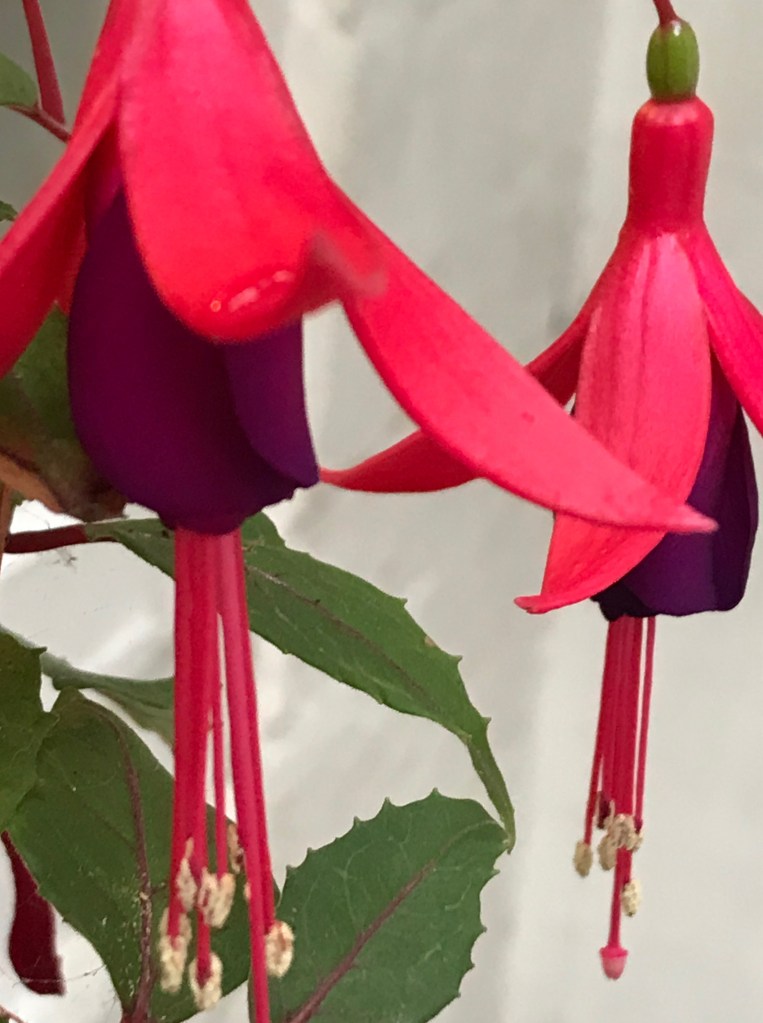
DAY 173 (25 SEPTEMBER) – Fuchsia (Fuchsia magellanica) (Farnham)

Miserable rainy day, so cheered myself up with this quick dash into the courtyard for a snap of the ever-bright fuchsia. I read this kind is called hummingbird fuchsia which is second best to seeing a real hummingbird. It is native to the southern tip of Chile and Argentina – and the Latin name comes from the Magellan Straits that separate mainland Chile from a series of islands.

Swedish-Japanese collaboration

DAY 172 (24 SEPTEMBER) – Red emperor maple (Acer palmatum) (Greater London)

I liked these colours on a small shrub in my mother’s garden today. It turns out to be a red emperor (or Japanese) maple. Apparently Swedish botanist Carl Peter Thunberg (perhaps an ancestor of Greta?) discovered it in Japan in the late 18th century and gave it the name palmatum because of its hand-shaped leaves.

The Japanese name is written irohamomjii in our alphabet. Such a beautiful word.

Green becomes red

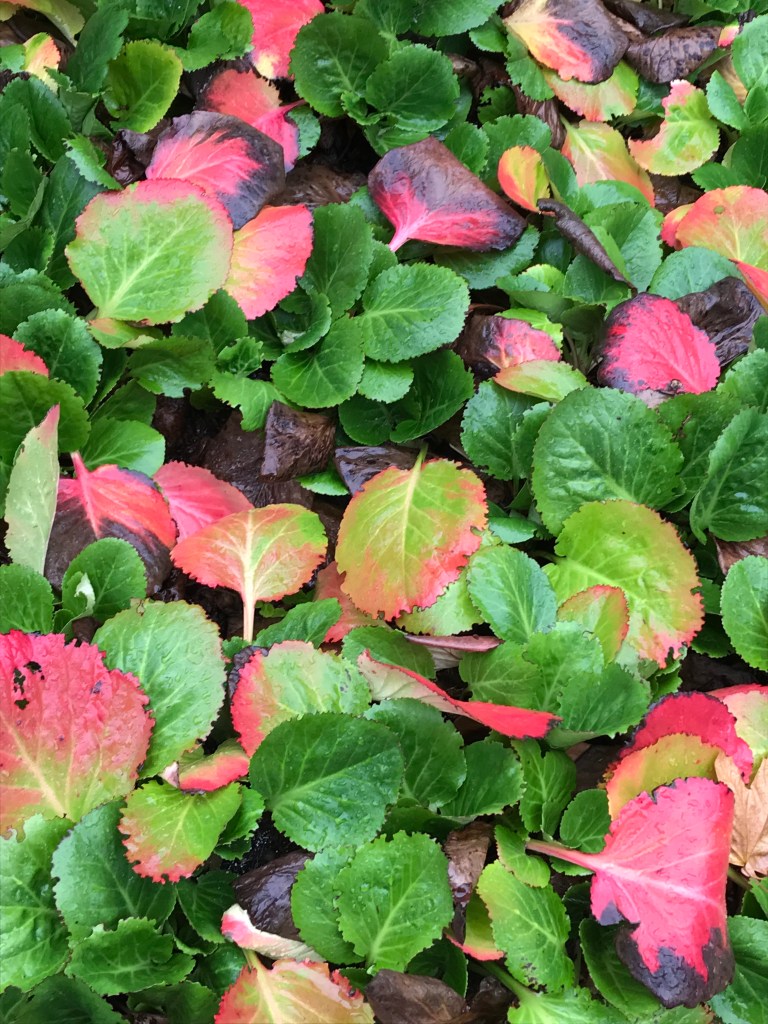
DAY 171 (23 SEPTEMBER) – Siberian tea (Bergenia crassifolia) (Guildford)

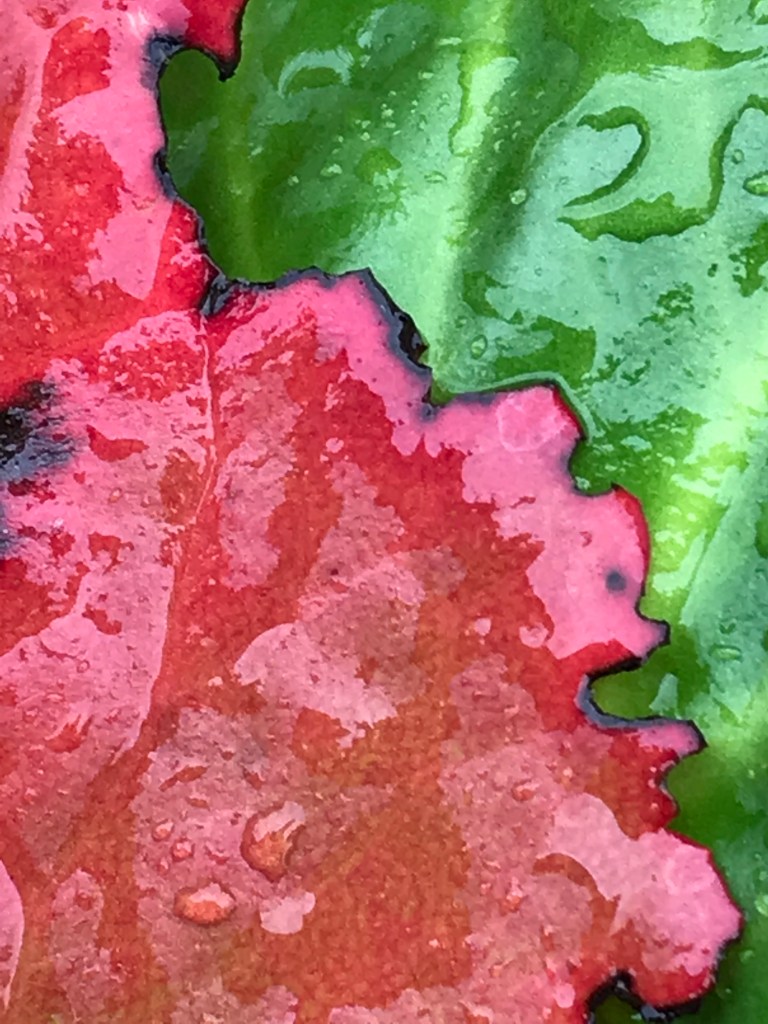
Dashed out in a downpour for this one. The plant is so-called because it’s used as a tea substitiute in Siberia – and also Mongolia. It’s also known as elephant ears, presumably because of the leaf shape.

Love the colour range here, especially how the red appears to be seeping into the green. Here we come autumn!

Courtyard gem

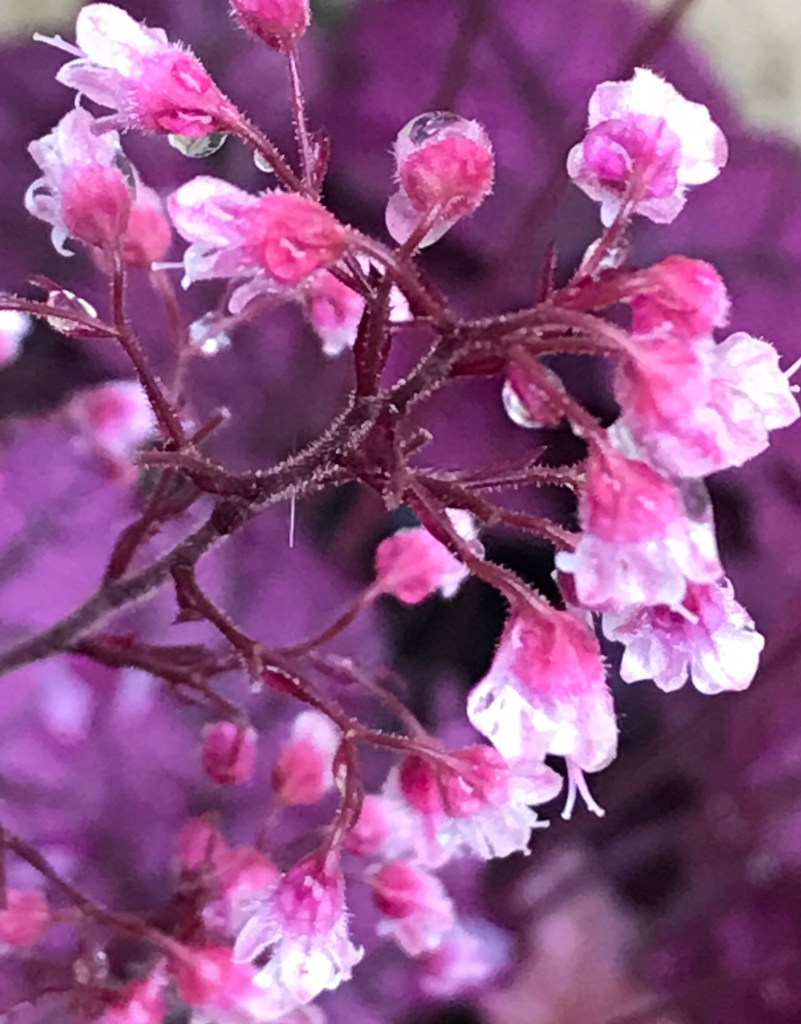
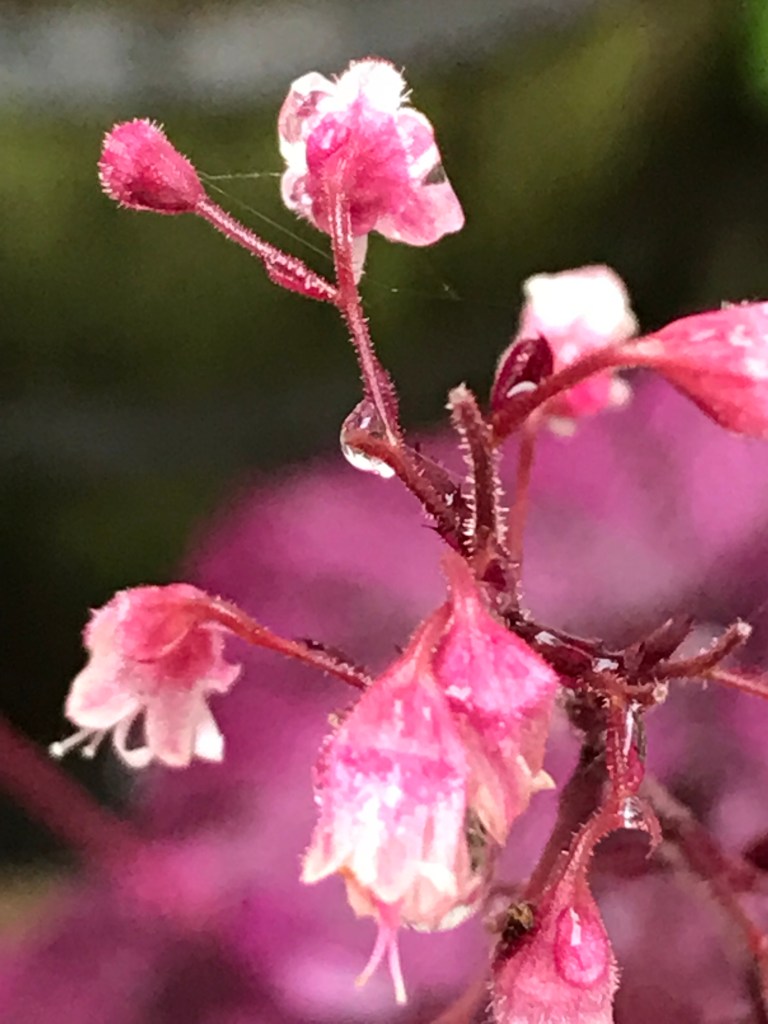
DAY 170 (22 SEPTEMBER) – Coral bells (Heuchera sanguinea) (Farnham, Surrey)

Back home to a gloomy wet day, so resorted to our internal courtyard for a photo opportunity. I learnt this plant is native to New Mexico and Arizona. But in these photos (not in real life) it just reminds me of those bonsai-style ornaments which seem to be called gemstone trees. They are believed, by some, to have healing qualities. I’m not saying anything …

Prom adornment

DAY 169 (21 SEPTEMBER) – Hollyhock (Alcea rosa) (Deal, Kent)

I’d always thought hollyhocks were the preserve of old stone walls and thatched cottages. So these made me stop in my tracks during a morning stroll along the front.

They aren’t featured in my Collins Complete Guide to Coastal Wildlife but they’re obviously thriving on the shingle here and blend beautifully against the grey waters of the Channel.