Je ne sais quoi

DAY 88 (2 JULY) – Large-leaf lime (Tilia platyphyllos) (Farnham)

This evening’s sun was so bright that the silhouette of a branch shows through this lime leaf with amazing precision.

I’ve long admired this lovely avenue of large-leaf limes that runs through our local churchyard. They remind me of those village squares in France where there’s always a war memorial, a fountain and someone sipping a morning cognac. Except here I was accompanied by the sound of a very English bell-ringing practice. Gorgeous all the same.

Sure enough, these trees are native to much of Europe, and locally to south-west Great Britain. Everywhere else calls them large-leaf lindens. But of course we had to have a different name from the ‘Continentals’, didn’t we?

Rhubarb and spaghetti

DAY 87 (1 JULY) – Virginia creeper (Parthenocissus quinquefolia) (Farnham)

On April Fools’ Day 1957 there was a hoax about spaghetti growing on trees. Well, it turns out to be true. Here is a rhubarb-spaghetti tree. Or just what a Virginia creeper looks like very close up. I found this one hugging the wall of a restaurant – and itself.

Today I learnt that ‘parthenocissus‘ is Greek for ‘virgin ivy’. (So the Parthenon means ‘unmarried woman’s apartments‘.) Part of the grape (not ivy) family, it’s native to parts of North America down to Guatemala. Apparently the native Americans used it to cure “difficult urination” and ‘lockjaw”, though hopefully not at the same time.

Paint splash plant

DAY 86 (30 JUNE) – Cornflower (Cyanus montanus) (Lodsworth, W Sussex)

1 July: The site’s back up. It’s a cornflower!

30 June: Disaster! My plant identification site has crashed this evening… So I’m posting these images of an attractive plant I found in my friend’s garden today. I’ll update the post when the site’s back up. Meanwhile I’m still marvelling at the painterly images my iPhone can pick up – even in the shade.

Pollinators unite

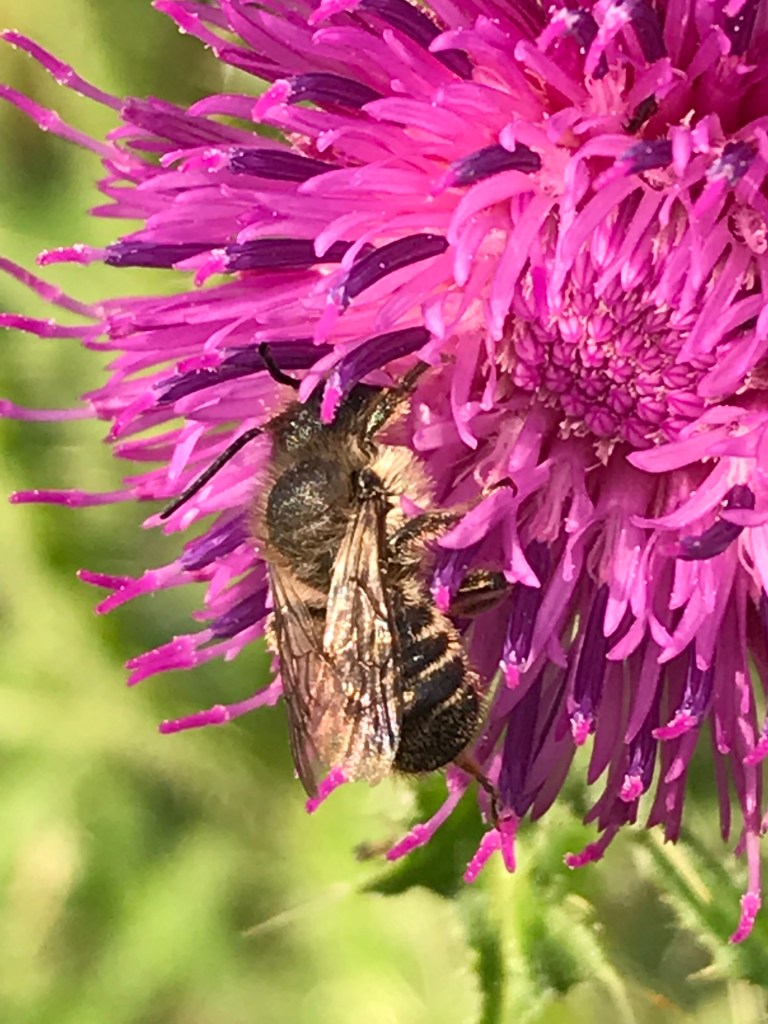
DAY 85 (29 JUNE) – Scottish thistle (Cirsium vulgare) (Farnham)

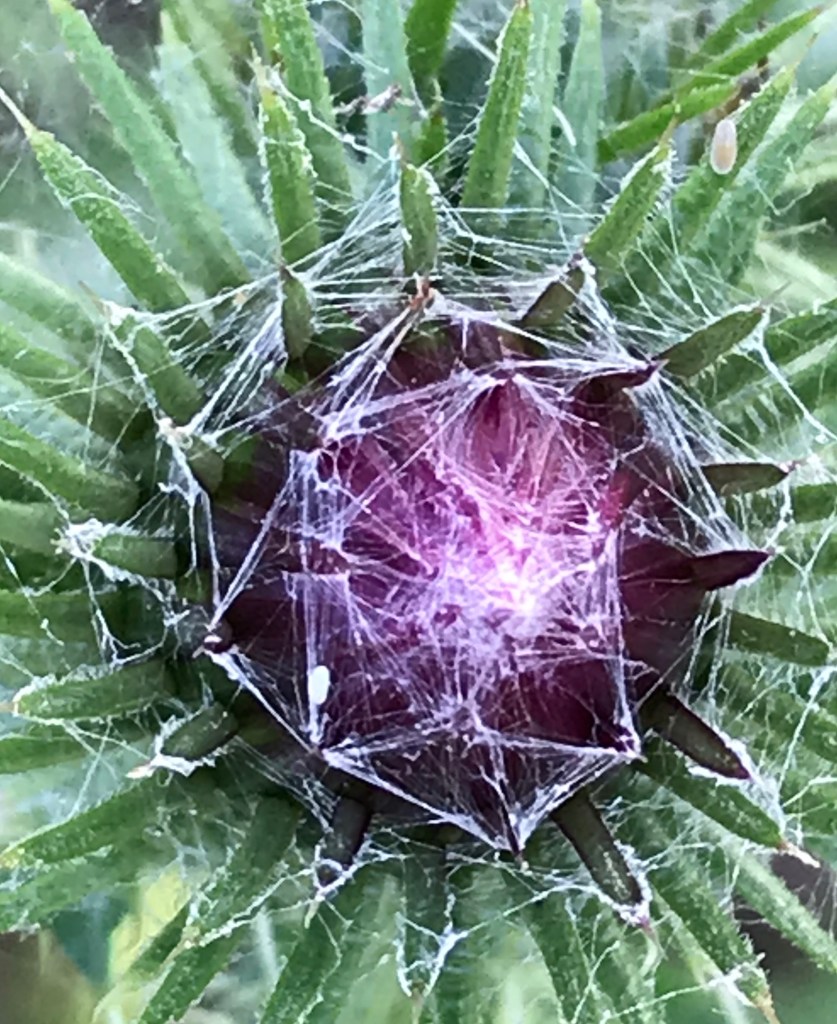
I’m sure I’ll repeat this as the summer progresses: just green, green, green everywhere. Except of course cultivated gardens. So I spotted this pinky-purple today on the end of a Scottish thistle in the water meadows. Love the woven threads across the flower head.

I laughed when I read this about it in Wikipedia “rated top 10 for nectar production in UK Plants survey which is supported by the UK Insect Pollinators Initiative”. I pictured a committee of bees, butterflies and moths sitting around an oval table each holding one leg or wing up in agreement.

Fair tree

DAY 84 (28 JUNE) – Common beech (Fagus sylvatica) (Farnham Park)

Found this beech tree today, part of a row mixed in with oaks in Farnham Park. They’ve been invaded by a fun fair, but I liked the contrast of neon from the ride with the evening sunlight on the leaves.

I read that the beech is the most popular with lovers who want to carve their names on the bark. The silvery smoothness makes it a tempting canvas. The dog or pig head above ‘Maxo’ is intriguing…

Wimbledon celebration

DAY 83 (27 JUNE) – Hortensia (Hydrangea macrophylla) (Farnham)

Wimbledon tennis starts on Monday. So I’m celebrating with a hydrangea, since the causeways of the All England Club are lined with these symbols of English summer. This one’s in the garden, but it always reminds me of the ‘plock’ of tennis balls behind the hedges.

But I hadn’t looked so closely before. Nor noticed that the outer, more showy flowers come out first – surrounding what look like pastel-coloured chickpeas that will later bloom more modestly.

I’ve also learnt that it is native to Japan and most commonly found in Japan, China and Korea. So not so English after all…

America in the wind

DAY 82 (26 JUNE) – Staghorn sumac (Rhus typhina) (Farnham)

Strange to find that this tree clattering crazily in the wind outside our local library is native to North America. Also known as Virginia sumac, it’s most commonly found in south east Canada, the Appalachian Mountains and other parts of eastern North America.

The fruits (which appear later in the year) can be used to make pink lemonade. The leaves and berries mixed with tobacco and other herbs have traditionally been smoked by native American tribes.

Tomb decoration

DAY 81 (25 JUNE) – Herb Robert (Geranium robertianum) (Farnham)

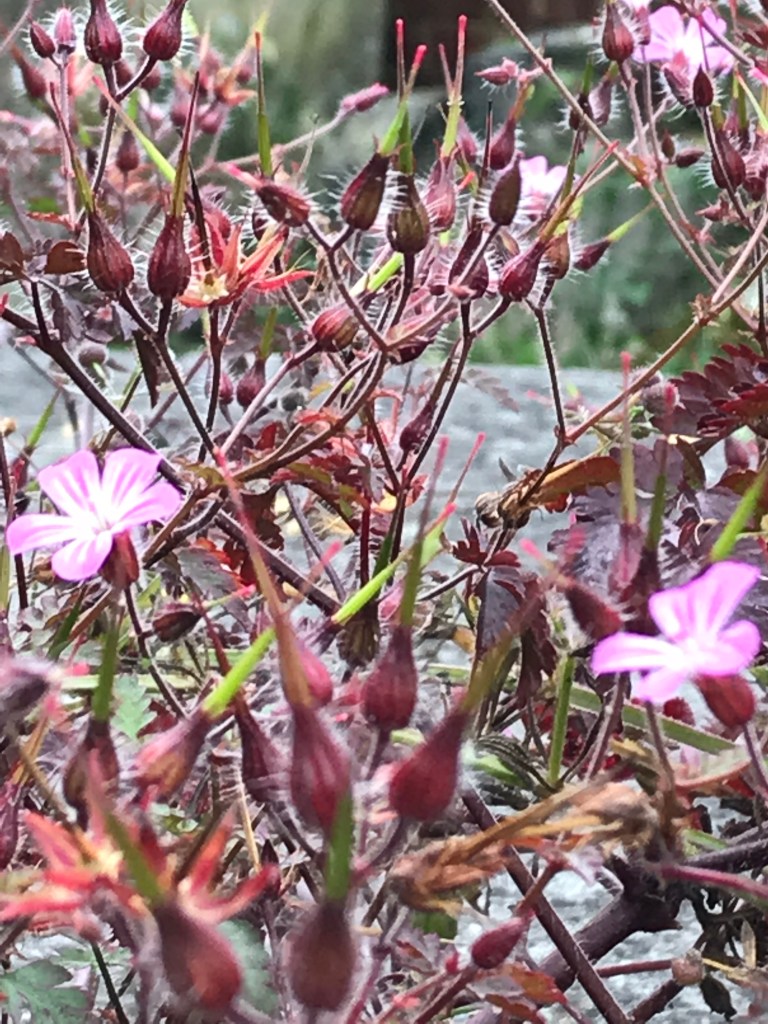
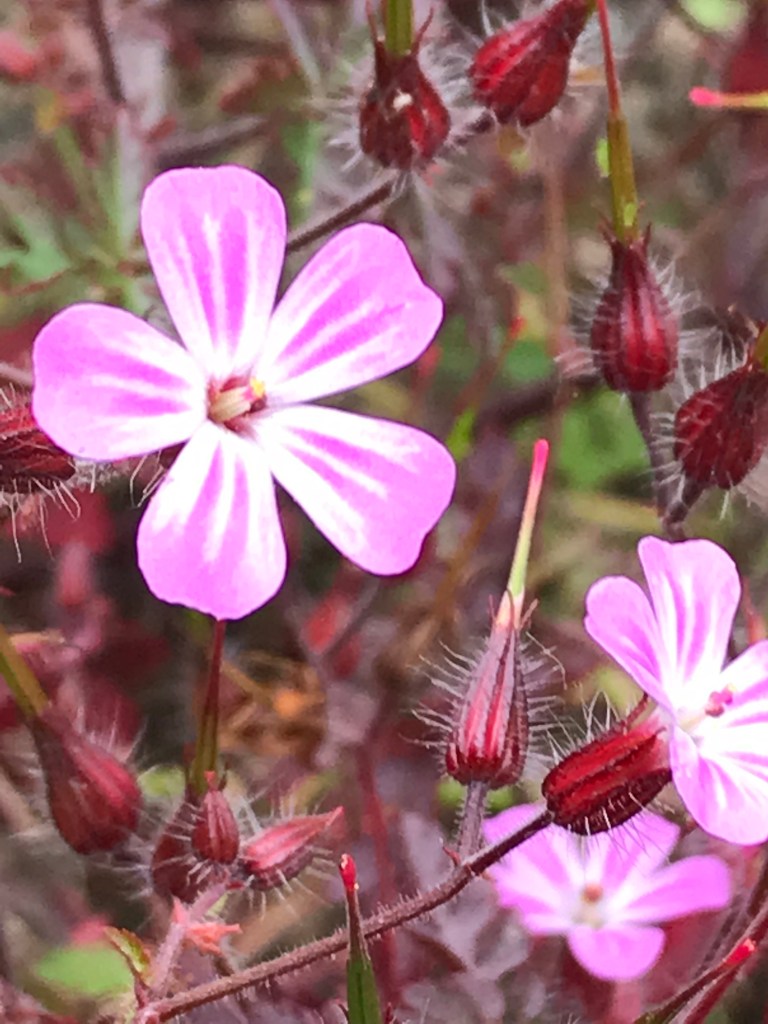
Ahh. Here’s nature again – putting colours together perfectly. Pink flower heads with wine red stalks and buds. Found this wonderfully scruffy herb Robert sprawling over an old, cracked tomb in the local churchyard. It flowers from April right through to the autumn, when the leaves also turn red.

Common all over Britain and Ireland, this lovely wild flower has earned a lot of other names over time: red robin, stinking Bob (its leaves smell musky when crushed), squinter Pip, storksbill and – appropriate for a churchyard – death comes quickly. And even a rhyme:

Little herb Robert, bright and small / peeps from the bank and the old stone wall…

Drain gain

DAY 80 (24 JUNE) – Million bells (Calibrachoa) (Farnham)

This could be the prettiest drain in England. It’s a mystery how these bright flowers arrived and seem to thrive here. They look a bit like petunias but I think petunia petals are more pointed and their leaves not as narrow as these.

So I’m going for calibrachoa, which resembles the petunia but the pictures I found match up better. It’s native to Brazil, Chile and Peru and named after Mexican botanist Antonio de la Cal y Bracho. My favourite thing about calibrachoa is that it attracts hummingbirds.

OK, so more likely to be petunias, but I don’t care…

PS I’ve been doing this blog for as long as it took Phileas Fogg to go round the world. Time I expanded my horizons…

Seductively binding

DAY 79 (23 JUNE) – Field bindweed (Convolvulus arvensis) (Greater London)

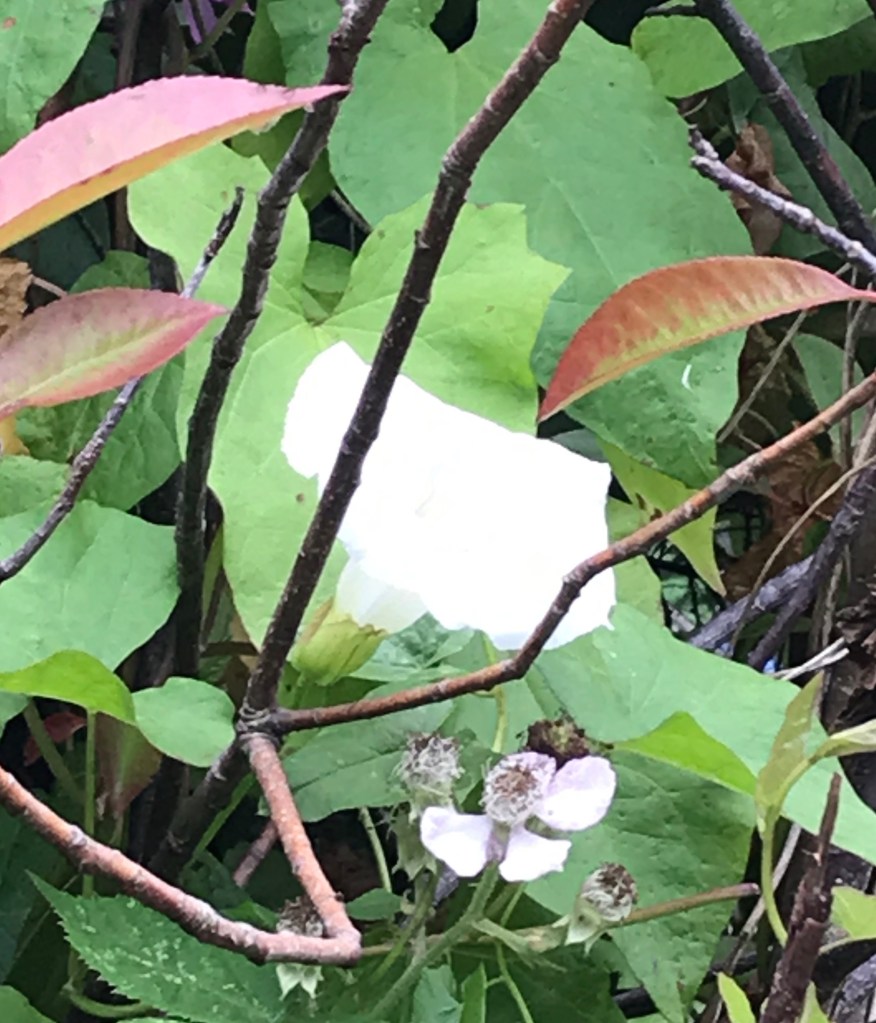
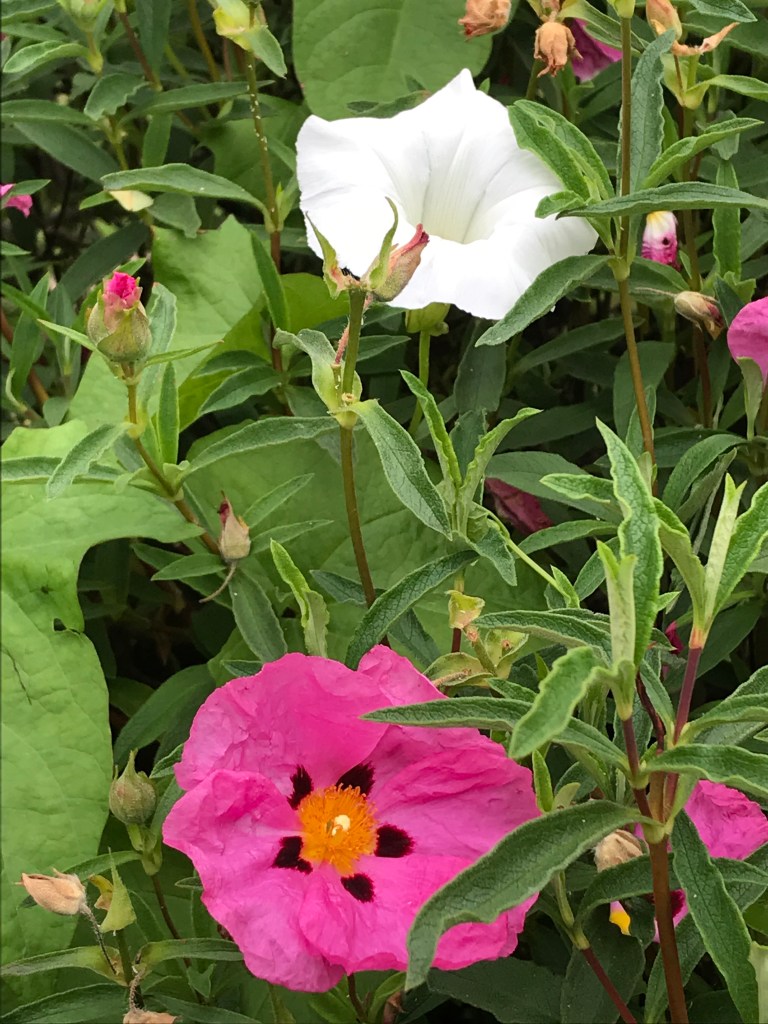
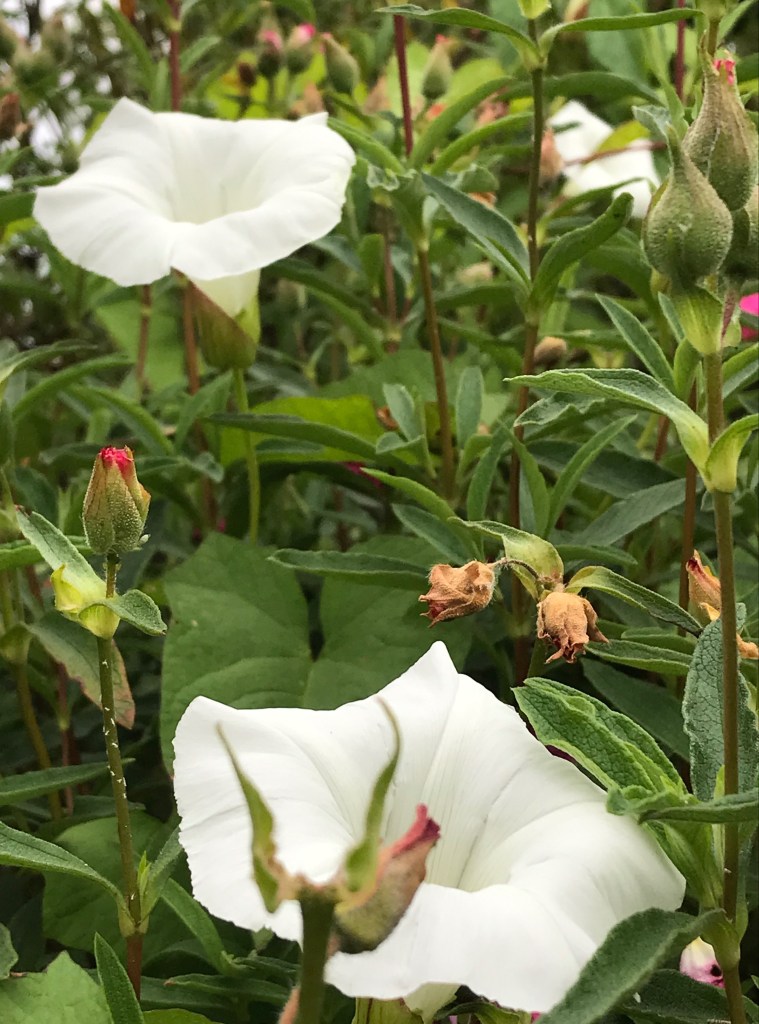
Exploring the tangle at the bottom of my mother’s garden today, I was drawn to the pure whiteness of this convolvulus. How can something so invasive also be so glorious?

I especially like its alternative names: withy wind (my favourite), possession vine and creeping jenny (well I had to include that one).