Emerging beauty

DAY 78 (22 JUNE) – Bear’s breeches (Acanthus mollis) (Farnham)
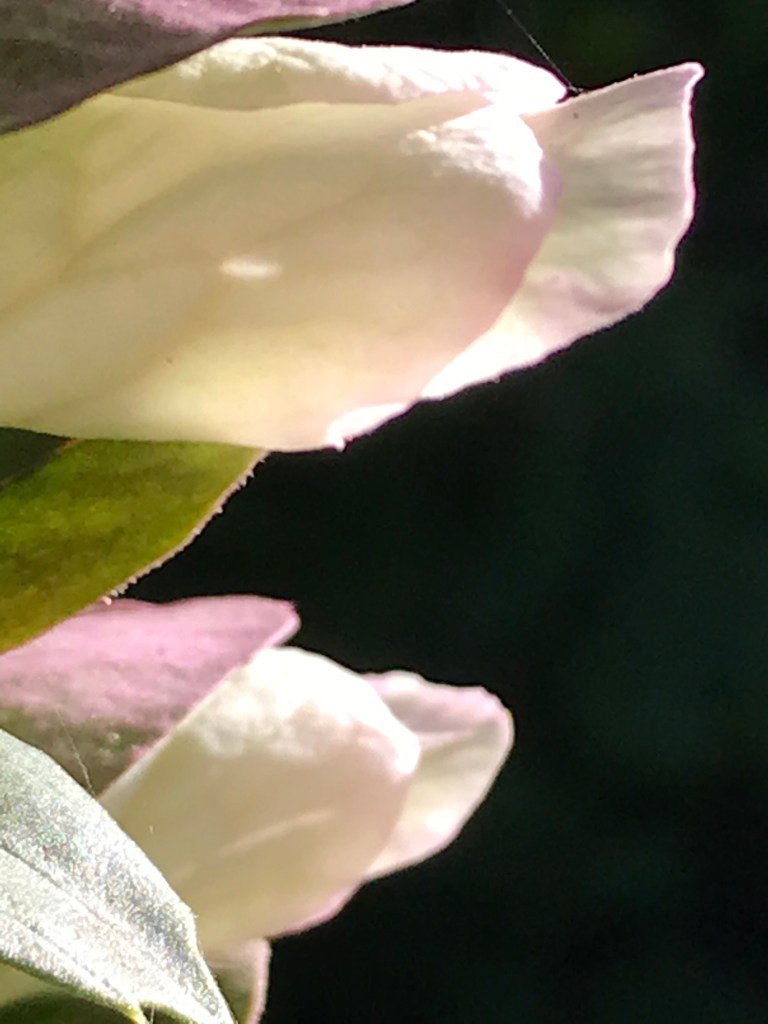
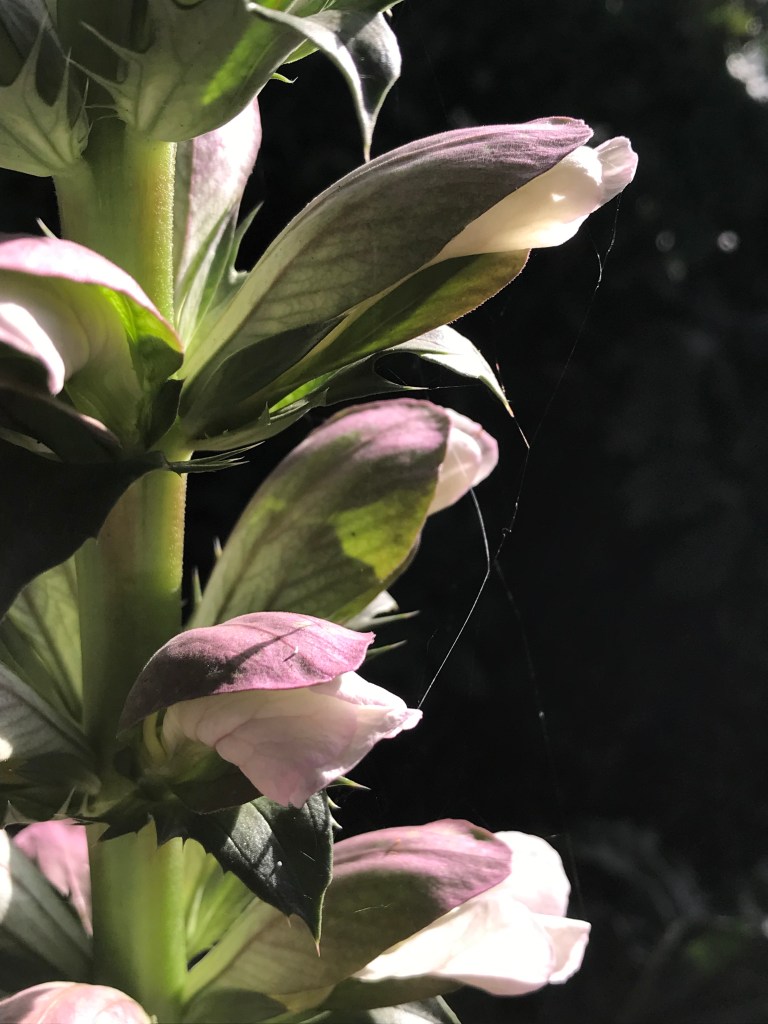
I wonder if these might be at their most beautiful now, just before flowering? Love the subtle creams, mauves and pinks of the scallop-like buds against the chunky green stalk.

Usually flowering in July and August, these bear’s breeches (no idea why so-called) are native to the Mediterranean – but they look happy enough here in Surrey. Apparently they require especially large bees or bumblebees to push their way into the deep folds to find the nectar. So expect some pictures of those if I’m lucky…

These were a challenge to photograph, planted right next to an overflowing litter bin in a public park. So I had to shoot them against the sun to show them off against the black.
Promise of more

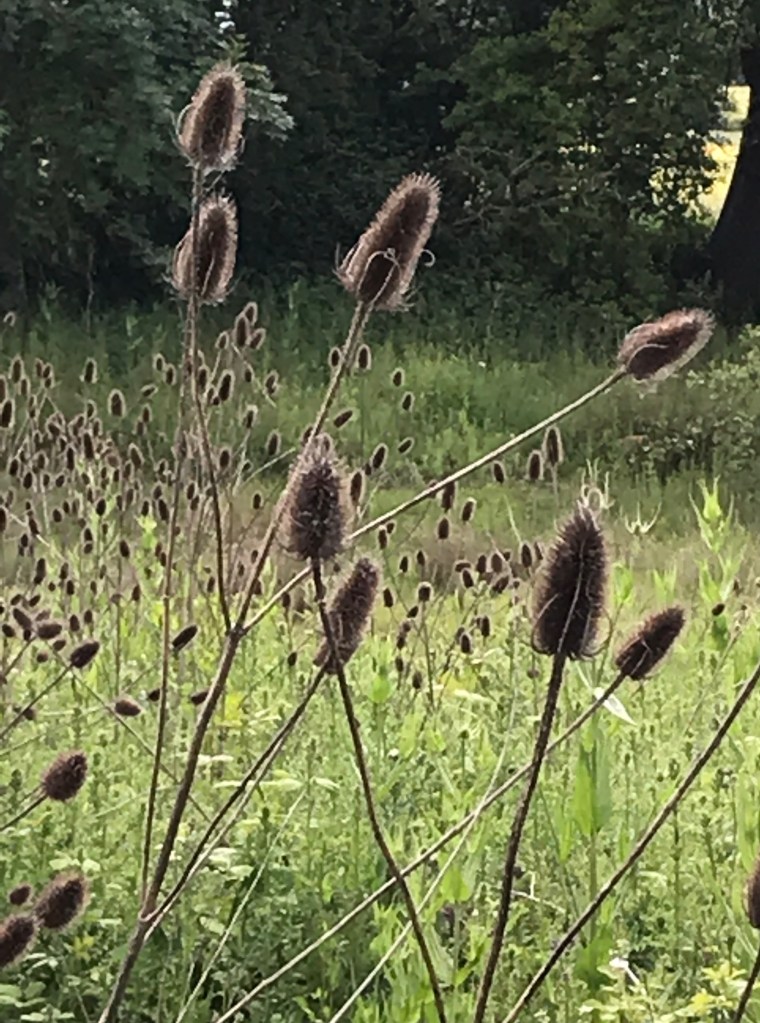
DAY 77 (21 JUNE) – Wild teasel (Dipsacus fullonum) (Lower Froyle, Hants)

I must have seen this growing wild many times, but not registered it. I love the careless way it leans at different angles. Apparently the cones can reach up to more than 8ft.

Wild teasel is native to Eurasia and North Africa – but grown widely elsewhere. It’s supposed to flower from May to July so perhaps these were early. The first flowers (purple, deep pink or lavender) open in a belt around the centre of the cone shape. Then others appear in subsequent rings above or below. Intriguing.

Better still, in autumn the seeds are an important food source for goldfinches. I’ll be back.

Maori eye-catcher

DAY 76 (20 JUNE) – Harakeke (Phormium tenax) (Baron’s Court, London)

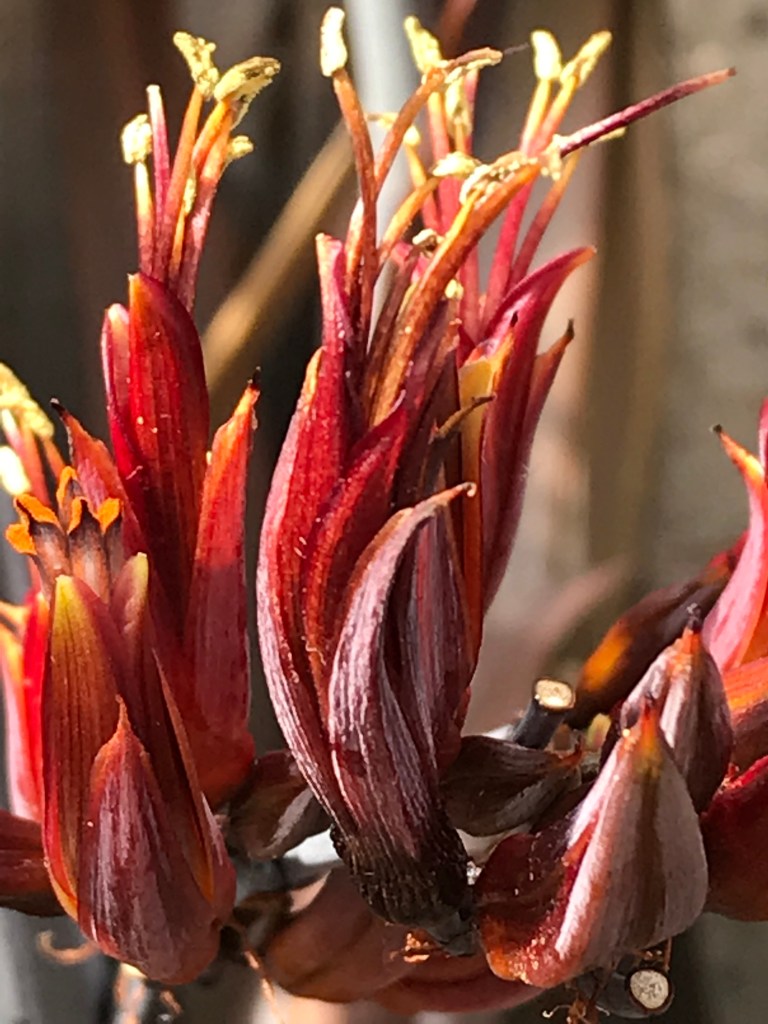
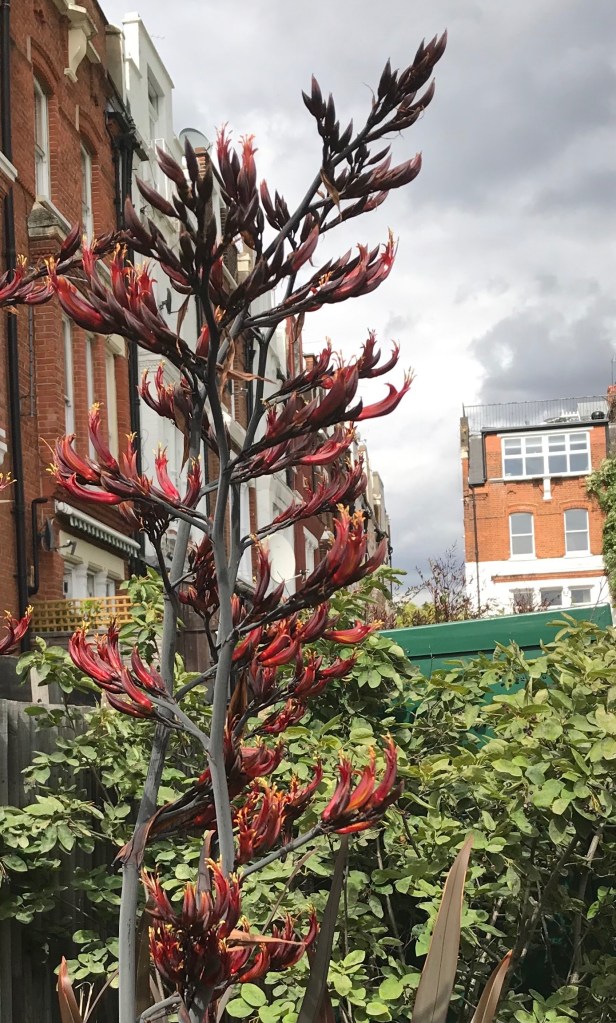
Known as harakeke in Maori, this fiery New Zealand flax lined a walkway at the Queen’s Club tennis championships today. My second Kiwi plant in as many days.

Its flowers reminded me of garlic cloves gone to seed.

Apparently the black-headed jumping spider lives in its rolled up leaves. But perhaps only in New Zealand… none in evidence here.

Head turner

DAY 75 (19 JUNE) – Daisy bush (Brachyglottis greyi) (Guildford)

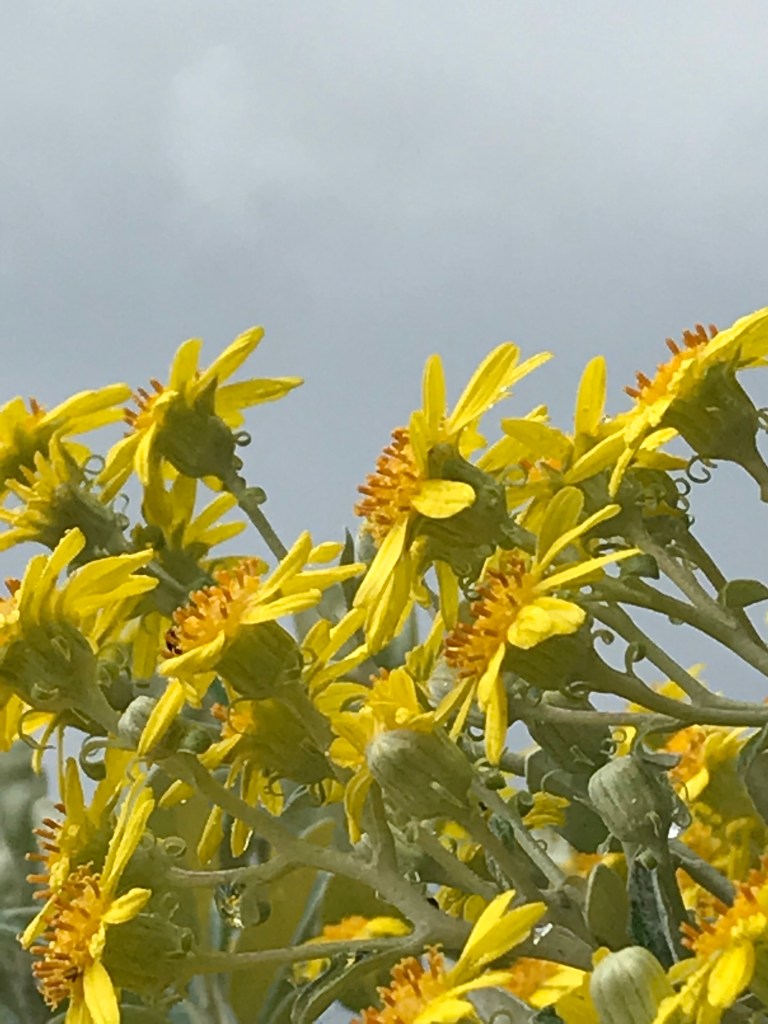
This cheery daisy bush caught my attention in the grounds of the Royal Surrey hospital today. Didn’t think I’d seen one before. Sure enough, it turns out to be native to New Zealand and favours hot sun, poor soil and coastal breezes. So a bit out of its comfort zone here today …

Its name brachyglottis greyi sounds appropriate – both medical and, well, grey – like the weather. Yellow flowers and grey sky do look great together though, don’t they?

What’s in the pot?

DAY 74 (18 JUNE) – Mystery blow-in (Farnham)

There’s what you plan and what you don’t. Weeds – the plants you don’t buy at the garden centre – are like the birds of horticulture. They are anywhere and everywhere, landing where they choose.

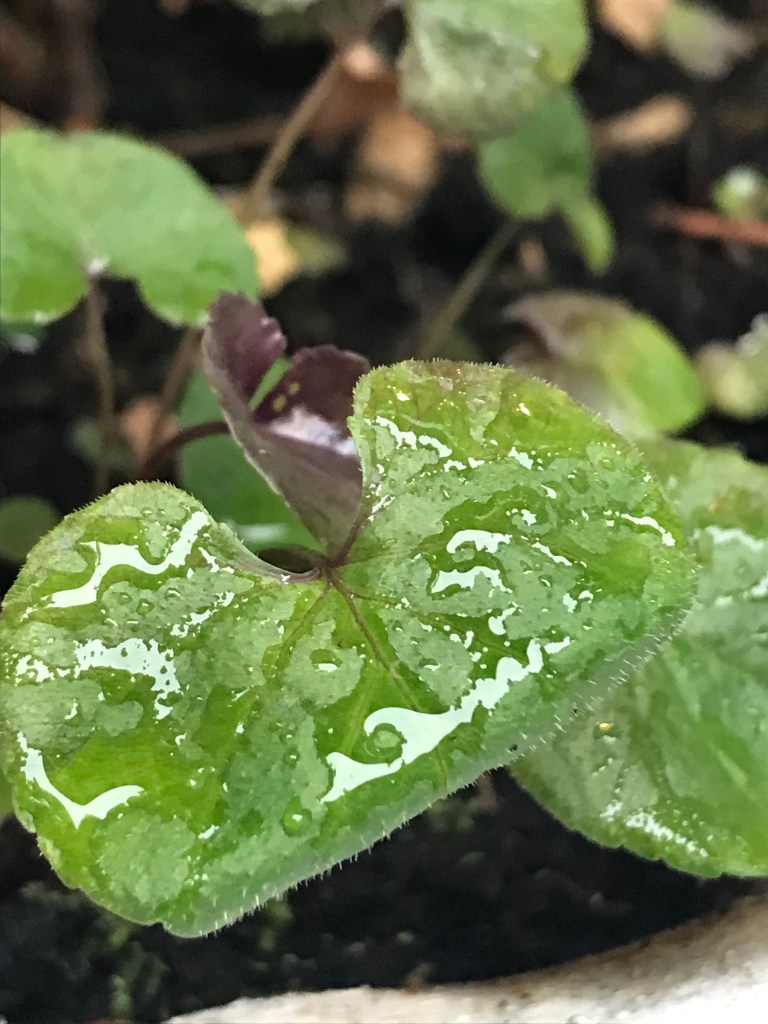
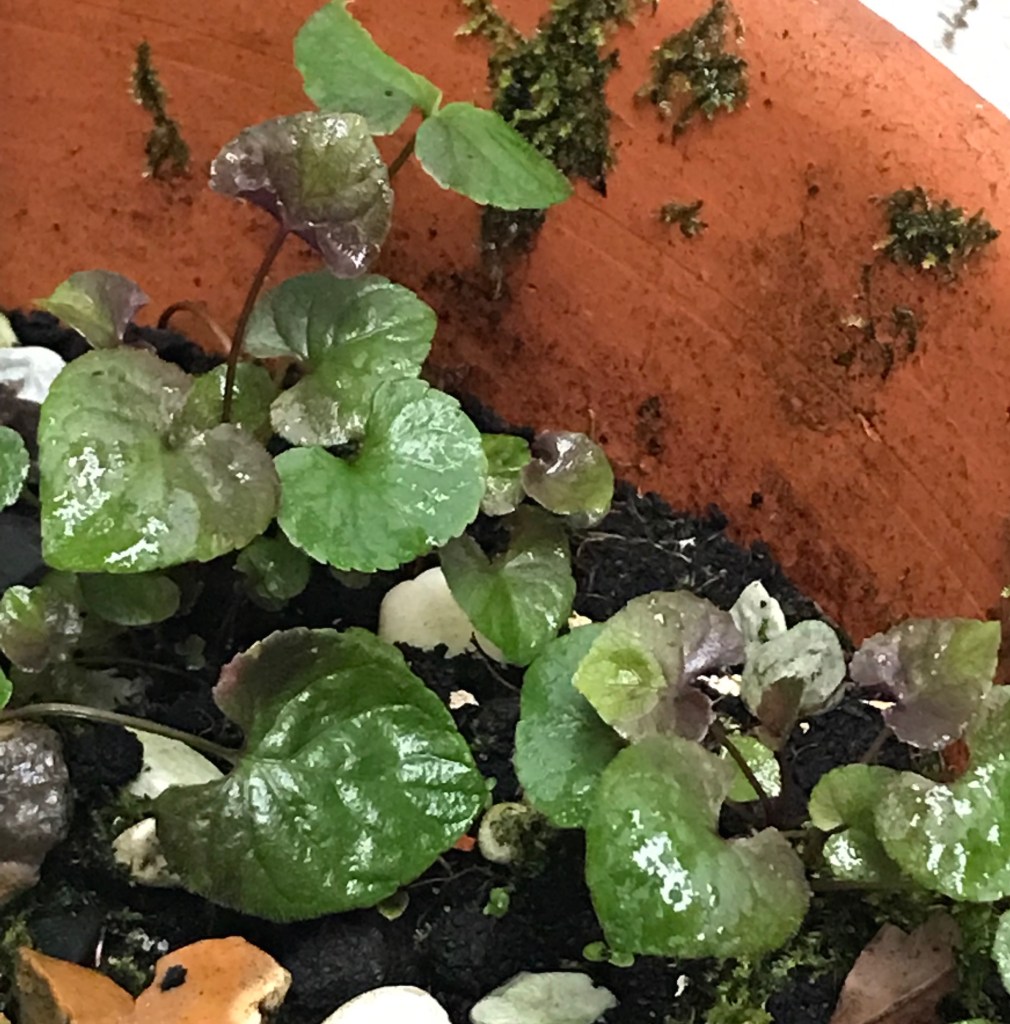
Today was another one of relentless rain, making me look closer to home. These plants are everywhere in our internal courtyard. In with the clematis and in with the fuschia. But I have no idea what they are. Their heart-shaped leaves are a bit like a viola, but their colour is a bit like cyclamen.

And I’ve no intention of moving them anywhere – they go with everything. I suppose there are those who like weeds and those who like marigolds. I’m one of the former.

A weed with attitude

DAY 73 (17 JUNE) – Hogweed (Heracleum sphondylium) (St Swithin’s Way, Hants)

Saw this weird-looking plant while walking St Swithin’s Way today. What you notice is how tall it is on a fiercely prickly stem, against the jumble of other weeds and nettles. They can reach over 6ft.

Then on top is a work of art. This one reminded me of a bird perched on a branch. Each ends with a flourish of tiny leaves. Some were just coming into flower – June is when they start – with a mass (or mess) of pink buds.

The name hogweed refers to its pig-like smell – but I didn’t notice…

Other odd facts: 1) Borscht derives from an ancient soup originally cooked from its pickled stems, leaves and flowers. 2) In Romania it’s used as a aphrodisiac… weirder and weirder.

In a fairy bell I lie…

DAY 72 (16 JUNE) – Fairy bells (Campanula persicifolia) (Guildford, England)

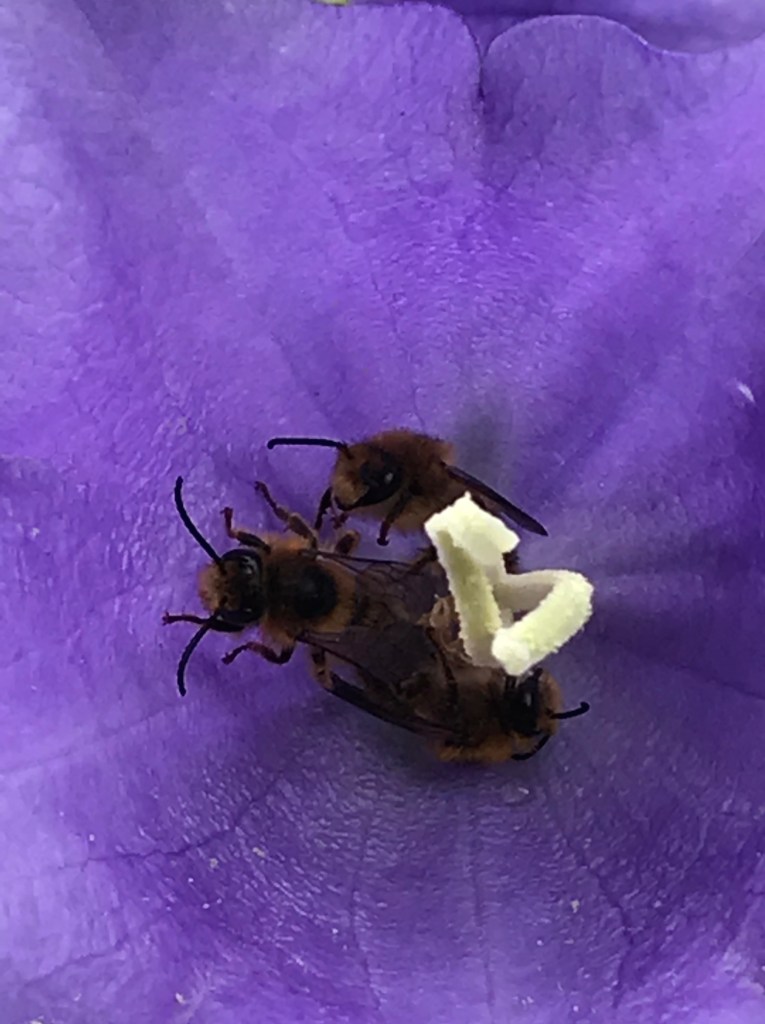
Found these gorgeous fairy bellflowers set against a background of lavender in the grounds of Guildford Castle this afternoon. Many of the bells were sheltering huddles of bees (miner bees I think) – like these three which seemed to be having a siesta against the pipe-cleaner white stamens.

These flowers are common in the Alps and other mountain ranges of Europe. That would beat a Surrey hillock…

New Jersey gift

DAY 71 (15 JUNE) – Bald cypress (Taxodium distichum) (Farnham, England)

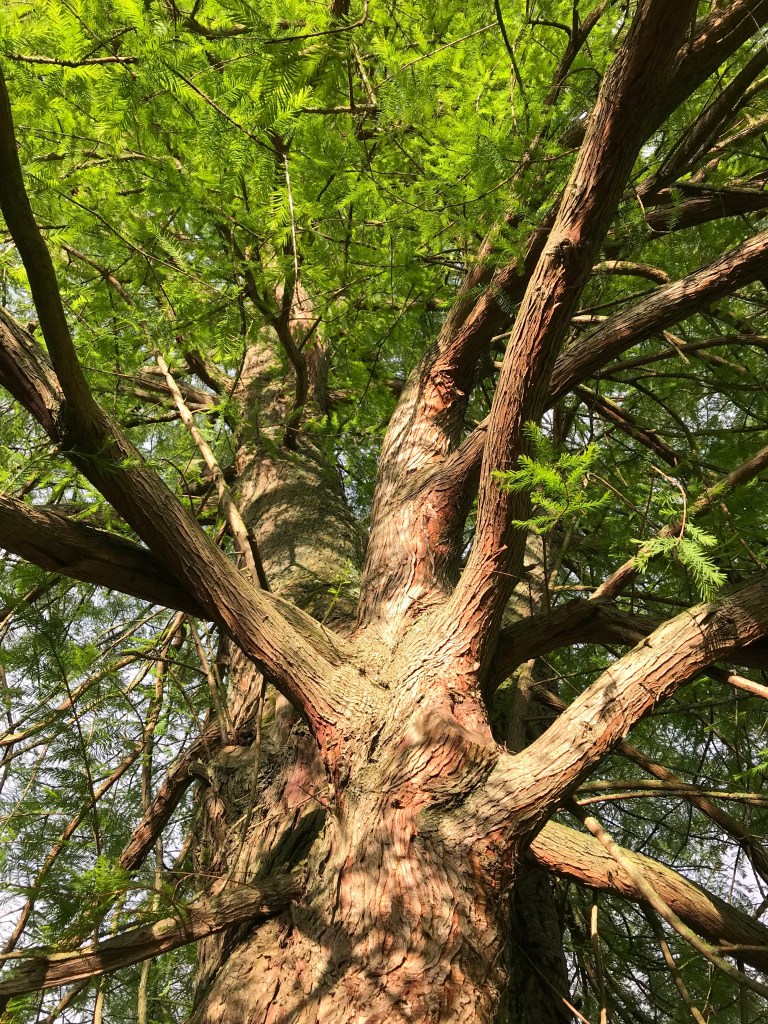
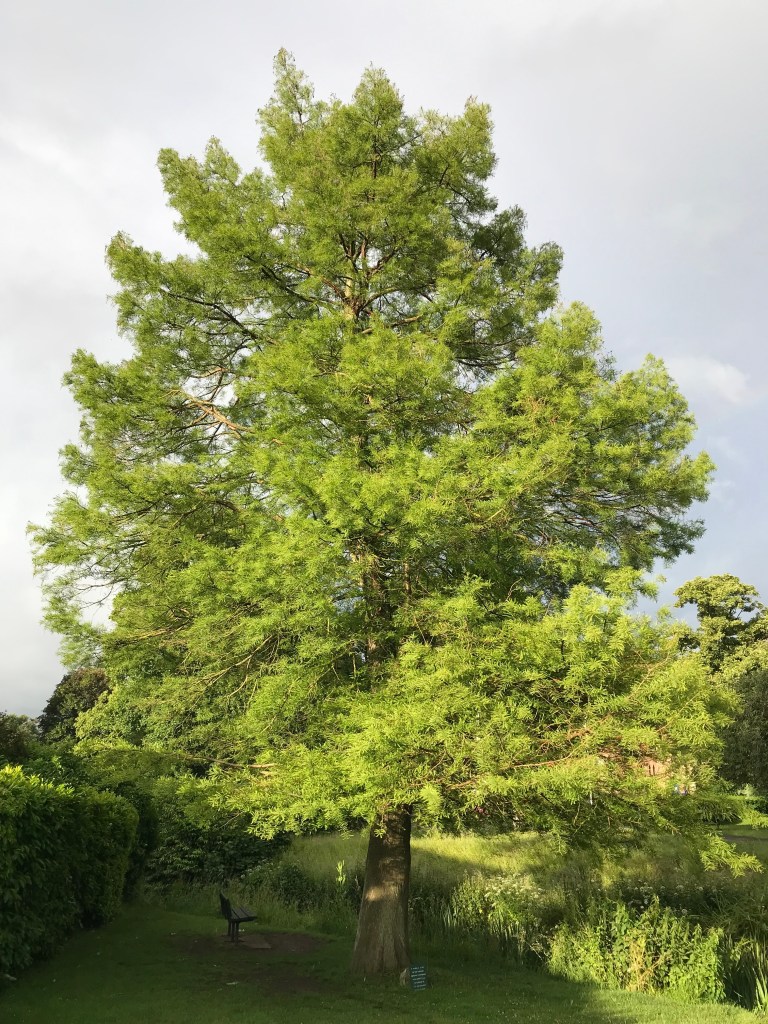
Found this interesting tree on the banks of the river Wey just as the sun peeped out between showers. Its pleasing shape caught my eye first. Then its wispy coniferous leaves and colourful bark.

A plaque at the bottom declares it was a gift from American visitors from New Jersey in honour of the Queen’s Jubilee in 1977. And sure enough, it’s a bald cypress – apparently iconic for residents of the south-eastern US. My research says the genus taxodium was widespread in both America and Europe pre-Ice Age (presumably someone knows that…), but later became extinct in Europe. So how nice that we have a rare example right here.

Floodlit magic

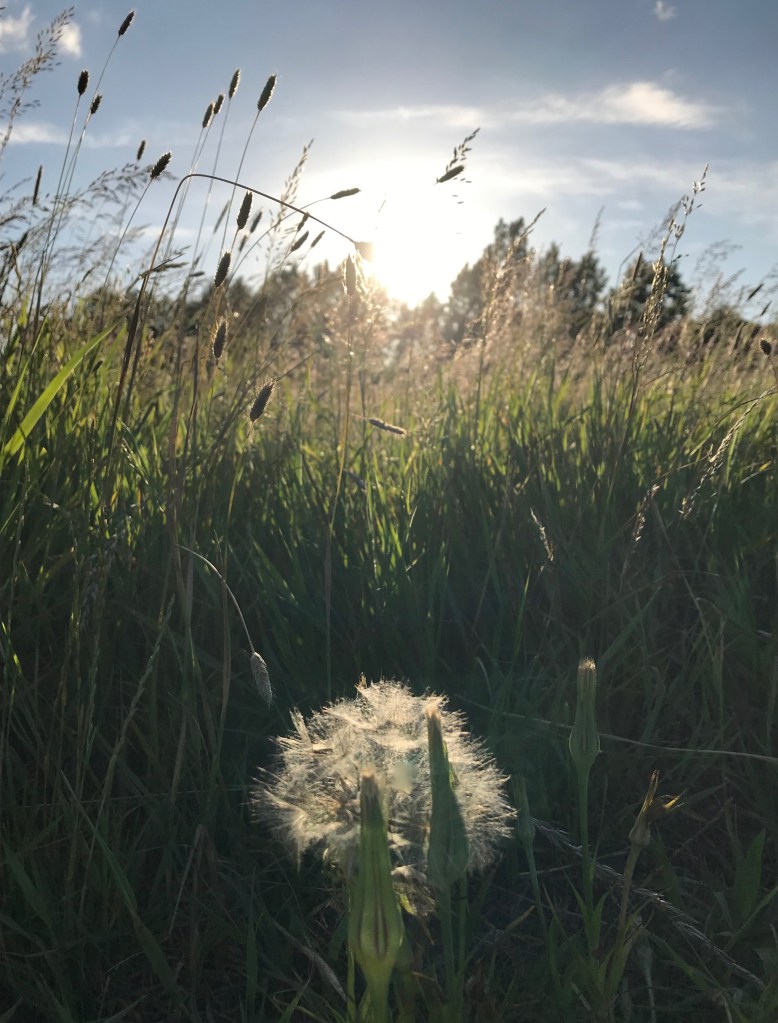
DAY 70 (14 JUNE) – Dandelion (Taraxacum officinale) (Farnham, England)

Couldn’t resist this dandelion parachute ball caught in the sun’s rays this evening. It was like a floodlit arena at dusk in the shadowy grasses. They’re so much more beautiful than the flowers that precede them.

Once the ball has become a perfect sphere, the mature seeds attach to white fluffy ‘parachutes’ (as here) which easily detach and glide away in the wind. Caught it just in time…

The real thing

DAY 69 (13 JUNE) – Shirley poppy (Papaver rhoeas) (Farnham, England)

If I had a proper sense of timing, I would have spotted this during the recent D-Day anniversary celebrations. A lone poppy against a wall. It certainly beats its mass-produced November paper imitations.

I imagined how an insect would see it landing from above, so long was its stalk and so vertiginous the drop for a small creature.

It was breezy today (and of course wet), making the poppy fold over on itself. It was like a dazzling butterfly waiting to open its wings. And its neighbouring bud resembled a modern street lamp designed to look old.

I love the French for poppy: coquelicot – which turns out to be a colour too. On the CMYK scale, it’s 78 parts magenta, 100 parts yellow. So now you know.