Down but not out

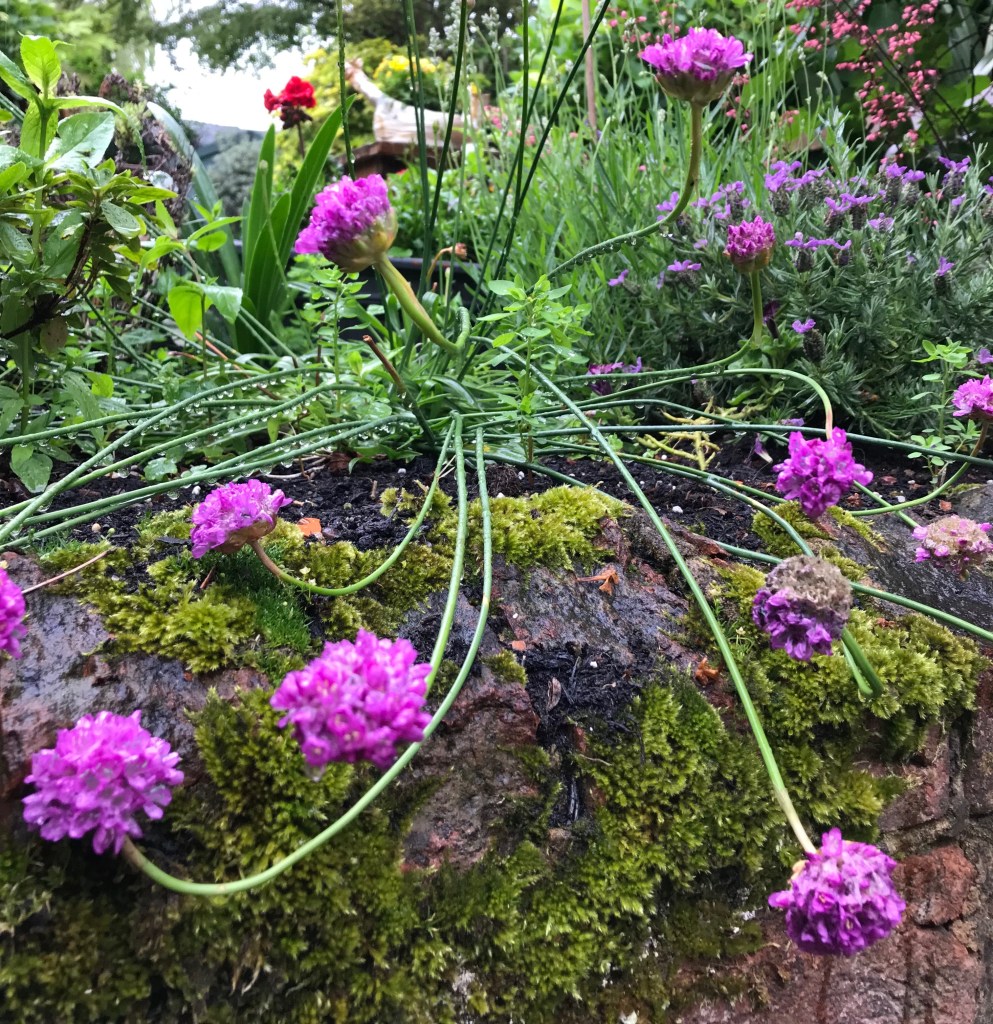
DAY 68 (12 JUNE) – Marsh daisy (Armeria maritima) (Farnham, England)

Another day when I had to rush out and in again to protect my camera from the relentless rain. This appropriately-named marsh daisy is supposed to stand on proud tall stems – but it couldn’t hold strong against today’s tsunami. Still looks gorgeous against the soaked moss on the old wall.

Unloved and ugly

DAY 67 (11 JUNE) – Leyland cypress (Cupressus leylandii) (Farnham, England)

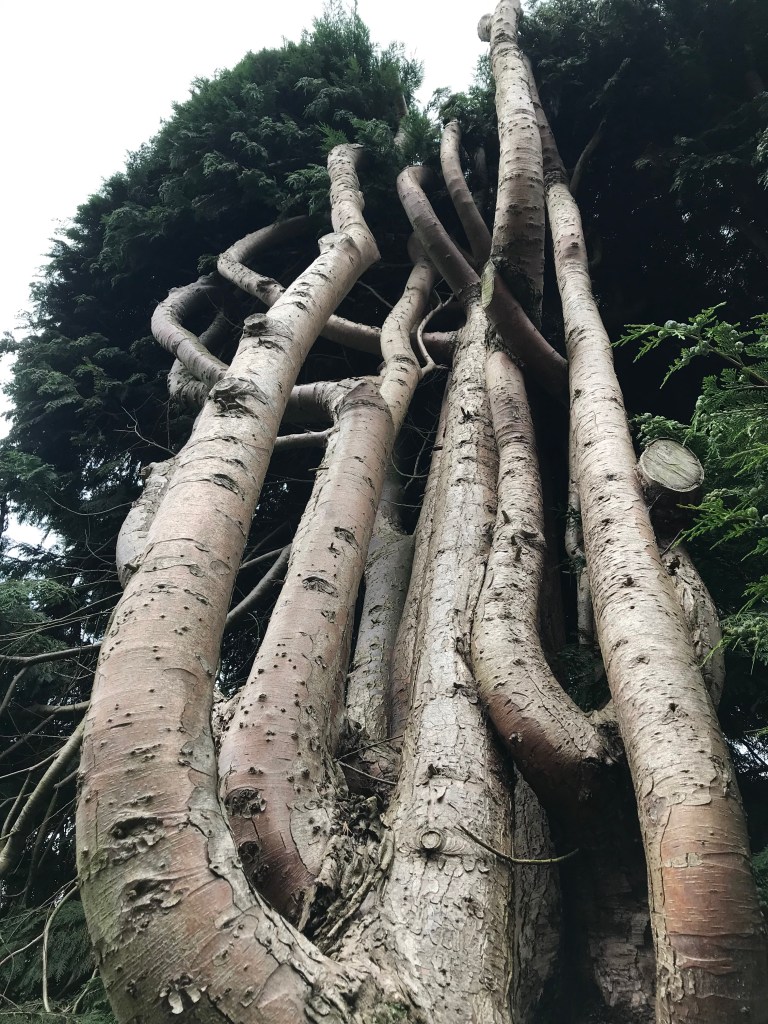
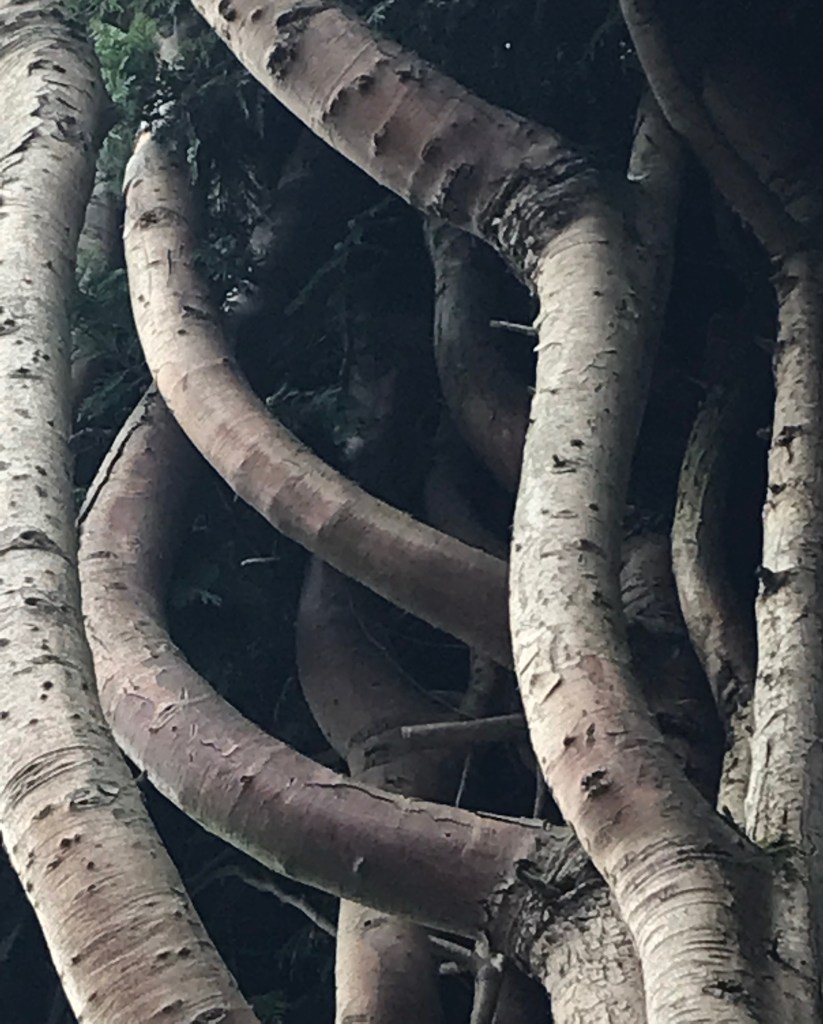
I passed this extraordinary sight today on a walk. It looks too exotic for rural Surrey. And the multiple trunks reaching up to the sky reminded me of giant organ pipes.

Turns out it’s no less than a Leyland cypress that’s been severely cropped on one side. I wonder why? Perhaps to resolve one of the disputes they are so renowned for causing.

Rather confusingly Leylandii – as they are most commonly known – were ‘produced’ in Wales, crossing two kinds of cypress trees – the Nootka (from Alaska) and the Monterey (from the central coast of California). But no idea why ‘Leyland’, which to me was a car plant.

The beauty of youth

DAY 66 (10 JUNE) – Chinese holly (Osmanthus heterophyllus) (Farnham, England)

A wintry plant for a wintry day of solid rain. I nipped out quickly to take this Chinese holly in the garden. What interested me is how much more attractive the new leaves are than the old ones. Paler, in a blend of almost autumnal colours. And, although they’re pretending to have spikes, these are still soft and harmless. The older leaves – dark green in the background here – are stiffer, waxy and unpleasantly prickly. Perhaps a bit like us…?

What makes it Chinese by the way is that the leaves are ‘opposite’ on the stem, rather than ‘alternate’ like English holly.

Sunny house

DAY 65 (9 JUNE) – Bumblebee (Bombus) (Farnham, England)

Where the bee sucks, there suck I … (Ariel’s song from The Tempest)

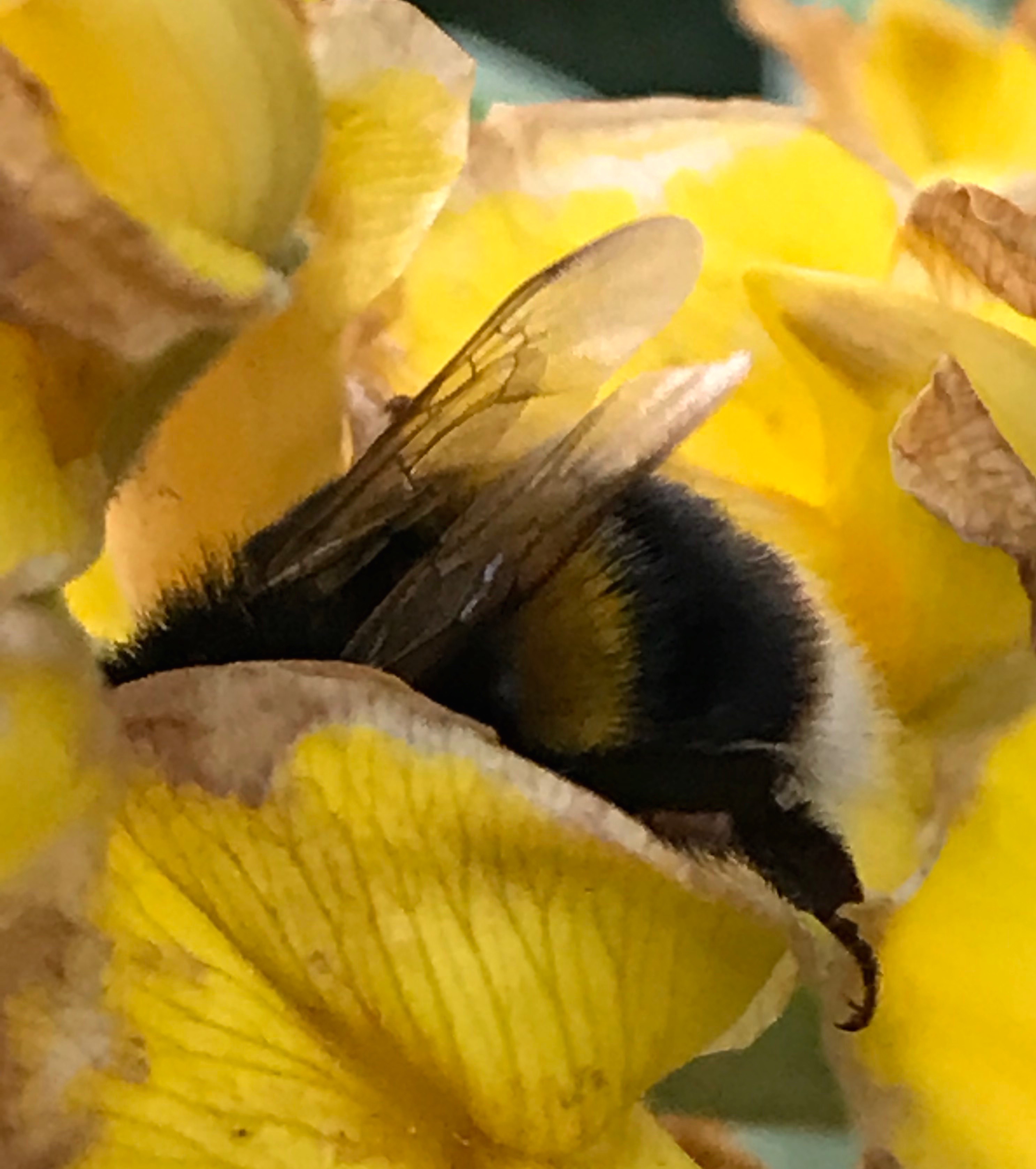
Inside this bright yellow flower really was the only place to be on a very dull, damp Surrey evening. This bumblebee couldn’t get in fast enough, only to see the world through a much brighter lens.

The plant was harder to identify – the lupin-style flowers were like upright versions of a laburnum, but also like a Christmas candle tree – though these are native to the Neo-Tropics, so it seems unlikely. Mr Bombus didn’t care…

Kaleidoscope

DAY 64 (8 JUNE) – Copper beech (Fagis sylvatica purpurea) (Farnham Park)

I stood under this copper beech today waiting for the sun. It came out from behind a cloud and, as it shone on the leaves, the wind began to blow. The leaves showed their many colours. Green. Copper. Purple. Blue. They showed their veins, their edges, their undersides and their perfect imperfections. The trunk and branches glowed silver. They glowed grey and blue. And nature gave me ever changing paintings. How had I never seen this before?

Approaching summer

DAY 63 (7 JUNE) – Dog rose (Rosa canina) (Farnham, England)

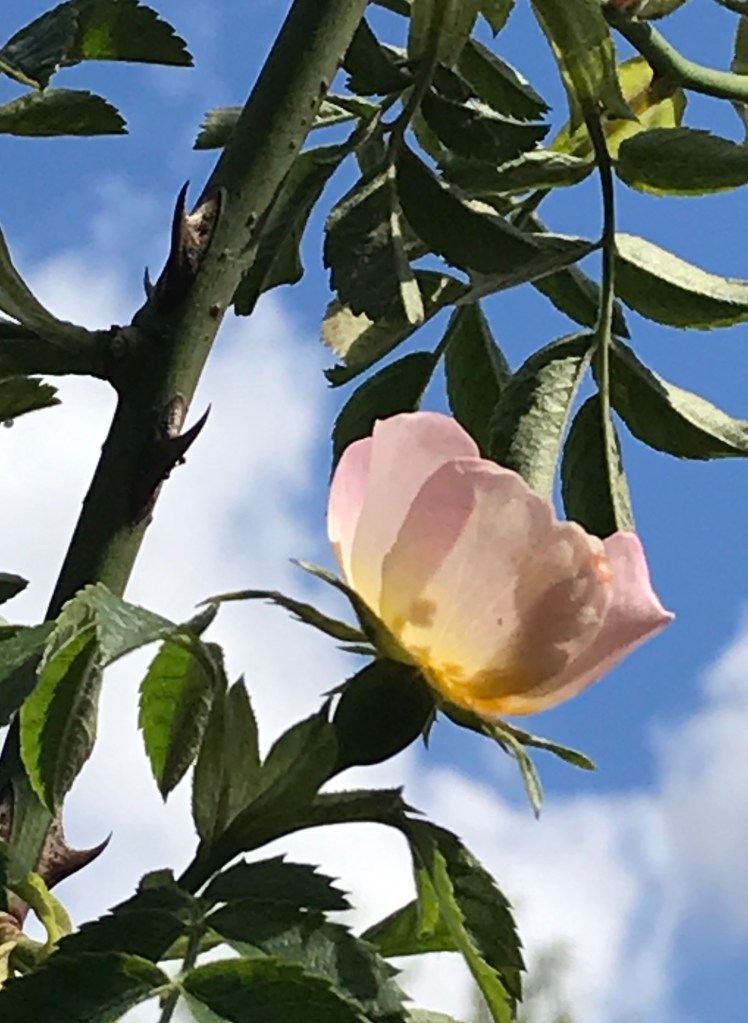
“One of the most beautiful signs of approaching summer” is how the Woodland Trust website describes the dog rose.

I found this tree on the edge of the water meadows during the hour it stopped raining today. I love the way the short-lived sunlight caught these delicate petals. Most of the flowers were white, which made the pale pink ones even more special.

Castle nectar

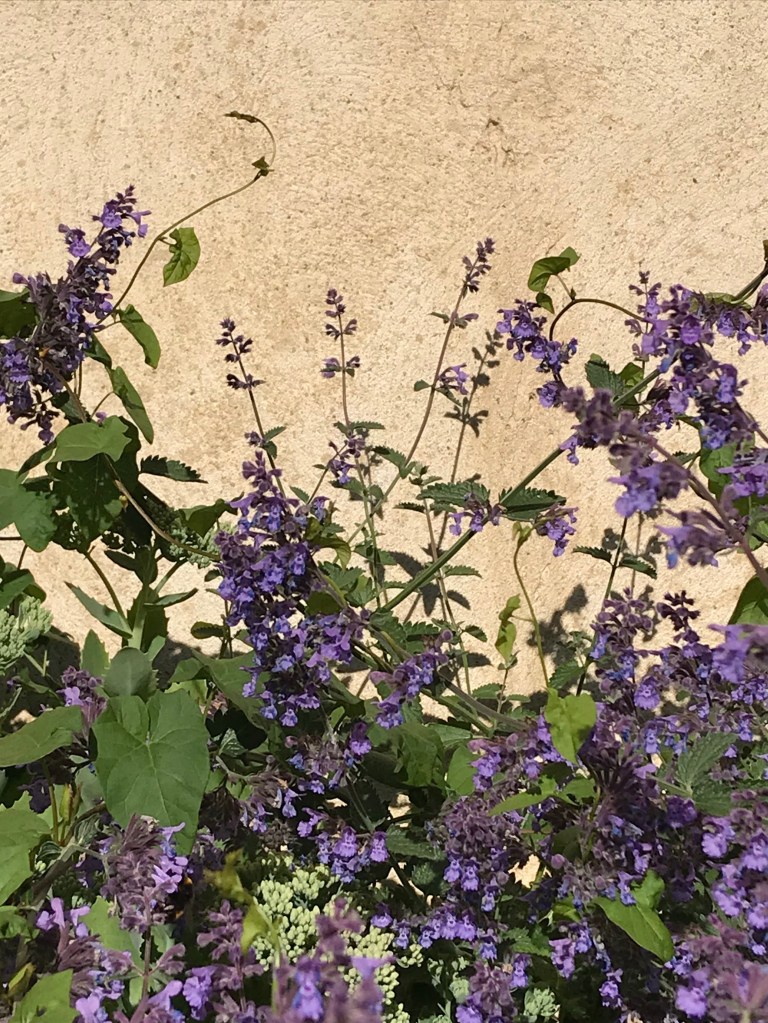
DAY 62 (6 JUNE) – Meadow clary (Salvia pratensis) (Farnham Castle, England)

What first caught my eye at Farnham Castle today was the natural beauty of these wildflowers against the castle walls – which look like sandstone…

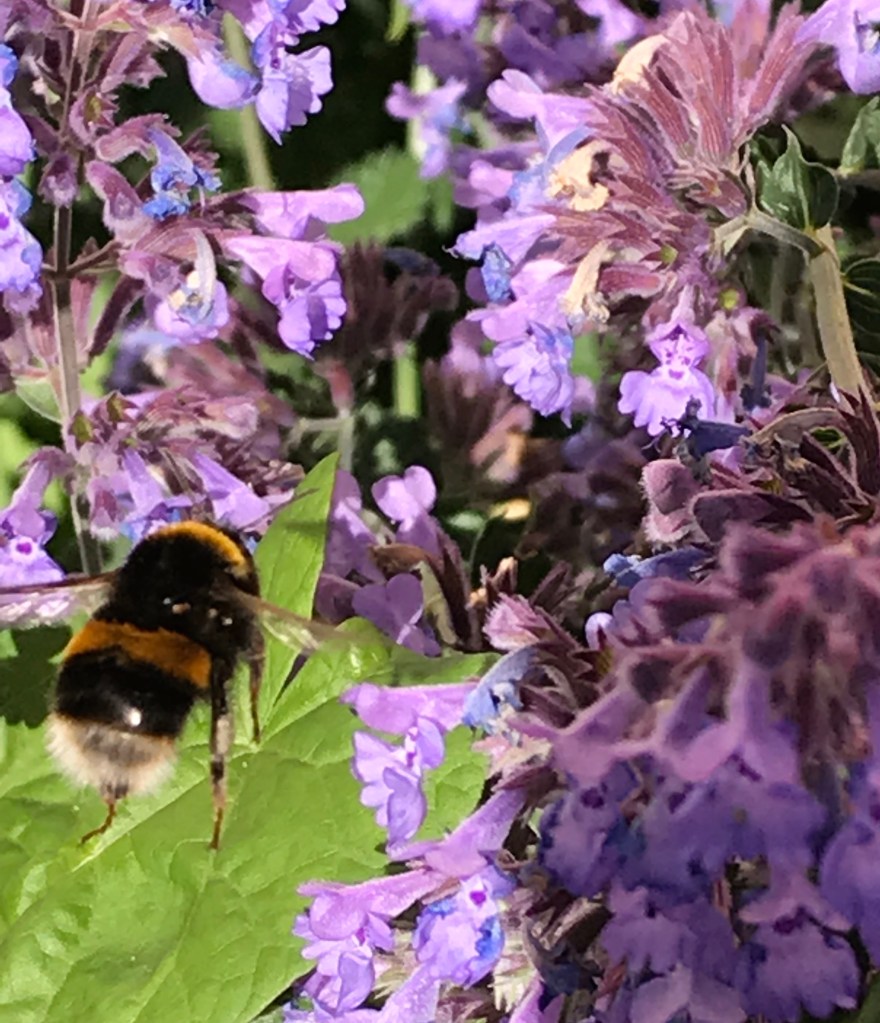
… and then I saw the bees – everywhere. According to the Bee Happy Plants website, meadow clary is a real bee favourite, but especially among long-tongued bumblebees – presumably because they have to reach far down the flower heads to find the nectar.

This native perennial wildflower usually grows in chalk and limestone areas, in grassland, woodland borders or ‘rough places’. Sadly, though, it is classified as ‘Near Threatened’.

Eight fingers

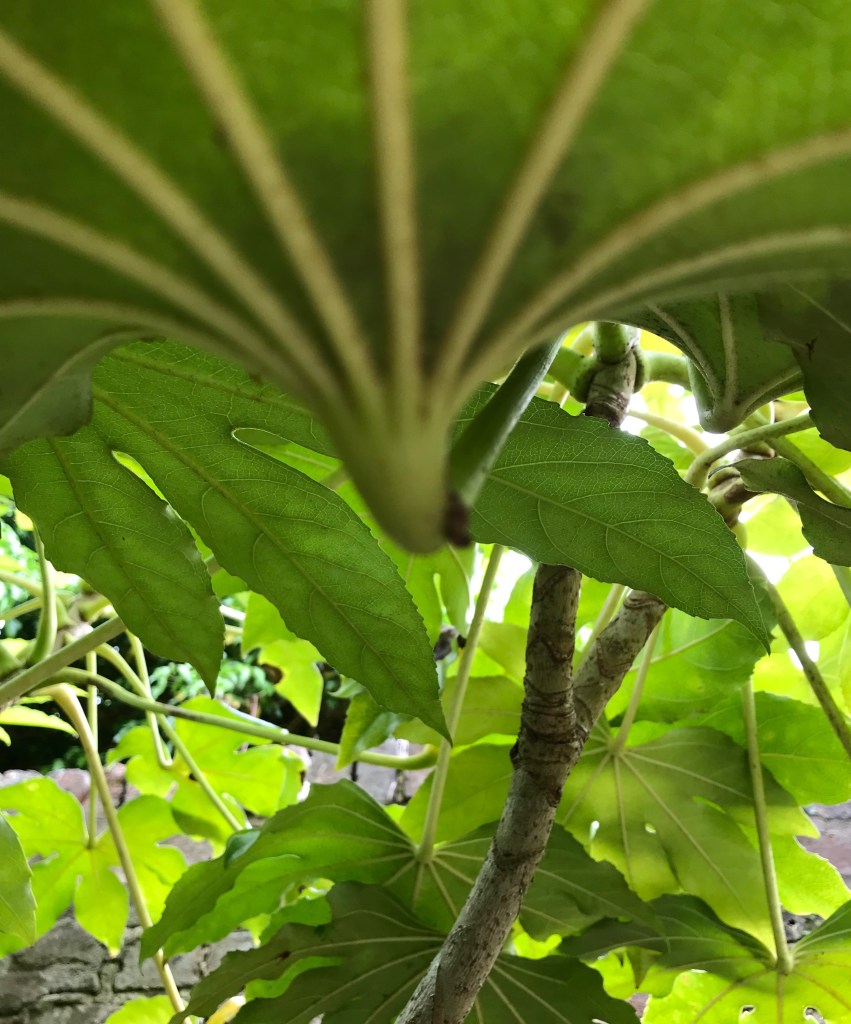
DAY 61 (5 JUNE) – Fatsia (Fatsia japonica) (Farnham, England)

There was a time when you were a nobody if you didn’t have a cheese plant and a yucca in your living room (and preferably a weeping fig on the bend of your staircase too).

I’ve always really loved this giant ‘cheese-plant’ kind of tree in our garden, without ever knowing what it was. It makes a dramatic statement against the old walls.

So it turns out to be a fatsia japonica, native to (guess) Japan – and also South Korea and Taiwan. It apparently is most at home in temperate climates. No mention of the Surrey-Hampshire border.

In Japanese it’s called fatsude, which means ‘eight fingers’ because of its eight leaf lobes. But I was also interested to see it’s related to the ‘castor oil plant‘ I identified on Day 14 of this diary.

Balcony wisdom

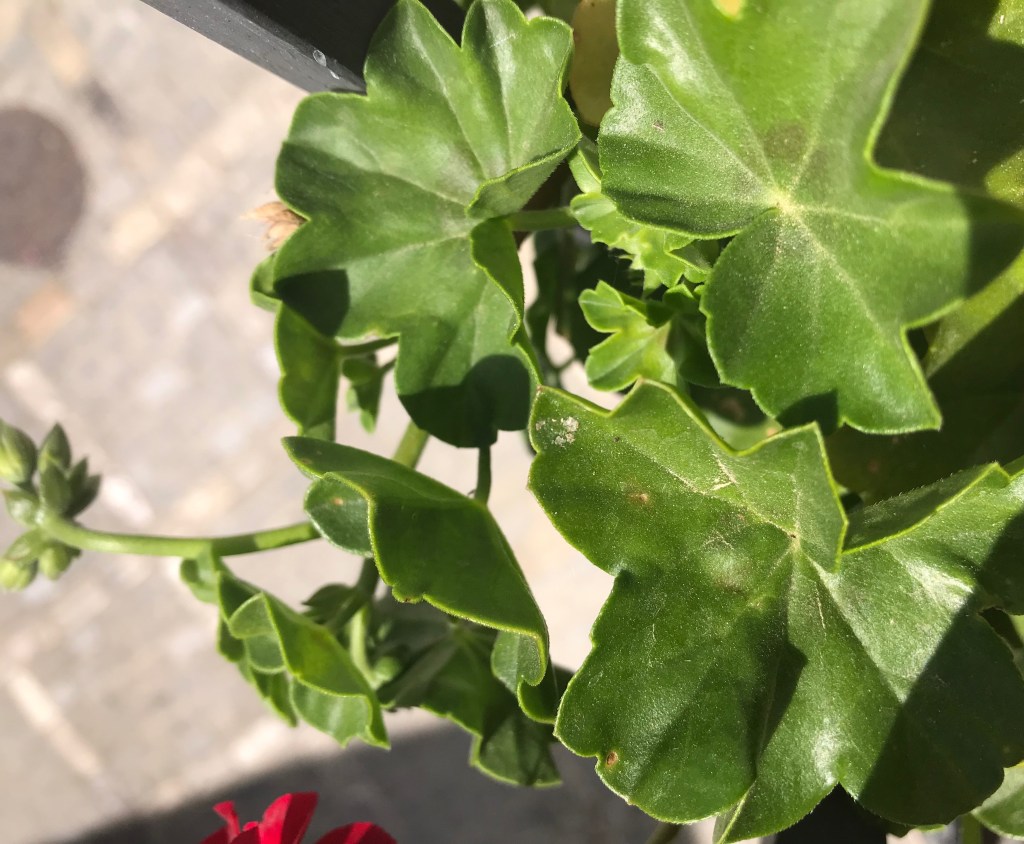
DAY 60 (4 JUNE) – ‘Gitanillas’ (Pelargonium peltatum) (Vejer, Spain)

Geraniums – as the uninitiated sometimes call these red or pink flowers that decorate Spanish balconies – are more correctly pelargoniums – in English, at least, (or rather Latin).

But as the neighours in Spain and my favourite garden centre keep reminding me, you have to choose the right ones, depending on whether you want them to trail through your black wrought iron railings or stand upright.

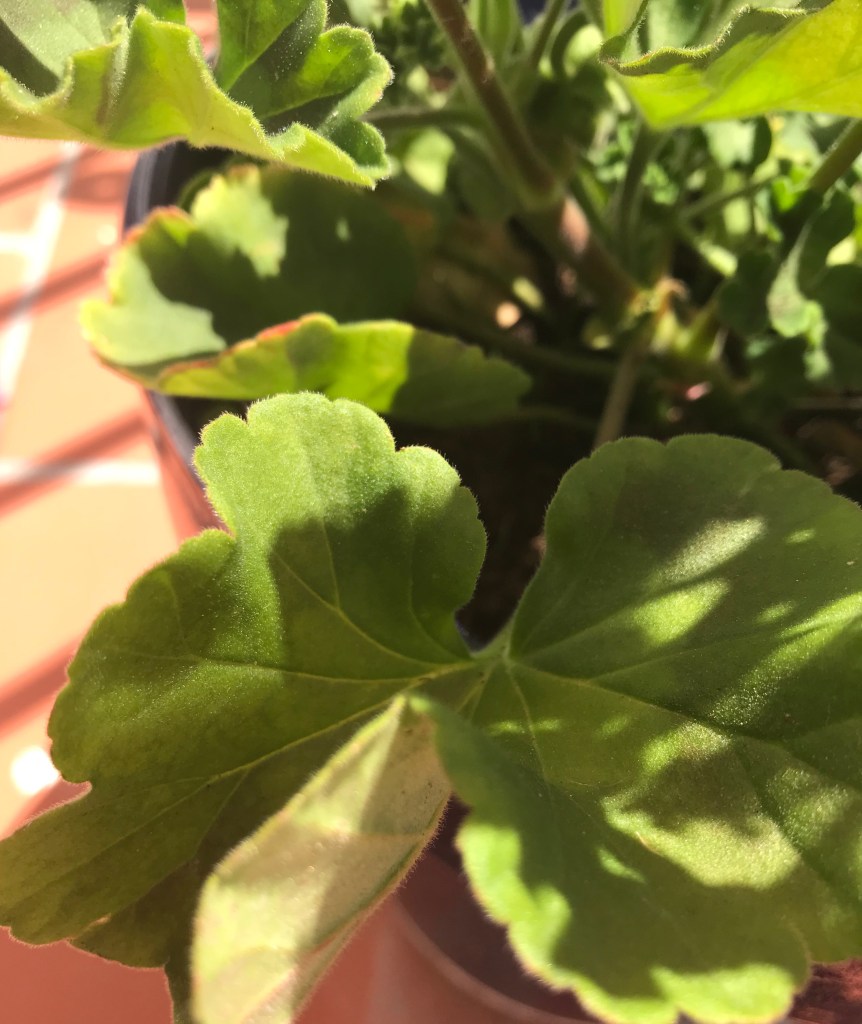
The upright ones are just called geranios locally. These have slightly more yellowy leaves that are velvety to touch. But for trailers, it has to be gitanillas (little gypsies), whose leaves are a bit darker, more ivy-shaped and very solid like succulents.

So next time your walk under a Spanish balcony, you’ll know which is which…
Local speciality

DAY 59 (3 JUNE) – Spanish oyster thistle (Scolymus hispanicus) (Vejer, Spain)

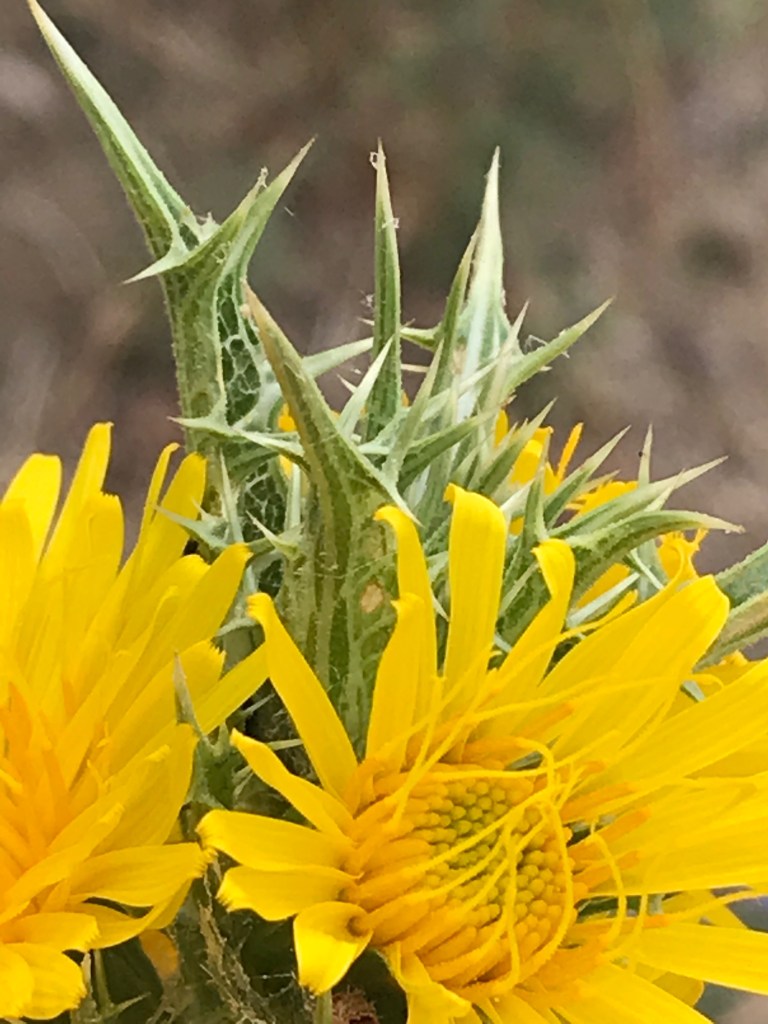
For once I’ve found a thoroughly native plant. This Spanish oyster thistle, or golden thistle, is commonly found by the side of roads and paths all over Spain, except in Cantabria and the Pyrenees.

But there are records of its having been used medicinally as far back as the ancient Greek botanist Theophrastus. And now the mid-veins of the leaves are widely eaten in Spain after being boiled and then lightly fried in garlic and olive oil.

Known as tagarninas or cardillos locally, the potaje de tagarninas (tagarnina stew) is a speciality in Jerez de la Frontera – very close to here.