Broccoli garden

DAY 58 (2 JUNE) – Candelabra tree (Euphorbia candelabrum) (Vejer, Spain)

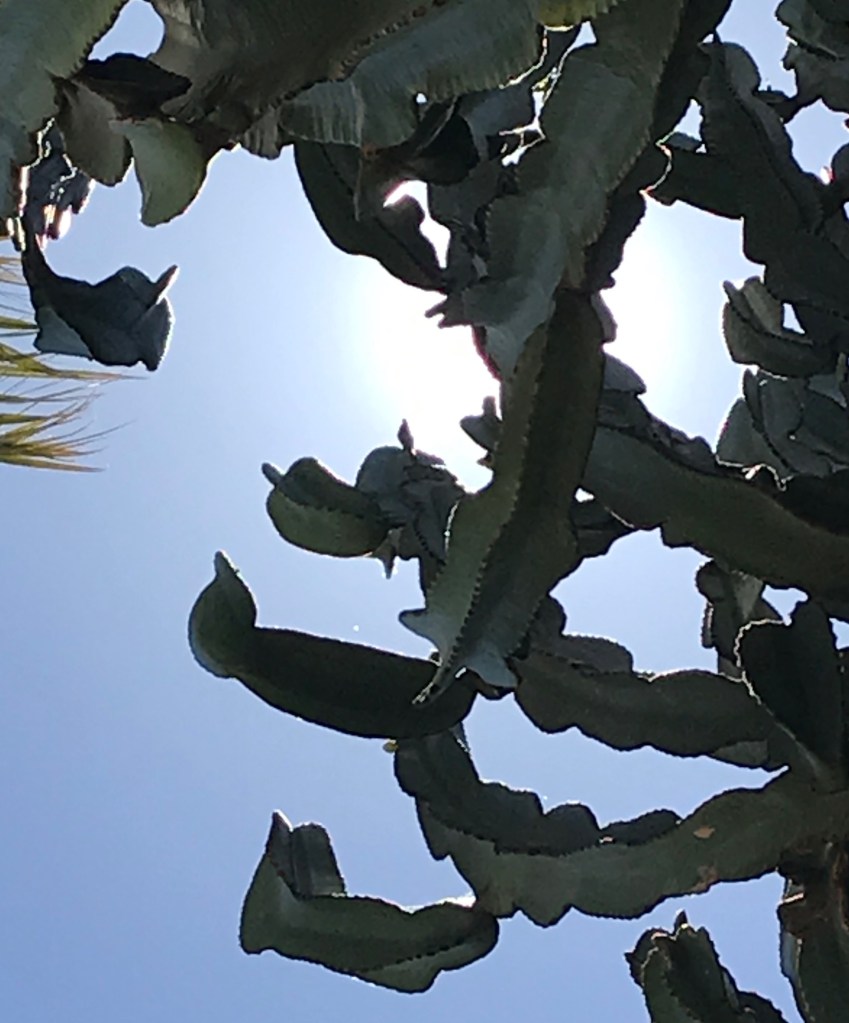
Although you are more likely to see this huge cactus tree in East Africa, where it is endemic, or in a cactus garden in the Canary Islands, this one stands in front of a house here in Andalucia next to the washing line. Crowned in yellow-green flowers, it reminds me of broccoli that’s on the turn.

Apparently its sap mixed with honey used to be used to treat syphilis in Ethiopia, or was mixed with other plants to treat leprosy.
Cute but toxic

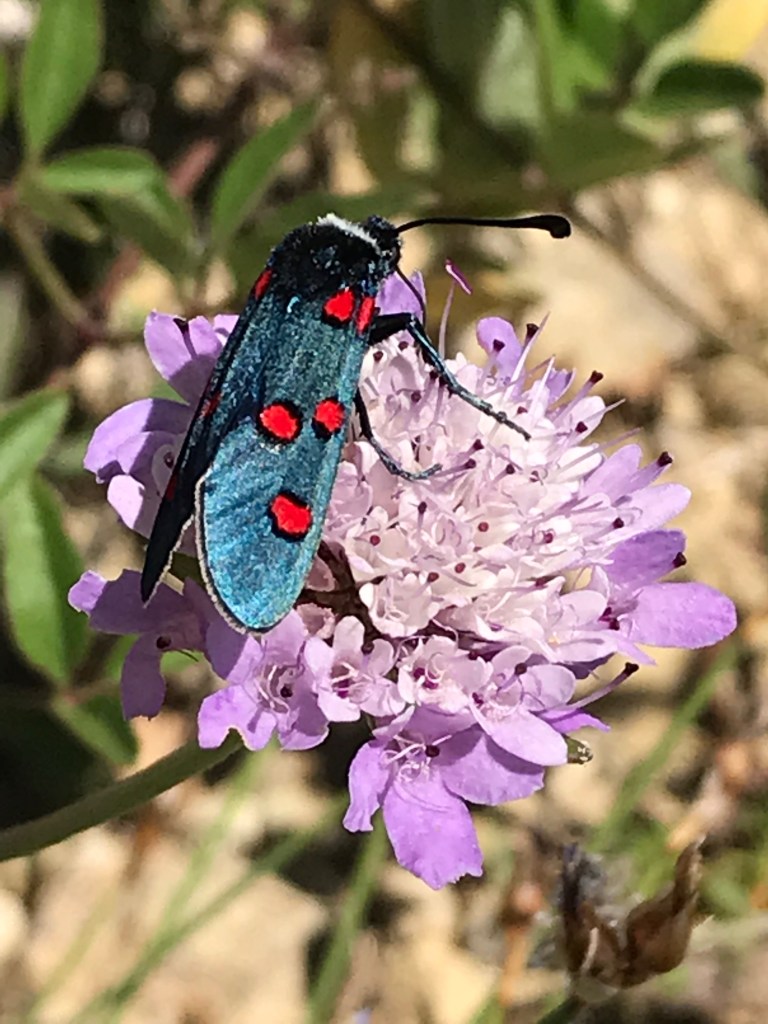
DAY 57 (1 JUNE) – Six-spot burnet (Zygaena filipendulae) (Grazalema, Spain)

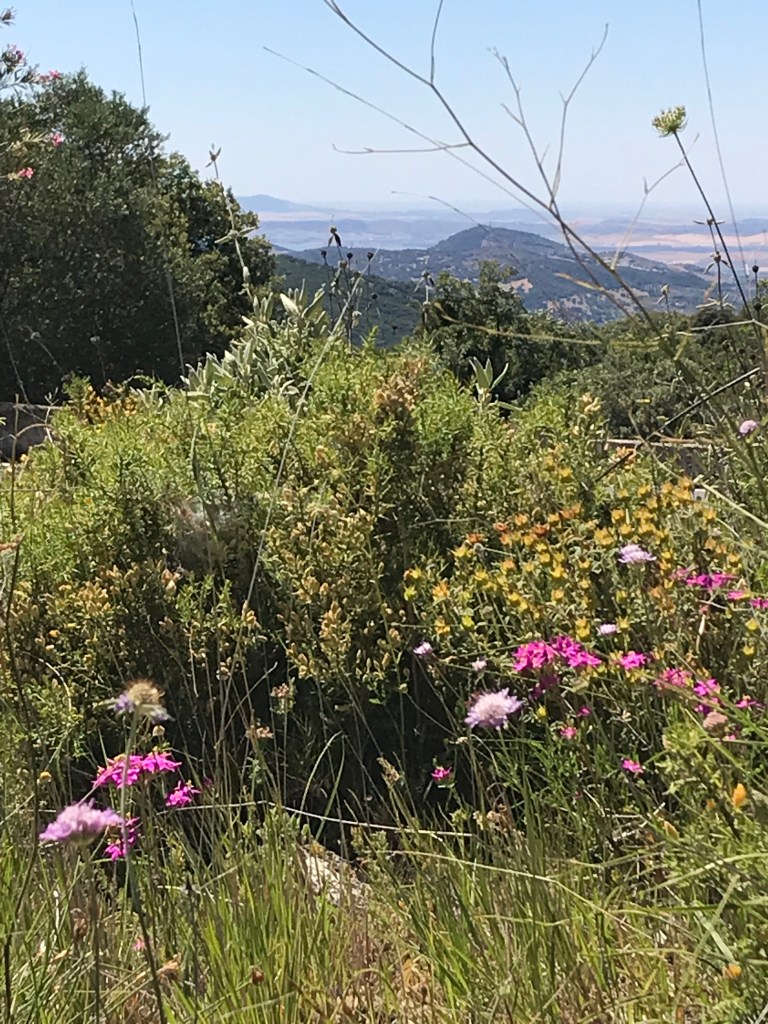
Very excited to include my first insect, high in the Grazalema mountains today. He (or she) was hanging on tight to a scabious flower in a very strong Levante wind.

Took me ages to identify – there doesn’t seem to be a website, as there is for plants, where you can find out what it is by dropping in a photo. So I identified the scabious instead, then found out which insects like it and he popped up.

The six-spot burnet turns out to be a day-flying moth, common in many parts of Europe except (says the source) in Portugal and western Spain – so either they are wrong or he’s on vacation here…

The bright colours are a warning to predators like birds and lizards that he is toxic. When attacked, he’ll emit a liquid containing cyanide. Glad I didn’t get too close.

Dazzling ‘paper flowers’

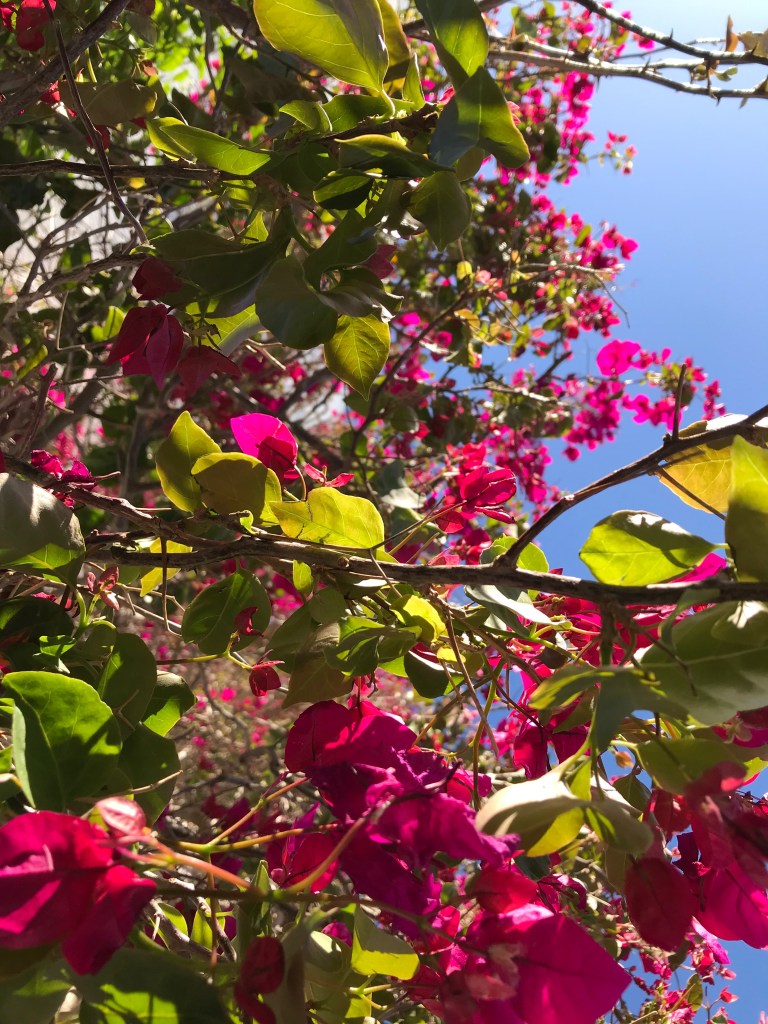
DAY 56 (31 MAY) – Bougainvillea (Bougainvillea spectabilis) (Vejer, Spain)

I knew I had to include this gorgeous display in the blog soon – so here it is today, before it starts to fade and the flowers fall.

I just discovered that bougainvillea is native to South America and was first introduced in Europe in the early 19th century. Now so widespread (mostly in hot countries) it’s acquired some interesting names: papelillo (little paper) in Peru; Napoleon in Honduras (no idea why); Drillingsblume (triple flower) in Germany and pokok bunga kertas in Indonesia and Malaysia which, although it officially translates as something like ‘tree of paper flowers’, sounds more like one of Silvio Berlusconi’s dodgy parties.

The solitary olive tree

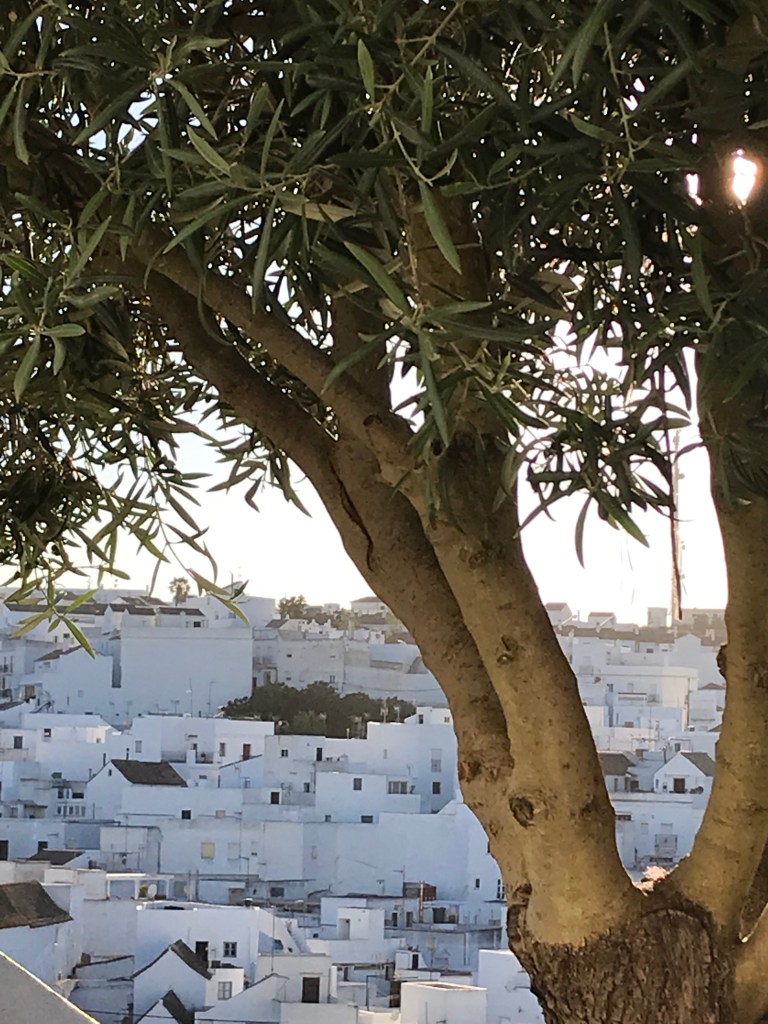
DAY 55 (30 MAY) – Olive tree (Olea europaea) (Vejer, Spain)

A single olive tree overlooking the town at dusk

Olivo solitario / lejos del olivar, junto a la fuente, / olivo hospitalario / que das tu sombra a un hombre pensativo / y a un agua transparente…

These opening lines of Olivo del camino by Antonio Machado in English:

Solitary olive tree / far from the groves, beside the fountain, / welcoming olive tree / offering your shade to a thoughtful man / and to the transparent water…

Pine position

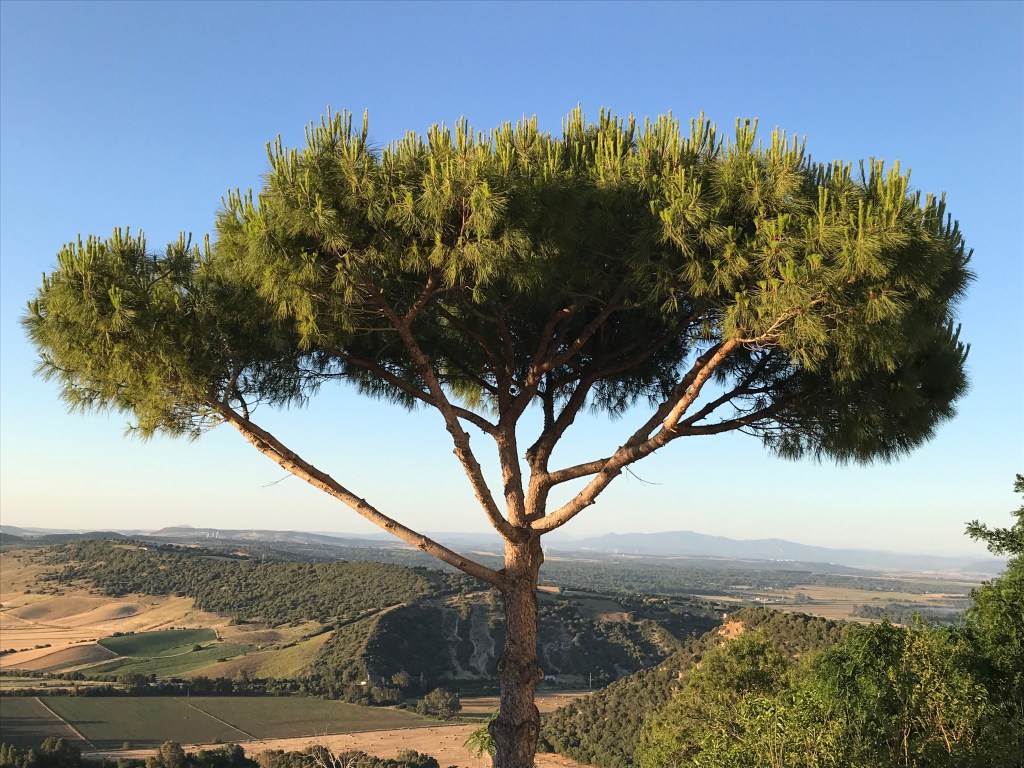
DAY 54 (29 MAY) – Umbrella pine (Pinus pinea) (Vejer, Spain)

One of several umbrella pines that guard Vejer’s northern edge, looking out across the valley towards Medina Sidonia.

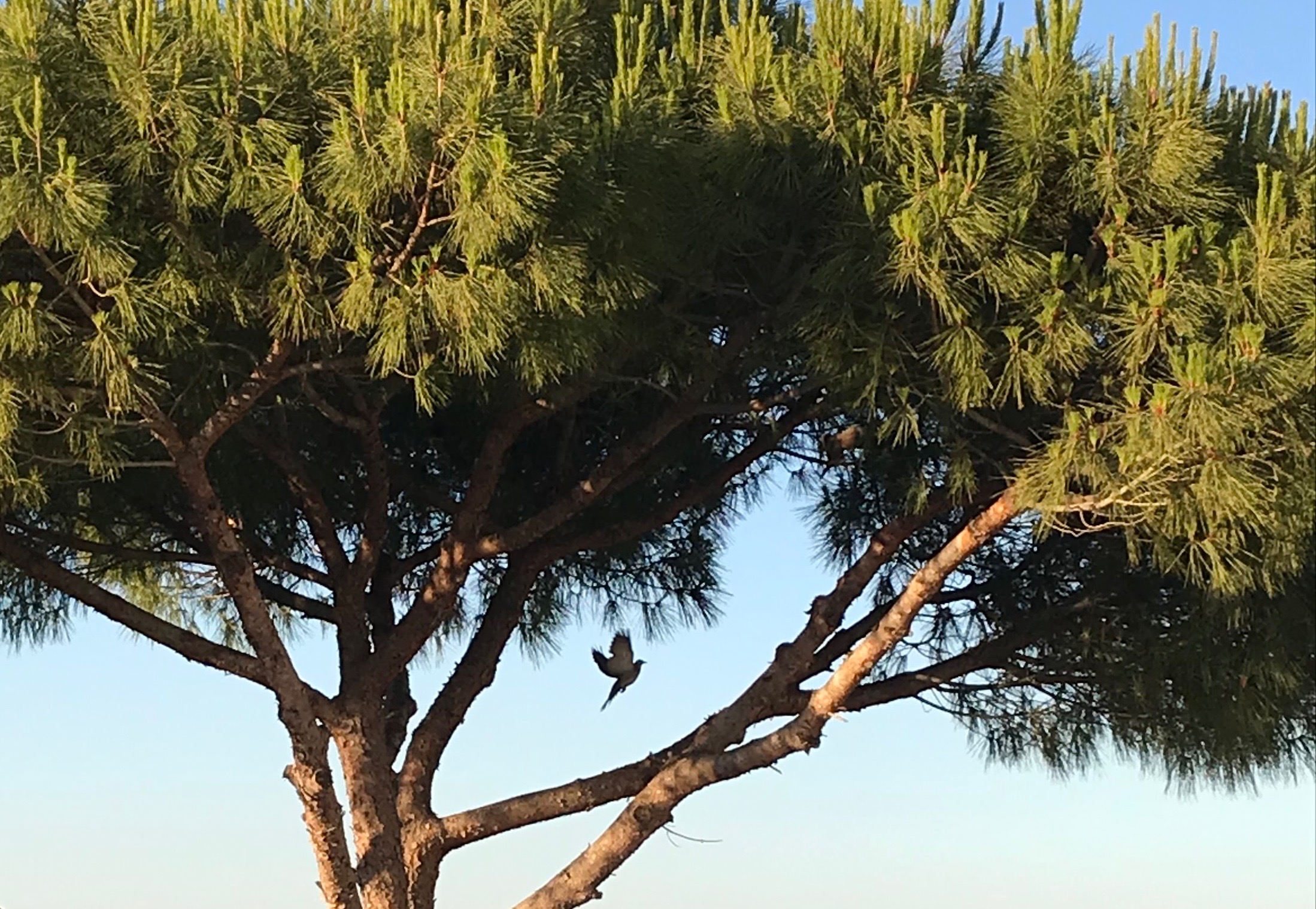
This may be my idea of heaven: a dove landing on an umbrella pine

If you love the Mediterranean, then it follows that you love the umbrella pine. They are intrinsic to any Roman landscape, and widespread in Israel, Lebanon, Syria and North Africa too. Those in Spain are predominantly in the provinces of Huelva and (here) Cádiz. Yes, this is the Atlantic but only just around the corner.

This tree, also known as the Italian stone pine, has been used in landscaping since the Italian Renaissance garden period – but has been cultivated for its pine nuts for many centuries longer.

Beach spike appeal

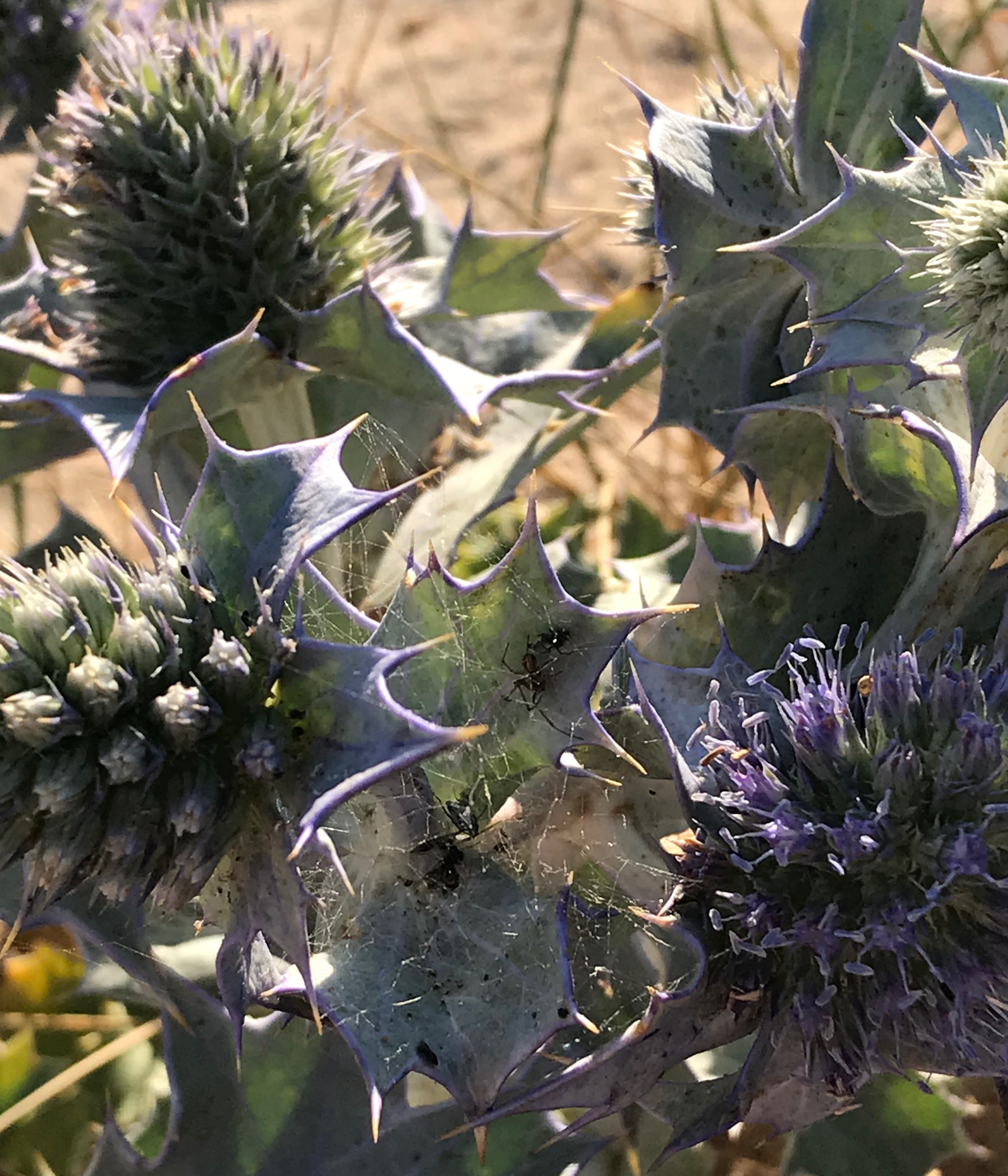
DAY 53 (28 MAY) – Sea holly (Eryngium maritimum) (El Palmar, Spain)

This is that stuff you always tread on just when you’ve discarded the flip-flops and got over-confident about striding down towards the sea. Or when you’re on your way up again for a comfort break behind the dunes. A partially concealed twig can ruin a beach picnic with one slightly misplaced towel.

But on (careful) closer inspection I found it was quite attractive – in a Mick Jagger sort of way. Not classic beauty but it somehow holds the attention. Something about the blue-tinged leaves reflecting the blue in the flowers.

It’s native to most European coastlines and I hadn’t realised it was abundant on British beaches too (not that Britain isn’t Europe – yet). Anyway I took this picture this evening on some Spanish dunes.

Apparently sea holly roots were used to make candles as an aphrodisiac in Elizabethan times. Think I might have been happy to think of Mick instead.

Herb confusion

DAY 52 (27 MAY) – Cuban oregano (Plectranthus amboinicus) (Vejer, Spain)

For a brief moment I thought this was French lavender. But of course it wasn’t, not with these very long stems and succulent leaves. Close up it reminded me of one of those personalised fans or, well, I don’t know…..

Just as I was photographing it a man with very few teeth came up and told me it was “orégano italiano” – used to ward off mosquitoes.

Apparently it tastes like oregano but with a sharp mint flavour – and it smells a bit like thyme.

My research came up with Cuban oregano. To confuse things further, it’s native to Southern and Eastern Africa but widely found in other hot countries (presumably like Cuba). Spain was its entry point to Europe – hence it is also known as Spanish thyme.

Snail perch

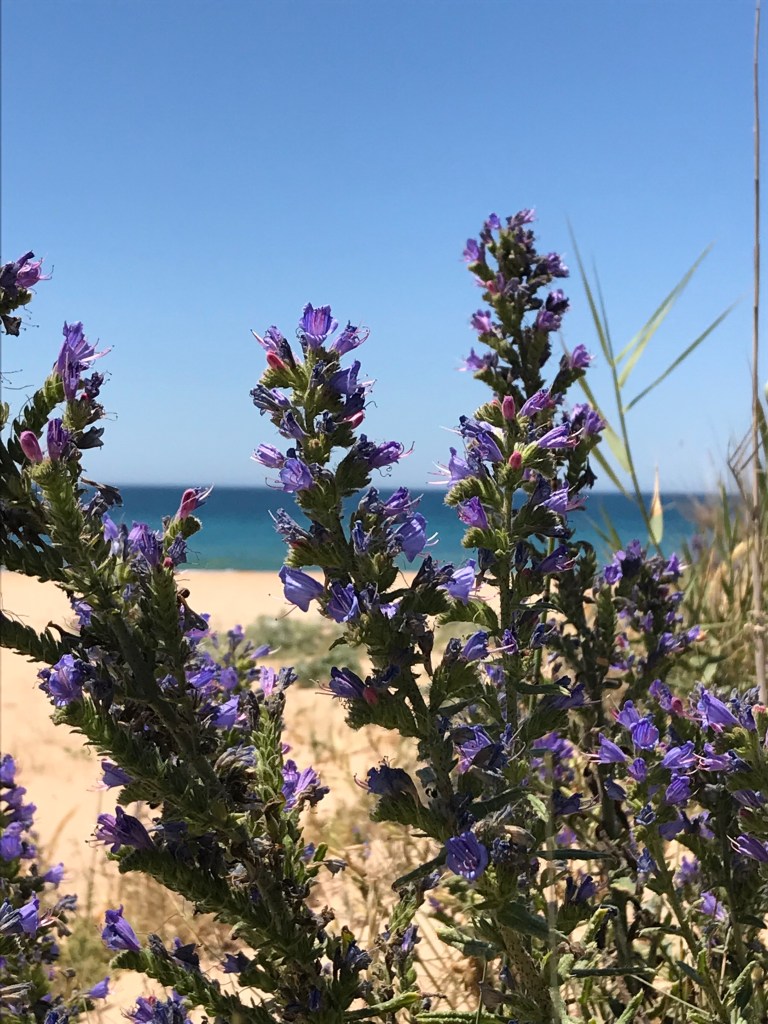
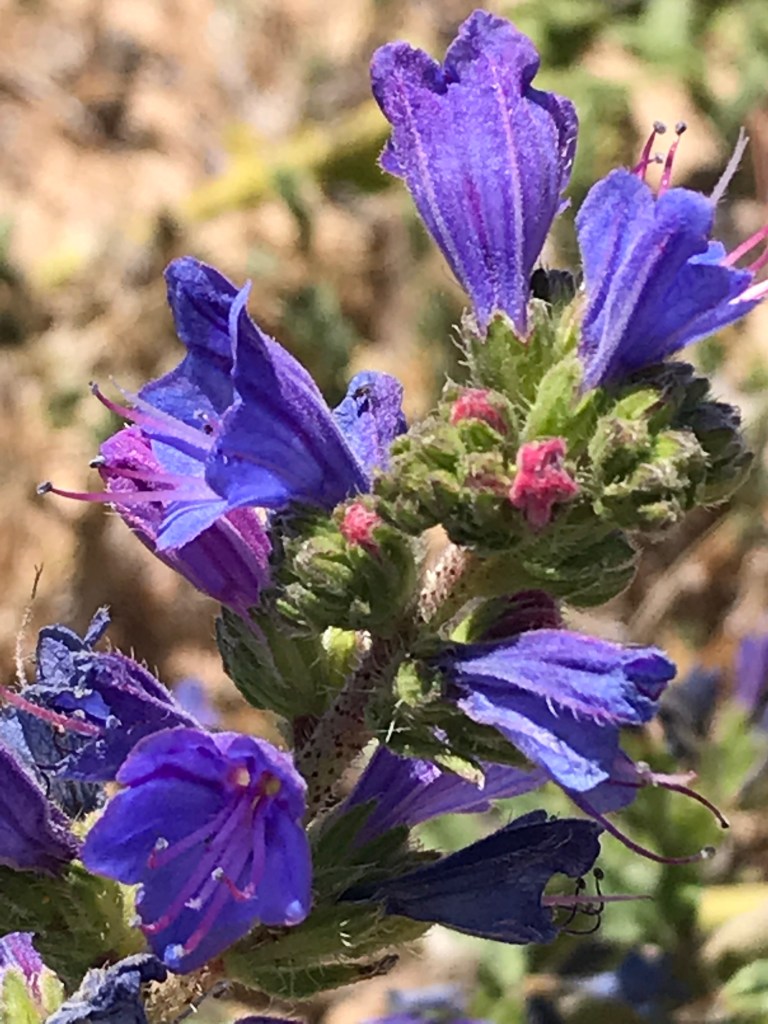
DAY 51 (26 MAY) – Viper’s bugloss (Echium vulgare) (Zahora, Spain)

Found this attractive wildflower on the sand dunes today. Complete with cute snail. It’s part of the borage family but a bit more dramatic than a more sombre variation I posted from Hampshire.

But these are native to the UK too, and typically found on wasteland, coastal cliffs and sand dunes like these in southern Spain. I love that there are pink flowers nestling among the purple. The colour changes through the season.

The name Echium comes from ‘echis’ which is Greek for viper. Not, I was glad to discover, because vipers like to hang out beneath it but because its flower stem develops in a coiled form.

Mexican drama

DAY 50 (25 MAY) – Golden chalice vine (Solandra maxima) (Vejer, Spain)

I can’t get enough of these bright-coloured exotic plants. I love the sheer ‘blousiness’ of this golden chalice vine, with yellow flowers that look like old leather and twisted branches.

Like yesterday’s tree, this plant comes from far away – it’s native to the dry to moist forests of Mexico and central America. I found it in a dusty corner near the edge of town, sheltering a scruffy kitten whose dinner was a rubbish bag of prawn shells.

Its extract is said to be used for hallucinogenic effects in ceremonies of the Huichol people from Mexico. And at night its large flowers attract pollinating bats.

Aussie far from home

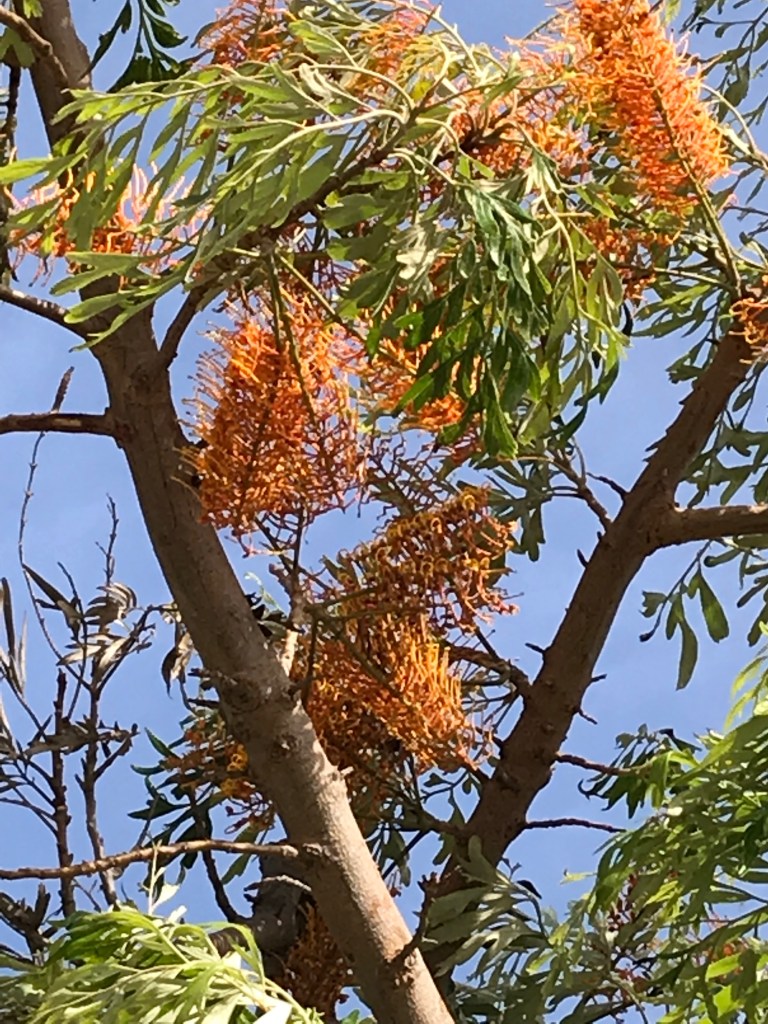
DAY 49 (24 MAY) – Southern silky oak (Grevillea robusta) (Vejer, Spain)

I didn’t expect to find a tree here that is native to east coast Australia. It’s at home in subtropical rainforests. Apparently it’s also naturalised in South Africa, New Zealand, Hawaii and the Caribbean. But no mention of Spain, so maybe I’m onto something.

Meanwhile, as it looks out towards Morocco, I will admire its weird flowers that look like orange loo brushes from a distance but are intricately looped when you see them close up.

What does make sense is that they’re used as windbreaks – much needed in this very blowy part of Andalucia.