Bird rejects

DAY 218 (9 NOVEMBER) – Kashmir rowan (Sorbus cashmiriana) (Farnham)

I may be getting a bit above myself, but when plantnet.org identified these as snowberries I had a hunch they were wrong… That’s because I’d already featured snowberries in August and these didn’t look the same. So I asked my nephew Tim who is an expert horticulturalist. I was right! They are something else: Kashmir rowan.

The white berries last much longer into winter than red rowan berries – because birds don’t like them much. But I thought these, down by the art college, were pretty eye-catching.
Ugly umbels

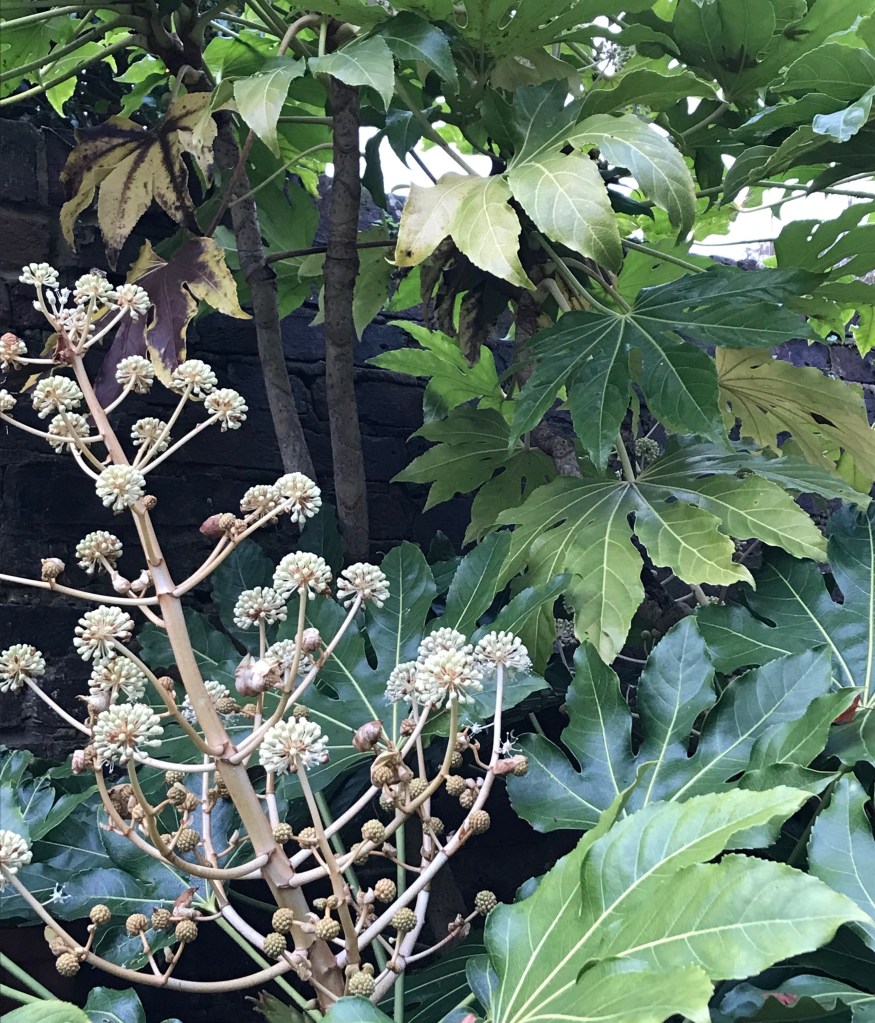
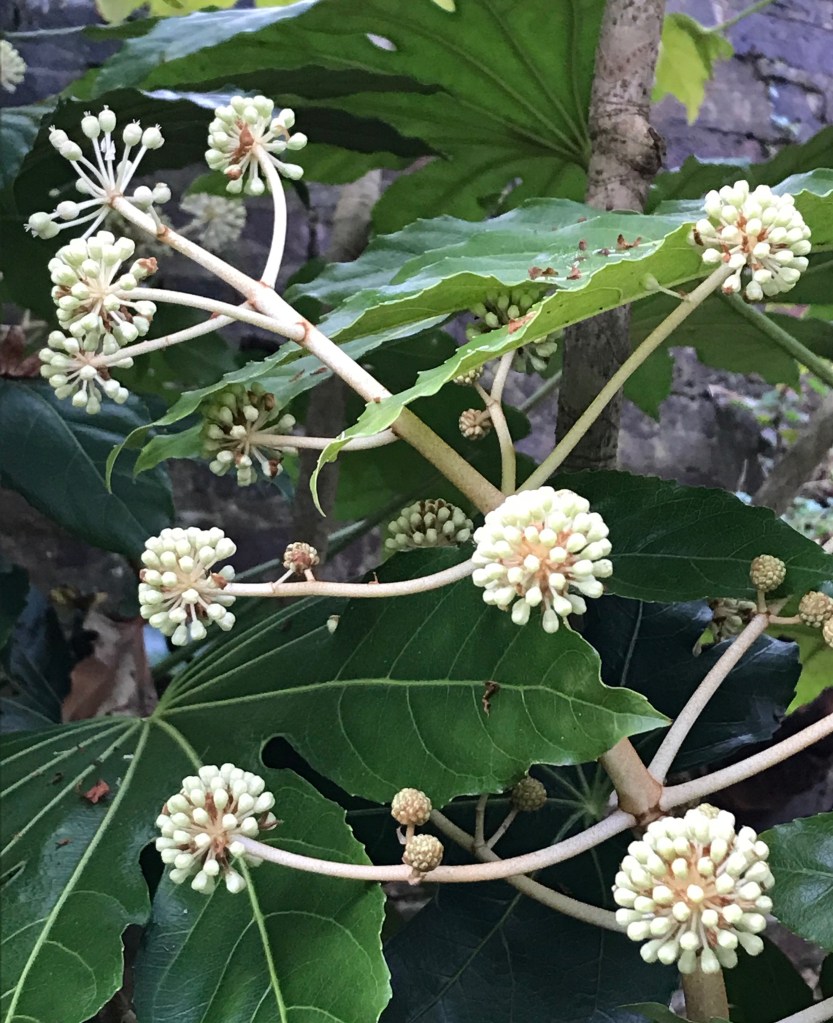
DAY 217 (8 NOVEMBER) – Japanese fatsia flowers (Fatsia japonica) (Farnham)

We’ve lived in this house for 13 years, with this plant in the garden – and I’ve never noticed these hideous flowers appearing in late autumn before. I’ve always loved this giant cheese plant or fig-tree-look-alike, as I like to think of it. It provides large chunks of shade on hot summer days.

But this addition looks as though it doesn’t belong. Horrible idea, but they remind me of images of cancer cells. Not helped by Wikipedia‘s description: “borne in dense terminal compound umbels”. Well I hope its umbels drop off soon.

Cherry leaves

DAY 216 (7 NOVEMBER) – Japanese cherry (Prunus serrulata) (Farnham)

Some trees look more gorgeous than others at the moment. This Japanese cherry in someone’s front garden is one from the gorgeous category. They are native to China, Korea and India as well as Japan – where they’re grown primarily for their spring blossom. Unlike the wild cherry, the fruit is bitter and cannot be eaten raw.

I hope the blossom comes during this financial year, so that I can include it in my blog. It may be later…

Bean mystery

DAY 215 (6 NOVEMBER) – Cigar tree (Catalpa bignonioides) (Farnham)

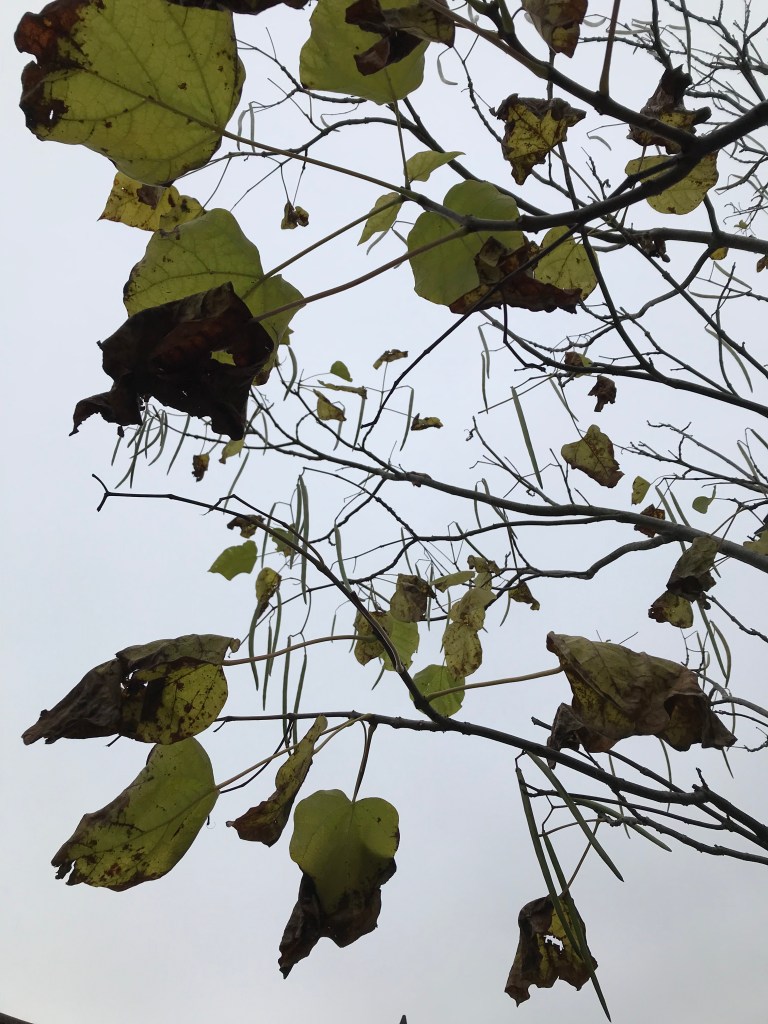
The first thing I noticed about this tree was its huge leaves. Then these bizarre long bean-like fruits. The ID site I use was very confident that here is a cigar tree (also known as an Indian-bean), native to the SE United States but growing happily here in a Surrey shopping street in November. Hmmm. And it supposedly prefers full sun. Well it must have had a bad day today.

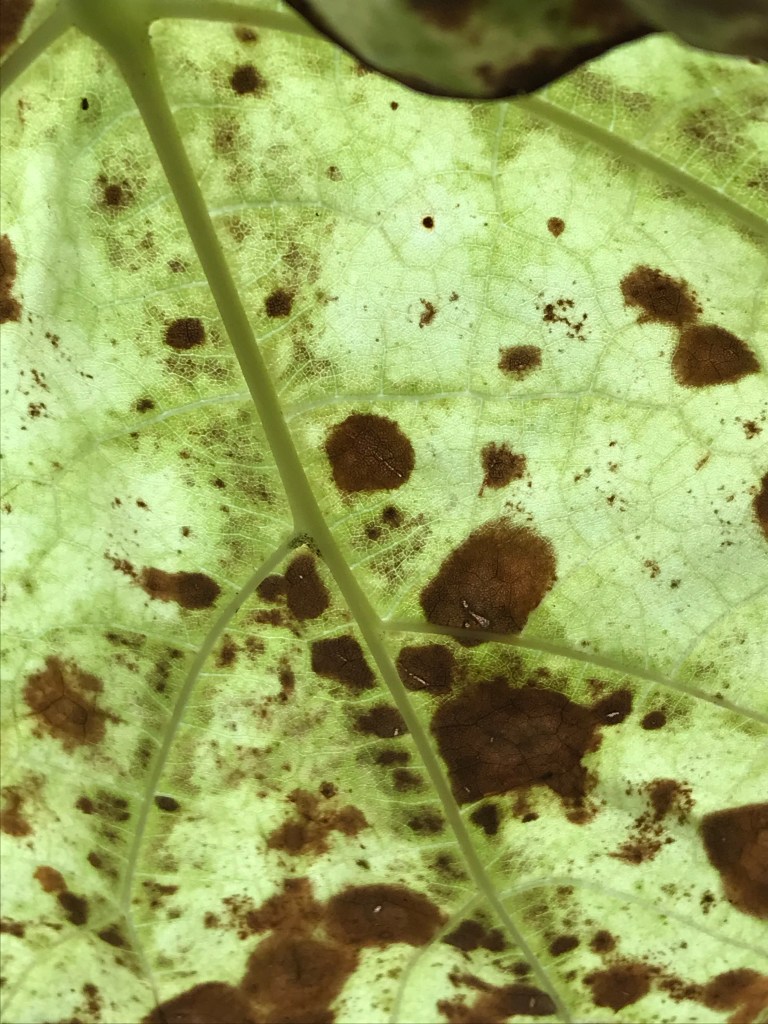
Anyway many of the enormous leaves do look as though they’ve been singed with a cigar – or perhaps it’s just the effect of late autumn?

Persistently orange

DAY 213 (4 NOVEMBER) – Common lantana (Lantana camara) (Vejer)

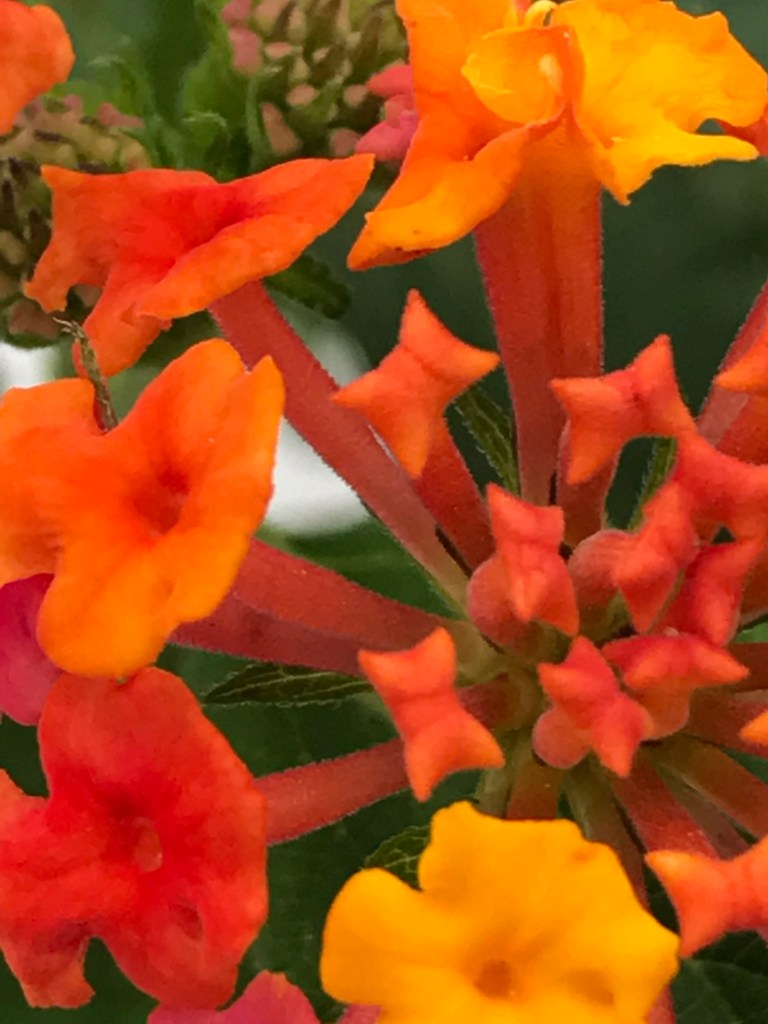
Yes I know it’s bright and cheerful, but I do find these shrubs quite dull. Took this photo at dusk, hence the very soft focus but at least it makes it look more interesting… These are all over the south of Spain, but are native to the American tropics. They are invasive in many tropical and sub-tropical areas – and in Sri Lanka are considered a “significant weed” since they escaped from the botanical gardens in 1926.

Date shower

DAY 212 (3 NOVEMBER) – Date palm (Phoenix dactylifera) (Vejer)

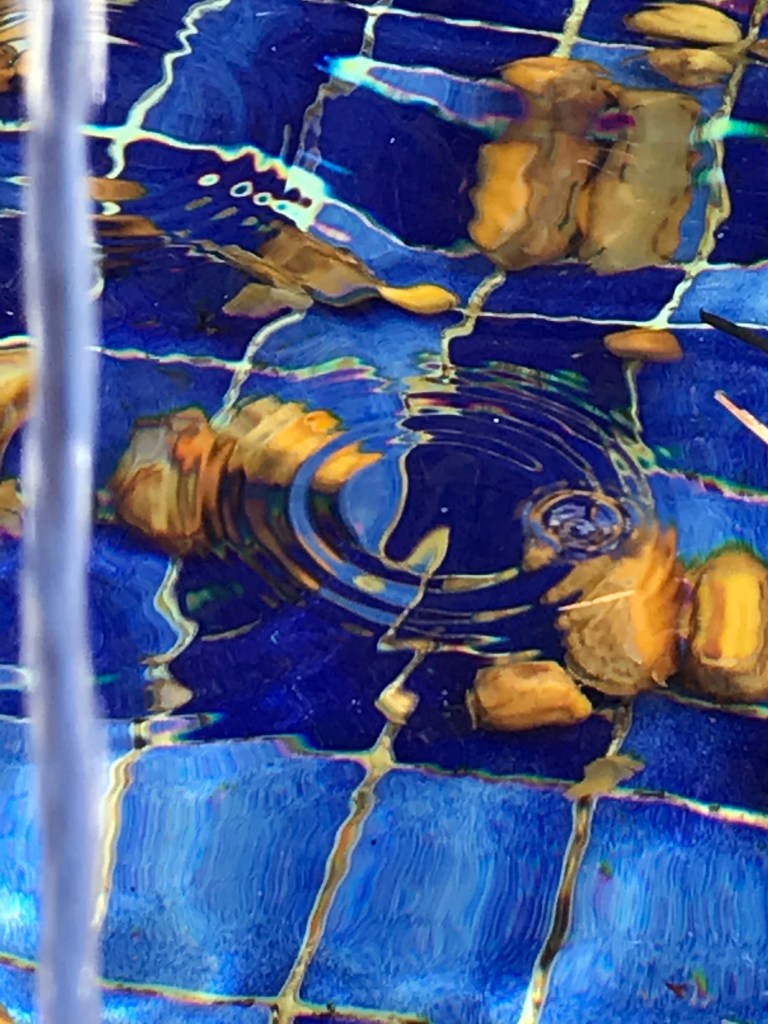
The main square in Vejer is a circle of date palms around a blue-tiled fountain. What could be more appropriate for this former Moorish stronghold? Most dates are cultivated in the Middle East or North Africa – and you can see the Moroccan coast from Vejer.

The hotel on the square is renowned for its Moroccan kitchen. And they don’t have far to go to catch the dates that were landing on my head today. The fountain is full of them.

Brazilian beauty

DAY 211 (2 NOVEMBER) – Angel’s trumpet (Brugmansia suaveolens) (Cádiz)

Couldn’t resist these striking flowers in Cadiz’s beautiful and grand Parque Genovés. Apparently they are usually white, so I was so lucky to see these peach-coloured versions. Didn’t surprise me at all that they are native to the coastal rain forests of Brazil and most commonly found in central and south America. This part of Cádiz is so reminiscent of Havana, with its faded grandeur, cobbled streets and magnificent promenades by the sea.

They are also highly poisonous, belonging to the nightshade family.

Bird paradise

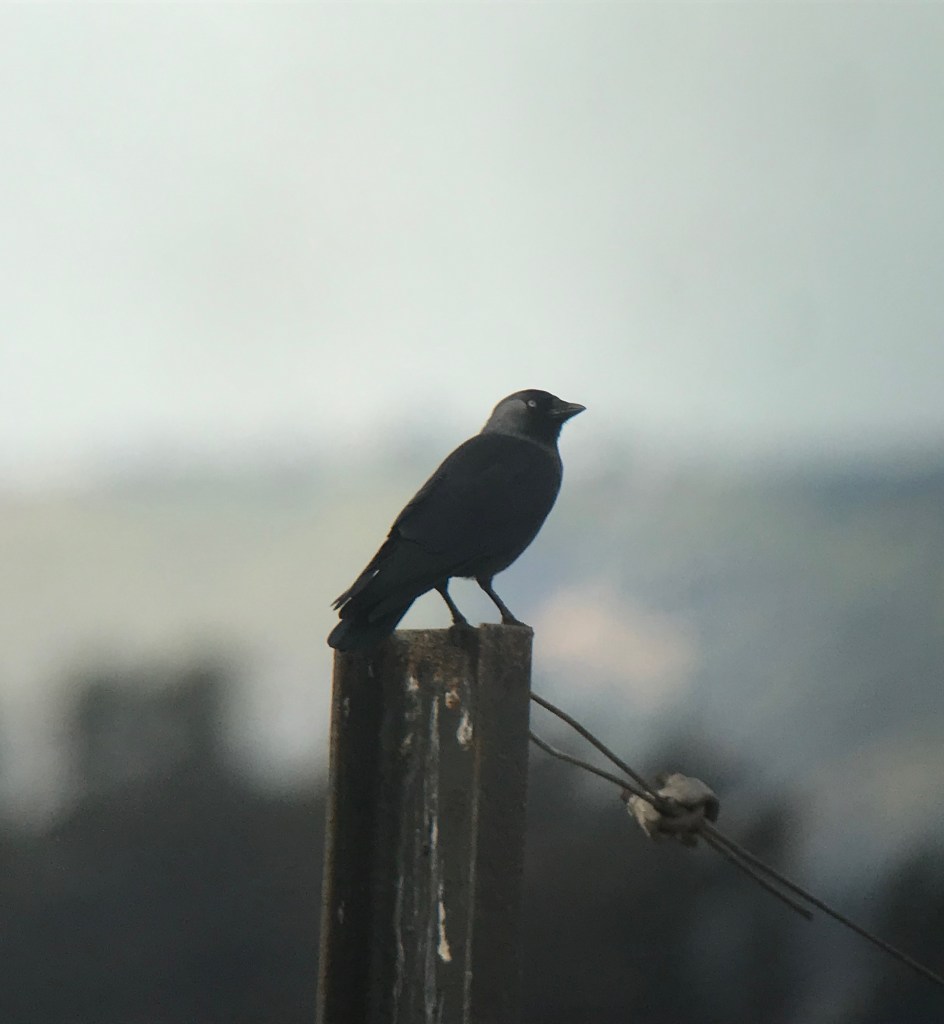
DAY 210 (1 NOVEMBER) – Jackdaw (Corvus monedula) (La Janda wetlands, Spain)

This is the one time in my blog that I can’t take credit for having taken the photo myself. Spent a morning at the magnificent La Janda wetlands with an ornithologist. The only way to get good photos of the birds using my iPhone was via his telescope.

I love how he captured this jackdaw (which I did see with my naked eye, by the way) against a background of mist. They weren’t known in Cadiz province until the 1960s.

Among many others, we also saw: bald ibis, common buzzards, little owls, marsh harriers, spoon bills, white cranes, storks, a night heron, egrets, a crested lark. It was just thrilling.

Fertility symbol

DAY 209 (31 OCTOBER) – Pomegranate (Punica granatum) (Jerez, Spain)

Visiting the Royal Andalusian School for Ecuestrian Art in Jerez today, I found this fascinating plant in the grounds. It turned out to be a pomegranate. What intrigued me was the way the hard fruits emerge out of the bright orange-red flowers. They simply metamorphose. Apparently the plants can live for up to 200 years.

There are references to pomegranates as long ago as the 3rd millennium BC. In ancient Egypt they were a symbol of property and ambition. And modern Greeks bring pomegranates as gifts into new homes. They are said to encourage fertility. They do have that look about them…