Ethiopian visitor

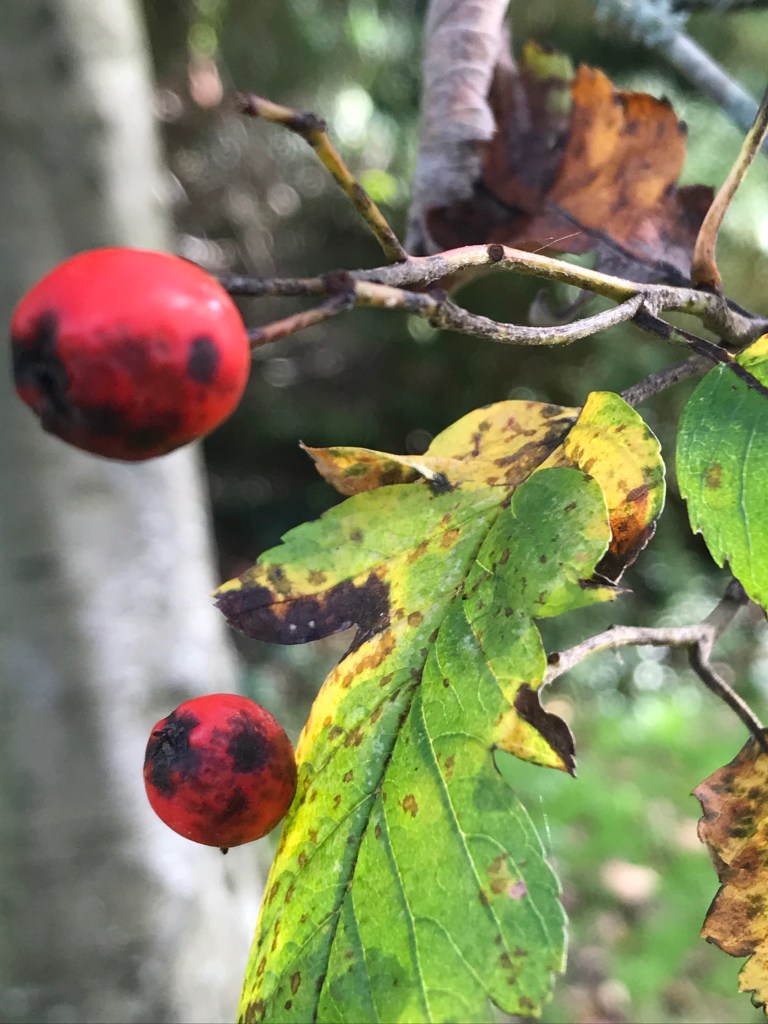
DAY 208 (30 OCTOBER) – Green stink bug (Nezara viridula) (Vejer, Spain)

Found this little chap (or chapess) today sliding around at the edge of our marble staircase. He turns out to be a green stink bug, though I haven’t been able to find out why the ‘stink’ bit. In Spanish he’s known as a chinche verde, which is much nicer.

They are thought to originate in Ethiopia, but because of their strong flight (and human trade routes), have now spread worldwide to temperate and hot regions. Not sure why he liked being in our house. We don’t have any of his favourite food (green beans and soybeans) on our terrace, nor the fruit trees for which this bug is considered dangerous.

An American website I found suggested several ways to dispose of him: hoovering up, “walloping” with soapy water, and electrocuting. I quite liked him, so let him do his thing.
Tree of darkness

DAY 207 (29 OCTOBER) – Poinsettia tree (Euphorbia pulcherrima) (Vejer, Spain)

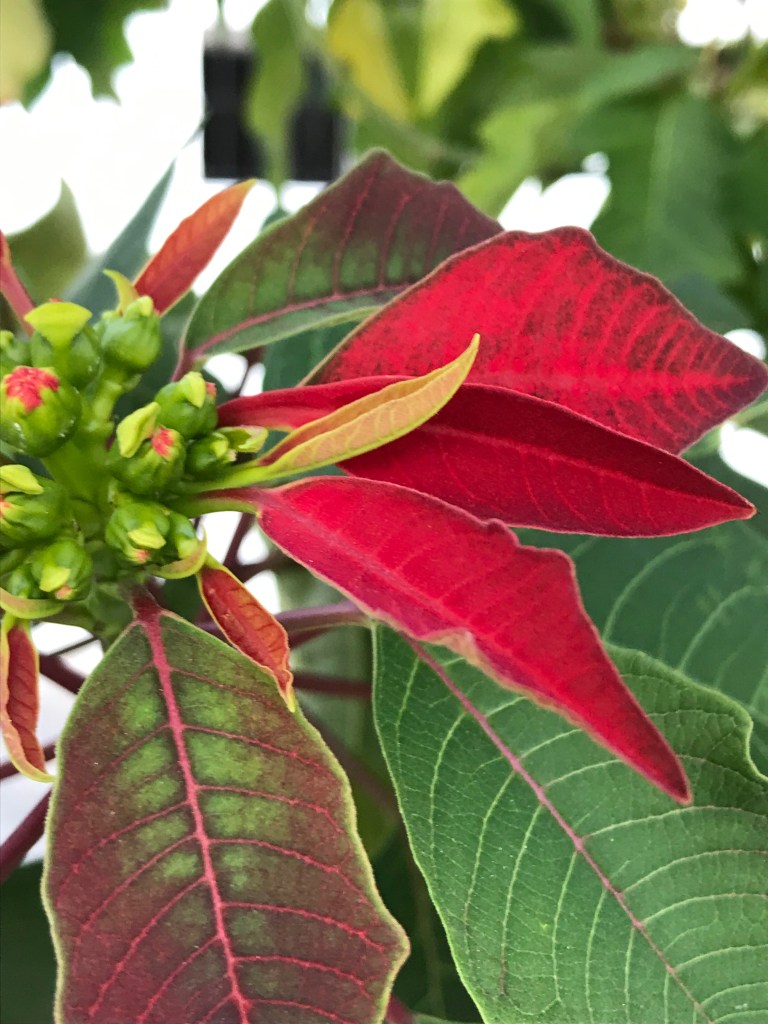
I was amazed to see this tree in a street in the heart of old Vejer. Surely it couldn’t be a poinsettia, could it? I hadn’t realised until now that they aren’t just dinky little shrubs we buy at Christmas. They can grow up to about 13ft.

Native to Mexico, their name comes from Joel Roberts Poinsett, the first US Minister to Mexico, who introduced the plant to his country in 1825.

The change in leaf colour occurs through photoperiodism. This means it requires 12 hours of darkness for at least five consecutive days. The more abundant the light is during daylight hours, the brighter the colour of the leaves.

Evening cases

DAY 205 (27 OCTOBER) – Sea daffodil pods (2) (Pancratium maritimum) (El Palmar, Spain)

My third visit to the ever-changing sea daffodil. This time the pods that were green in late summer have burst and dried out against a background of the evening sun on the Atlantic.

Purse pods

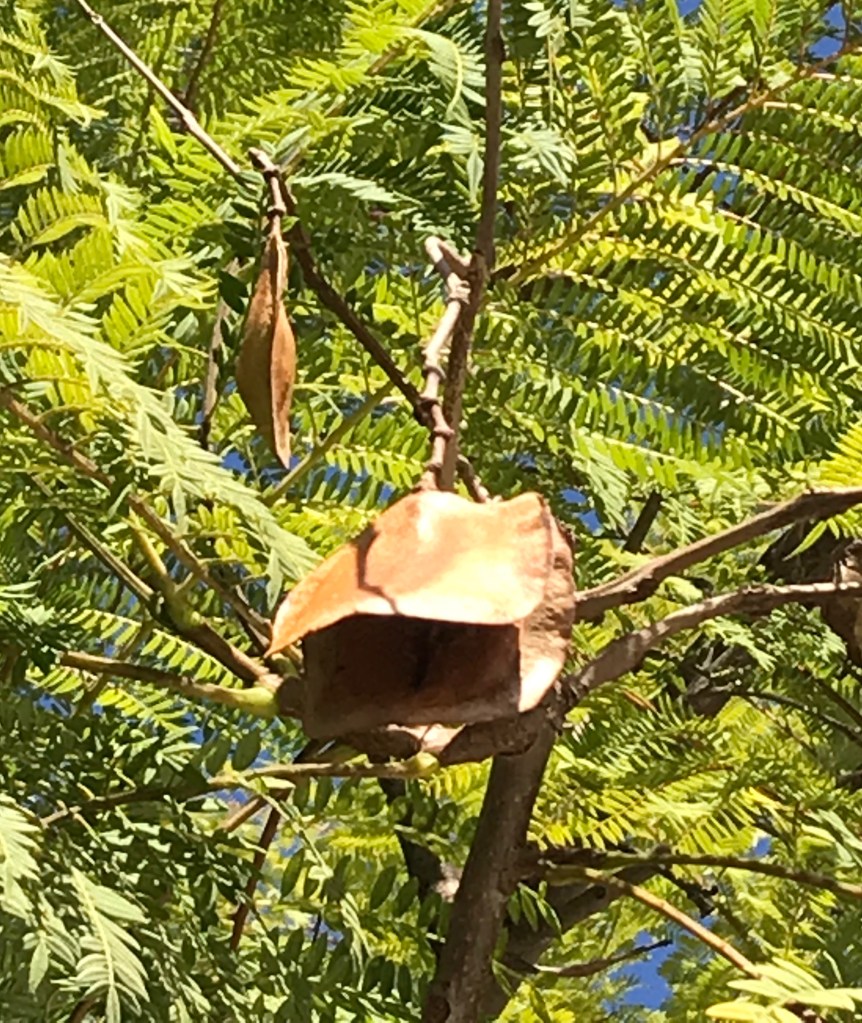
DAY 204 (26 OCTOBER) – Jacaranda seed pods (Jacaranda mimosifolia) (Vejer, Spain)

Good to see a blue sky again. These seed pods hang from the jacaranda trees here in Andalucia. The dried ones remind me of those leather purses, used by Continental men, that open into a rectangular shape at one end.

Catta optima

DAY 202 (24 OCTOBER) – Daisy (Catta optima in mundo) (Farnham)

Today was a very dark day. I had to have my beloved 19-year-old cat put to sleep. It has taken me a few days to be able to post this entry. The photo is from last December, four months before I started this diary.

This poem Mercies by Don Paterson explains the feeling very well. I have changed just two words marked*. His were ‘dog’ and ‘wolf’. I hope he will forgive me.

She might have had months left of her cat*-years,
but to be who? She’d grown light as a nest
and spent the whole day under her long ears
listening to the bad radio in her breast.
On the steel bench, knowing what was taking shape
she tried and tried to stand, as if to sign
that she was still of use, and should escape
our selection. So I turned her face to mine,
and seeing only love there – which, for all
the tiger* in her, she knew as well as we did –
she lay back down and let the needle enter.
And love was surely what her eyes conceded
as her stare grew hard, and one bright aerial
quit making its report back to the centre.

OMG

DAY 199 (21 OCTOBER) – Cedar tree (Cedrus deodora) (Farnham)

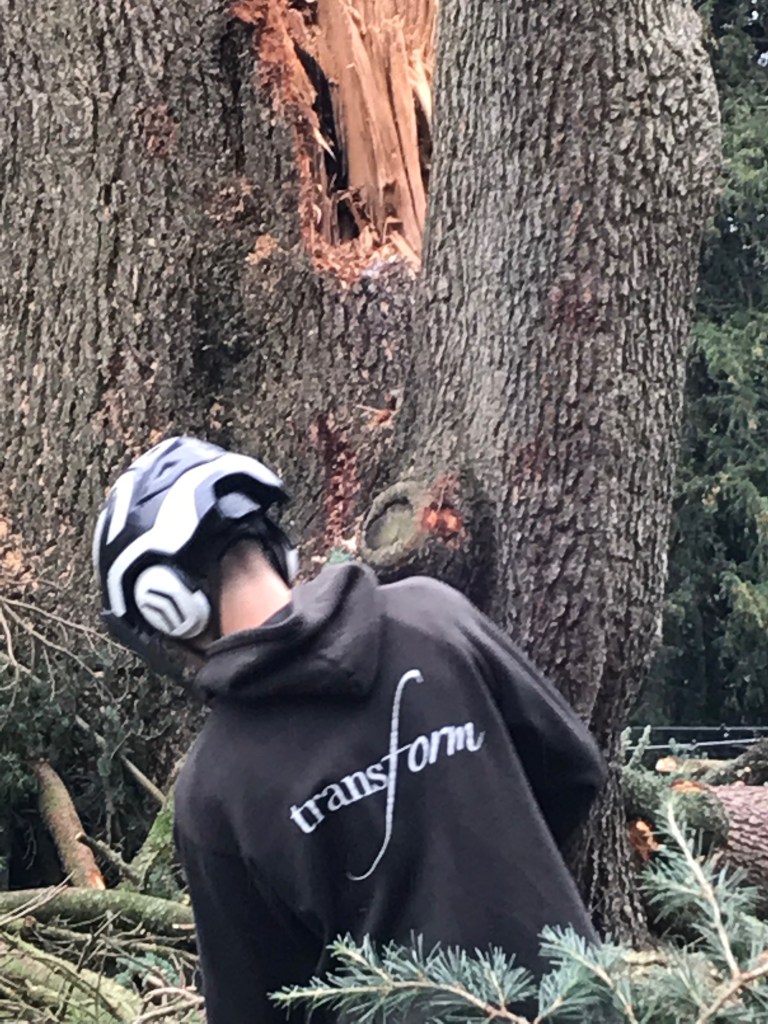
What a very sad day. It turned out to be the first of two very sad days this week (more later). I had seen the ominous sign on the gate a few days ago. It read something like: No entry. Dangerous cedar tree. So when I saw the gate open today, I went in. And the top photos say it all. Health and safety had given this ‘Transform’ team their job for the day. One of the men said that this type of work is what “gets me up in the morning”. Gosh.

For more on this breathtakingly beautiful tree, see my post from 11 September.