DAY 198 (20 OCTOBER) – Conkers (Aesculus hippocastanum) (Farnham)
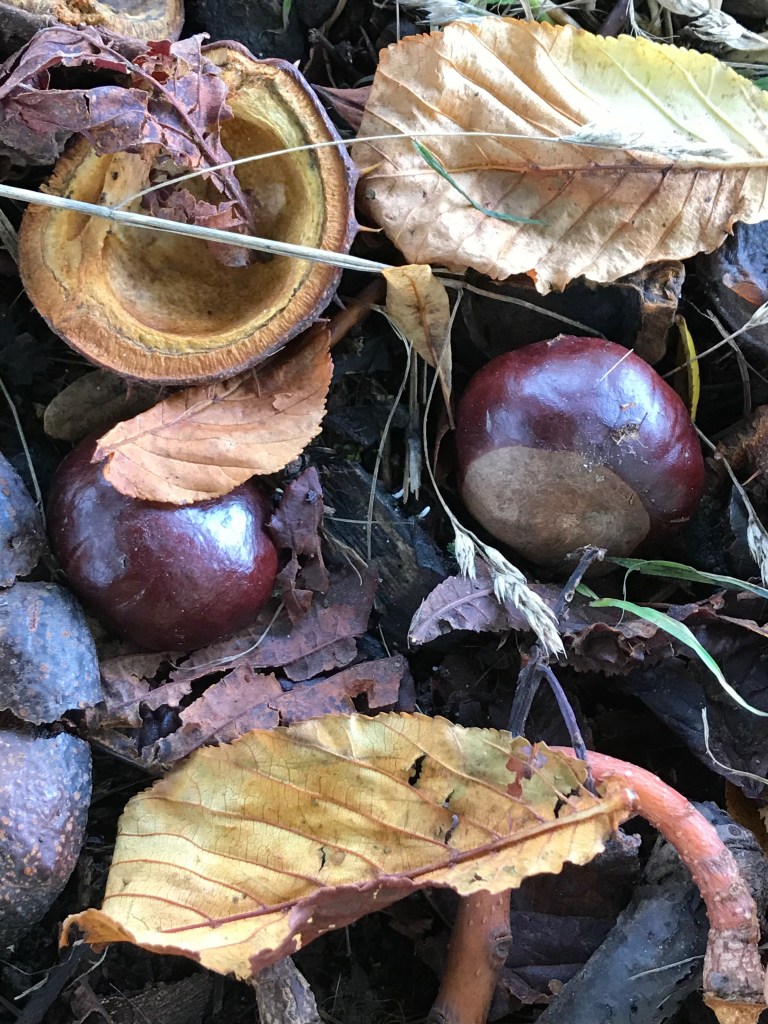
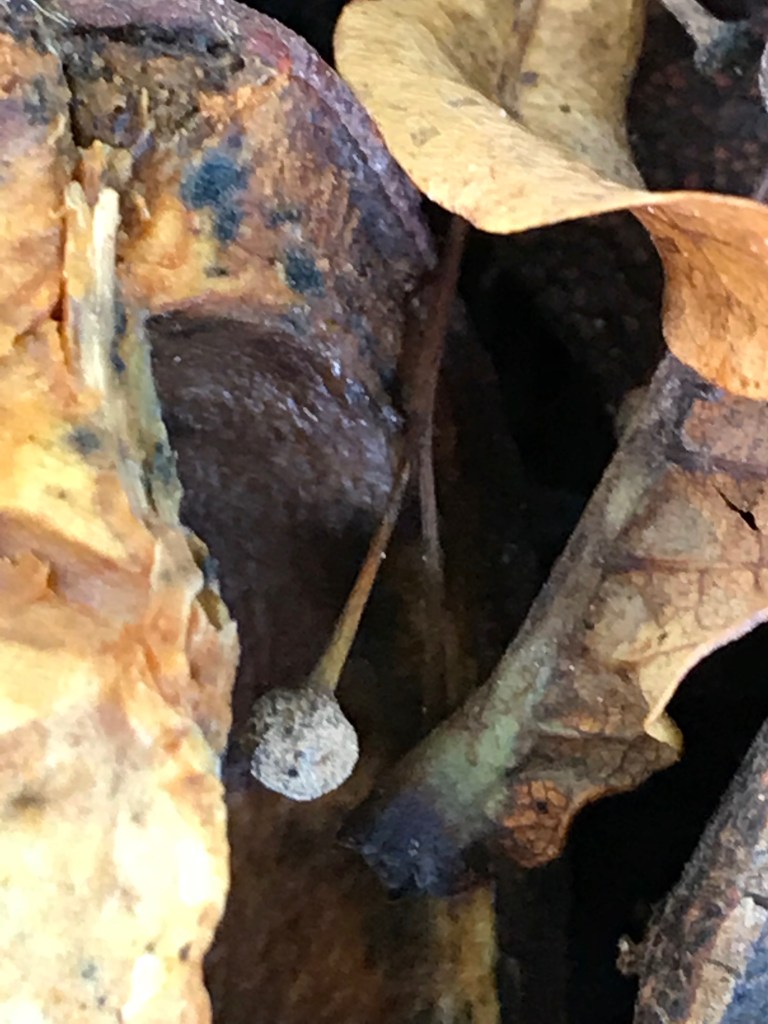
A gorgeous still life offered itself up in Farnham Park today, underneath the chestnut tree. And looking closely into the empty shells was fascinating too.
Fact of the day: the first recorded game of conkers using horse chestnuts was on the Isle of Wight in 1848.
DAY 197 (19 OCTOBER) – Red emperor maple (Acer palmatum) (Farnham)
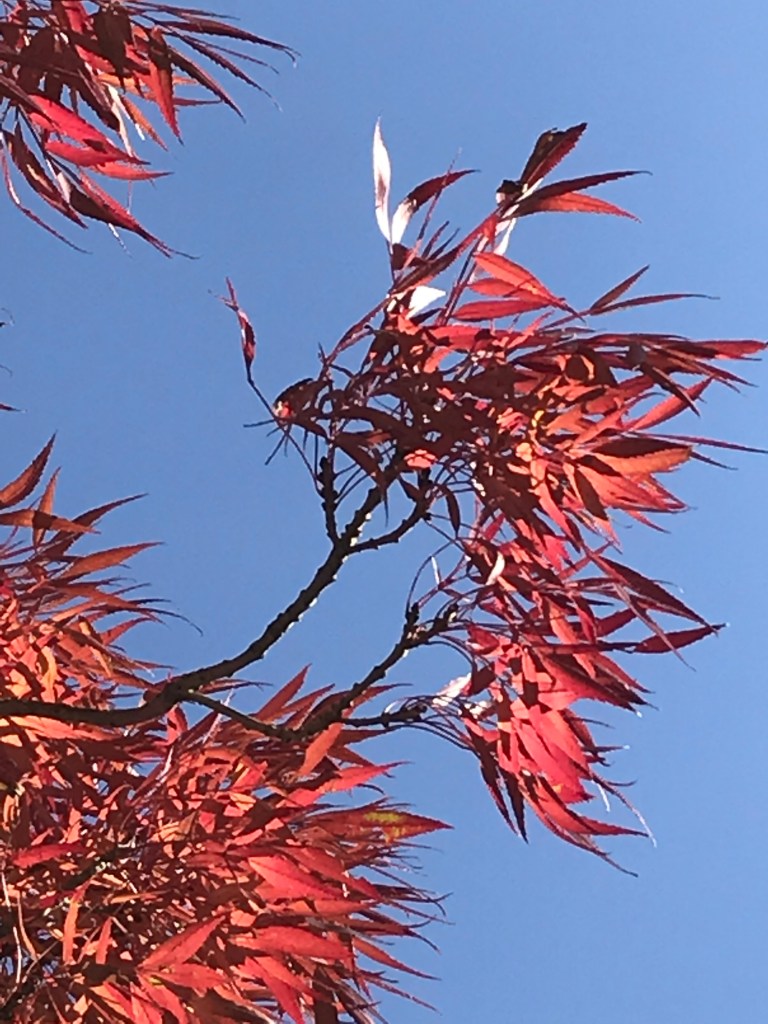
It’s been my aim not to repeat species in this blog, but I didn’t recognise this beautiful tree as the same as a small shrub in my mother’s garden on Day 172. All part of my steep learning curve.
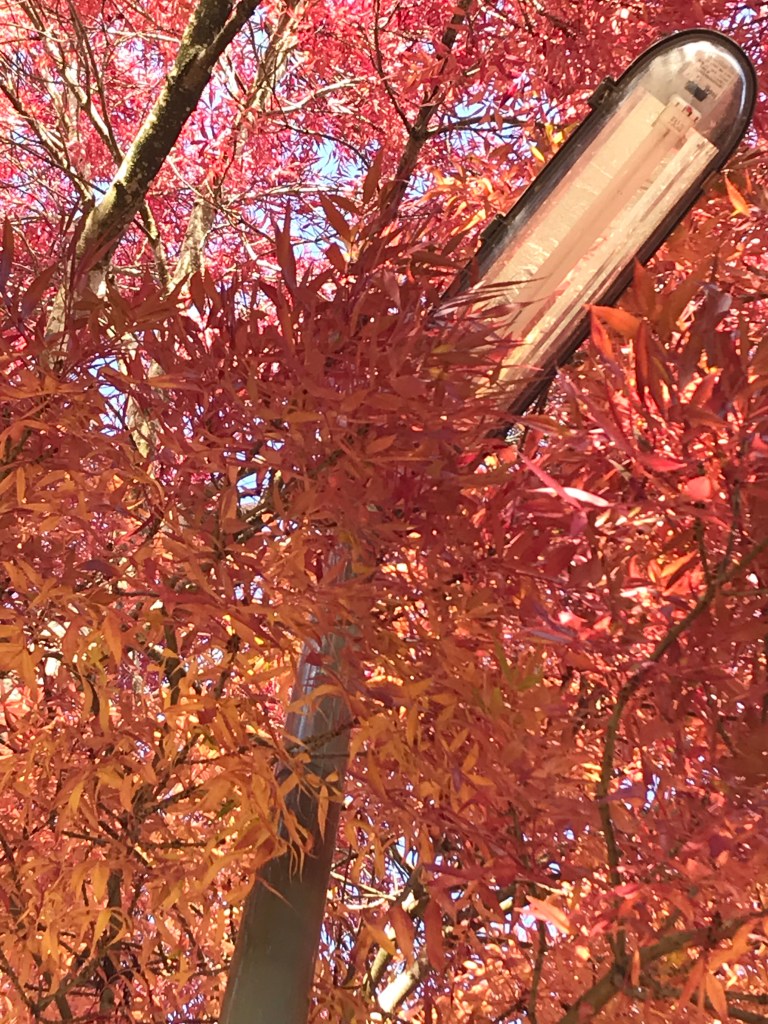
Here it is in its full glory with dappled trunk, cloaking a street lamp in red papery leaves.
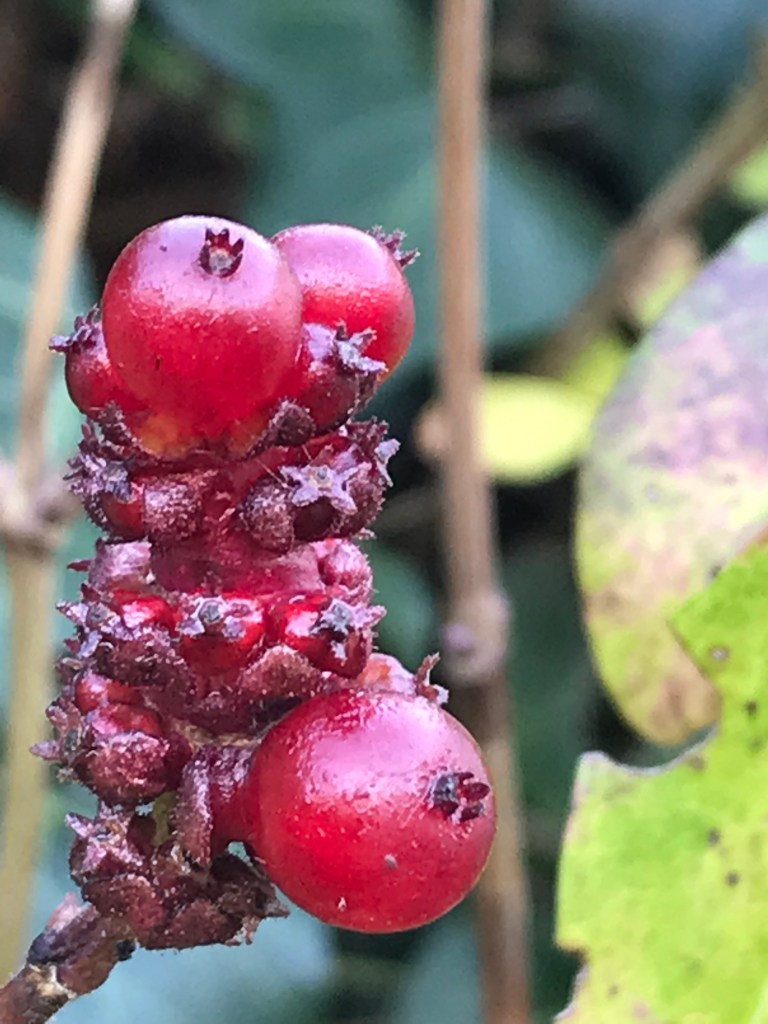
Strange how we tend to associate a plant (or perhaps it’s just me in my ignorance) with either flowers or berries but not both. So I’d never noticed these glacé cherry look-a-likes on a honeysuckle before.
I read they are loved by many birds including thrushes, bullfinches and warblers – so that makes them ok by me.
DAY 195 (17 OCTOBER) – Passion flower (Passiflora caerulea) (Farnham)
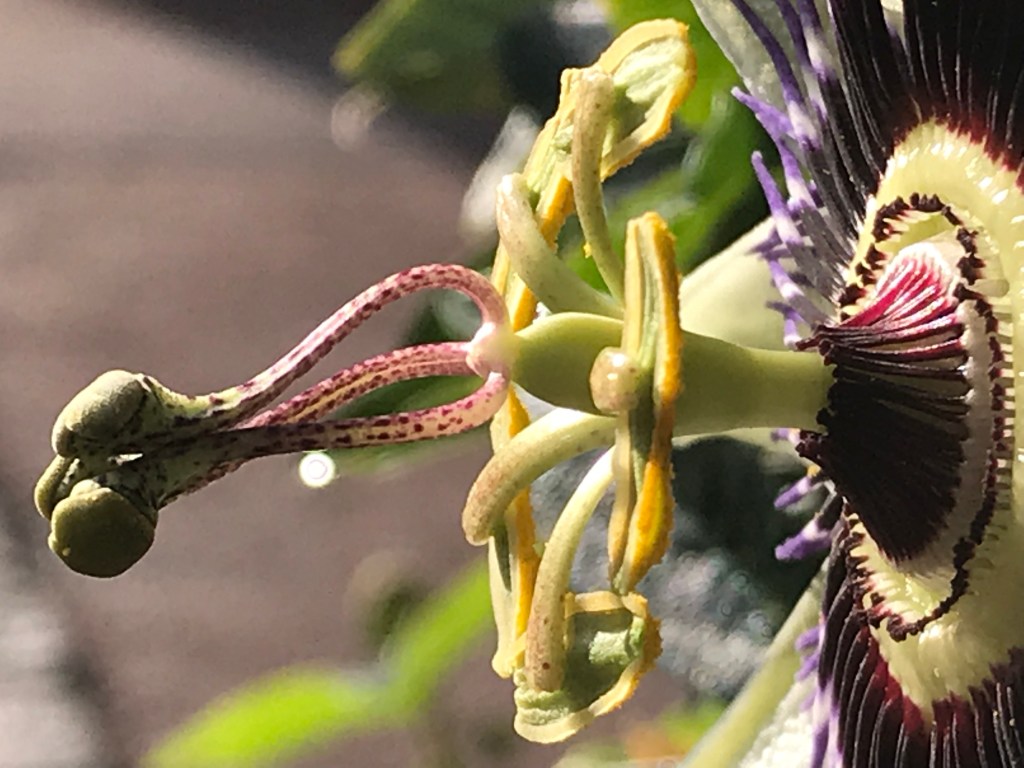
Who on earth designed these? Presumably all nature is arranged for a purpose… This flower is one of many that weave through the hedge of a particularly flamboyant friend. It does seem just right for him.
The Japanese call it clock plant because apparently there are 12 petals and they think the other parts look a bit like a winding mechanism. My mother said ‘steering wheel’ and I think I’m more with her. Elsewhere it is known as flower of the five wounds, which I think may be a religious reference, as is passion flower – referring to Christ.
Apart from making a tea used for stress, anxiety and insomnia, I’m surprised to learn the fruit is edible but – wait for it – bland. Ridiculous!
DAY 194 (16 OCTOBER) – Garden nasturtium (Tropaeolum majus) (Farnham)
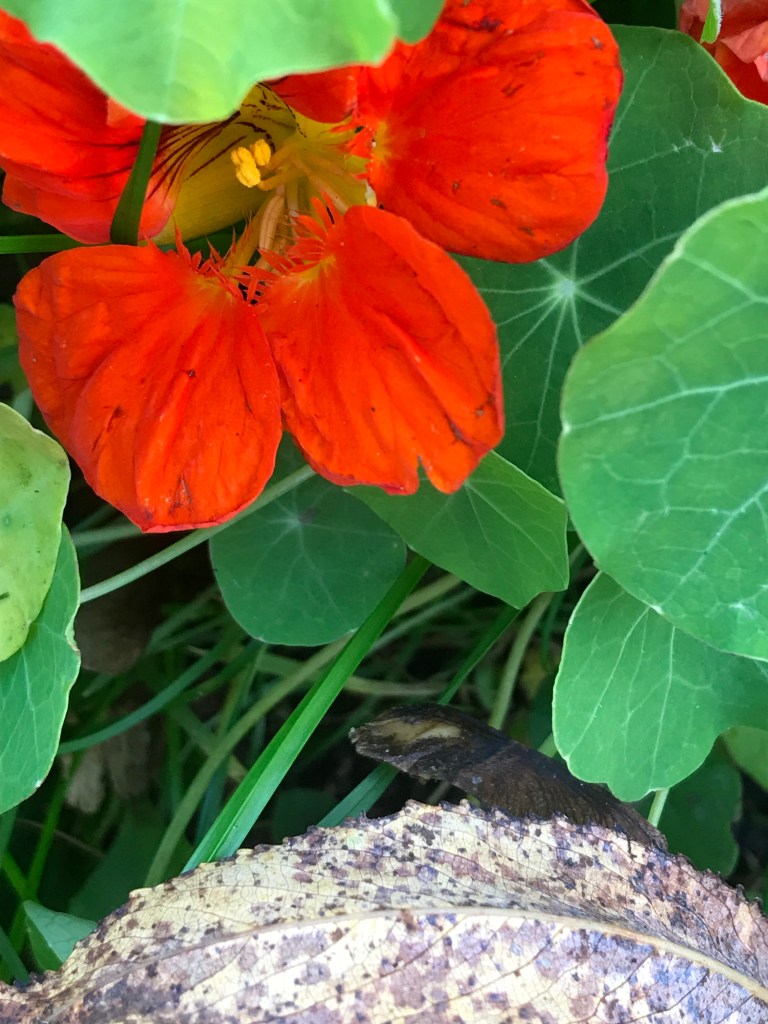
An autumnal leaf from something else strays into a thicket of nasturtiums. Today I learnt that nasturtiums original in the Andes. Amazing, as I’d always thought of them as so English and suburban.
And there’s something called ‘Das Elizabeth Linne-Phanomen’: a sensation, especially apparent at dusk, where the orange flowers seem to emit small flashes. At first it was thought to be an electrical phenomenon (which would have been more exciting) but it’s now thought the human eye just reacts to the contrast between the bright orange and the green of the leaves. So a trompe l’oeil I suppose… Must nip out to check one evening.
DAY 193 (15 OCTOBER) – Common dogwood (Cornus sanguinea) (Farnham)
I seem to be irresistibly drawn to dogwood this week… I had no idea when I took this picture of gorgeous leaves on a medium-sized tree that they were related to yesterday’s plant.
Wikipedia has come up with a strange fact for this one: “The prehistoric archer known as Otzi the Iceman, discovered in 1991 on the border between Italy and Austria, was carrying arrow shafts made from dogwood.” Hmm, wonder what would happen on the (perhaps) soon-to-be new Irish border?
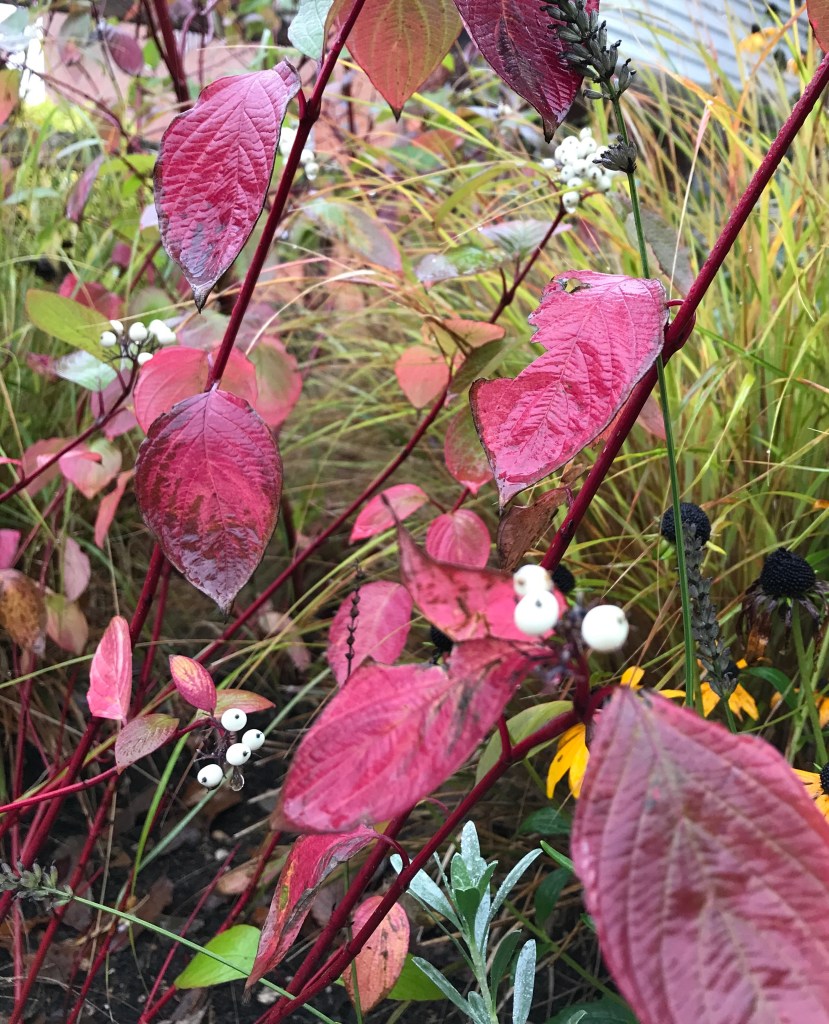
DAY 192 (14 OCTOBER) – Siberian dogwood (Cornus abla) (Farnham)
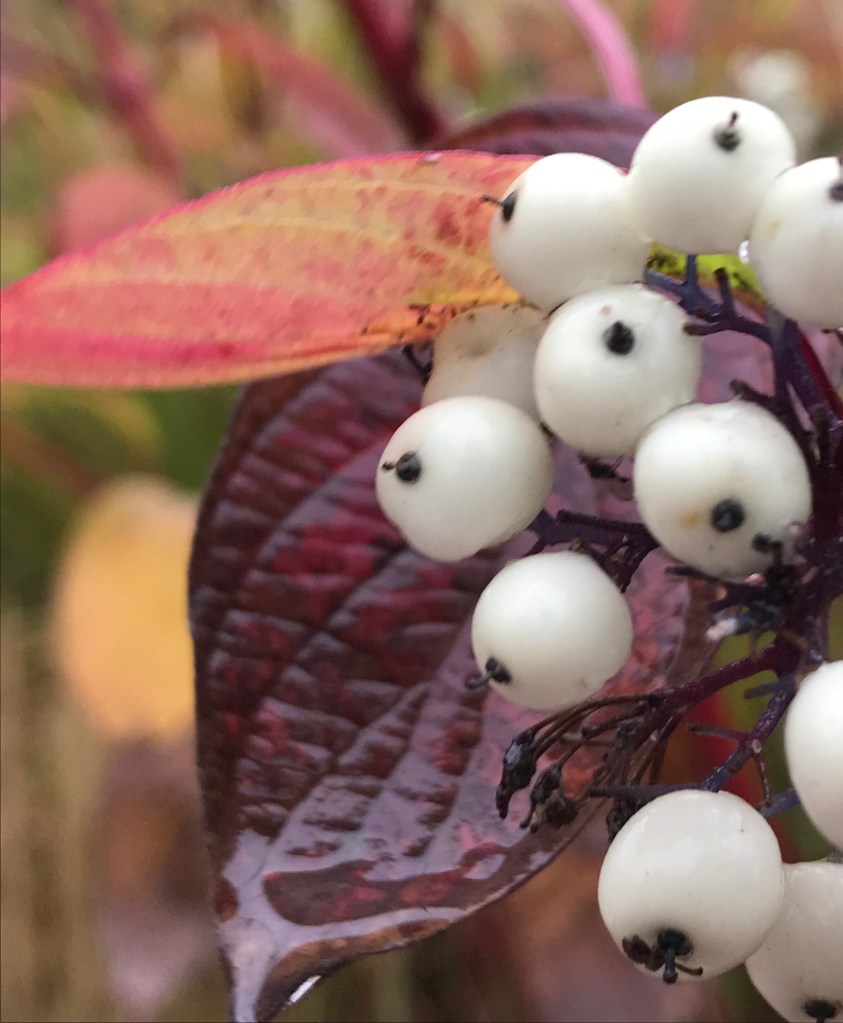
I’ve decided rainwater looks good on red leaves. Just as well. As well as Siberia, this plant is also native to northern China and Korea. So all in all, it’s made a lucky escape to dreary wet England outside The Maltings arts centre.
Birds love the white berries, which start in midsummer and are still abundant. And it’s deer and rabbit resistant, though I’m not sure what that means? They are not attracted to it, or they may not live to regret trying it?
DAY 191 (13 OCTOBER) – Sycamore (Acer pseudoplatanus) (Farnham Park)
This majestic sycamore is one of several lining the lower path in Farnham Park. Officially they can grow to 35 metres. This one is surely close. It looks even higher. So it must be extremely old. There is something very comforting in its permanence. Apart from one or two leaves, it has so far ignored autumn.
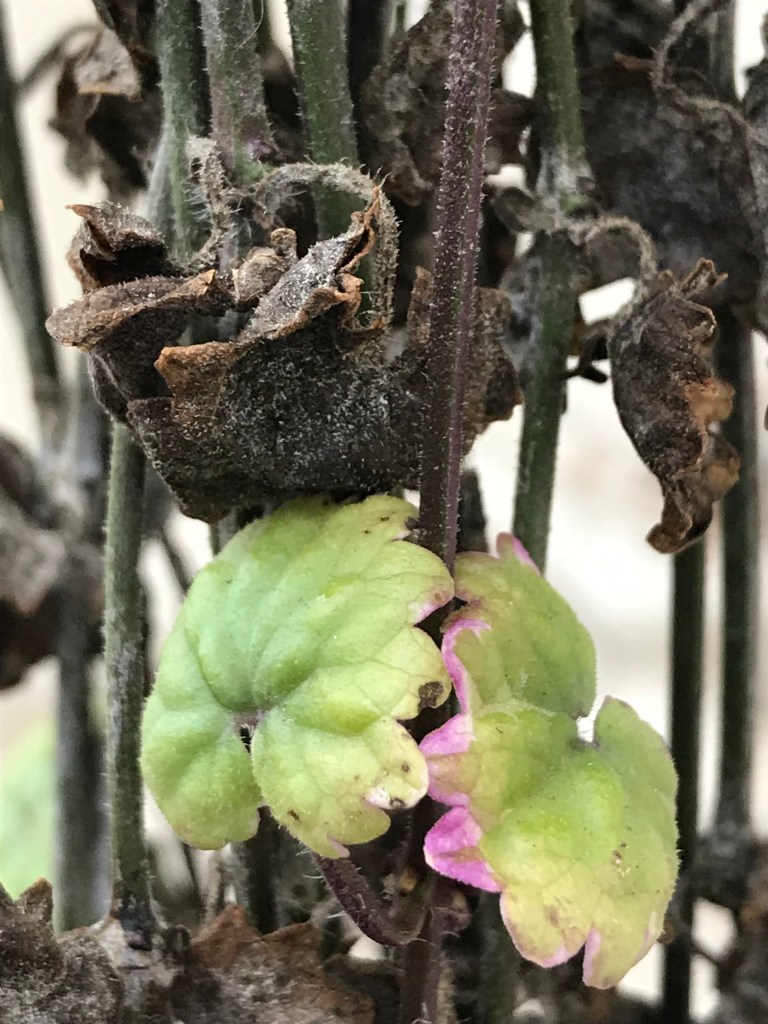
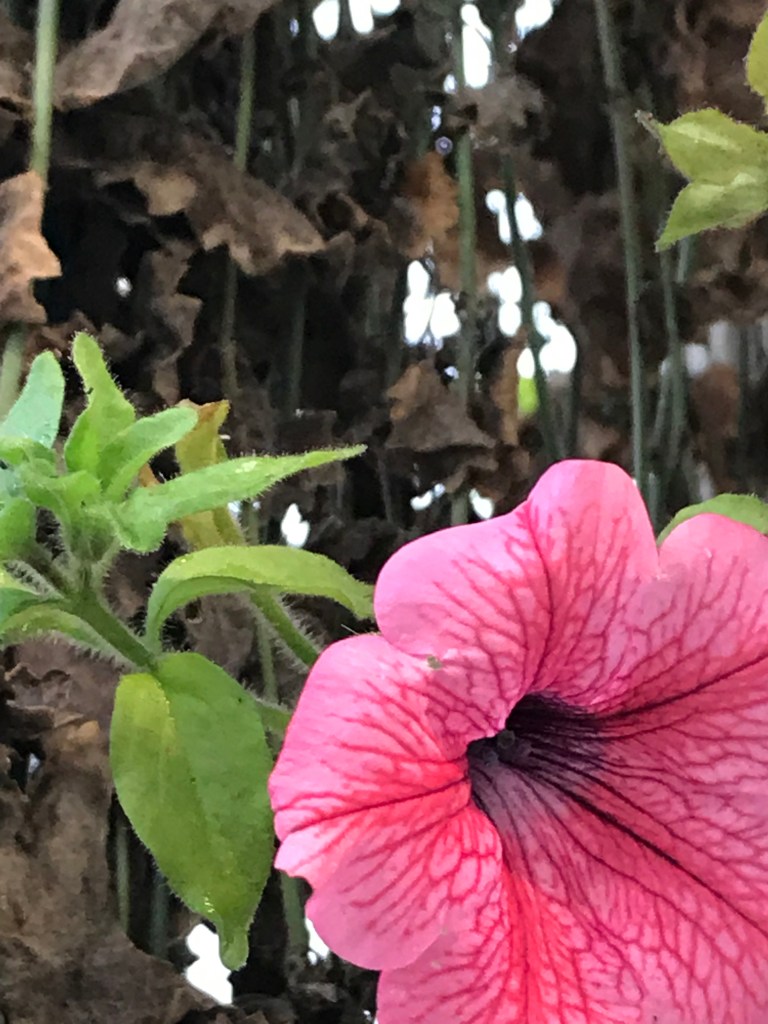
DAY 190 (12 OCTOBER) – Henbit? (Clamium amplexicaule) (Farnham)
Yes, yes, I know the flower on the right is a petunia. But what are the strange, pink-tinged leaves in the left-hand picture? Both are attached to these long, dead strings from a hanging basket on the high street. Today was a miserable, continuous downpour. So this was a dash-out-dash-in photo. All I can say is that ‘Clamium’ absolutely sums up the experience.
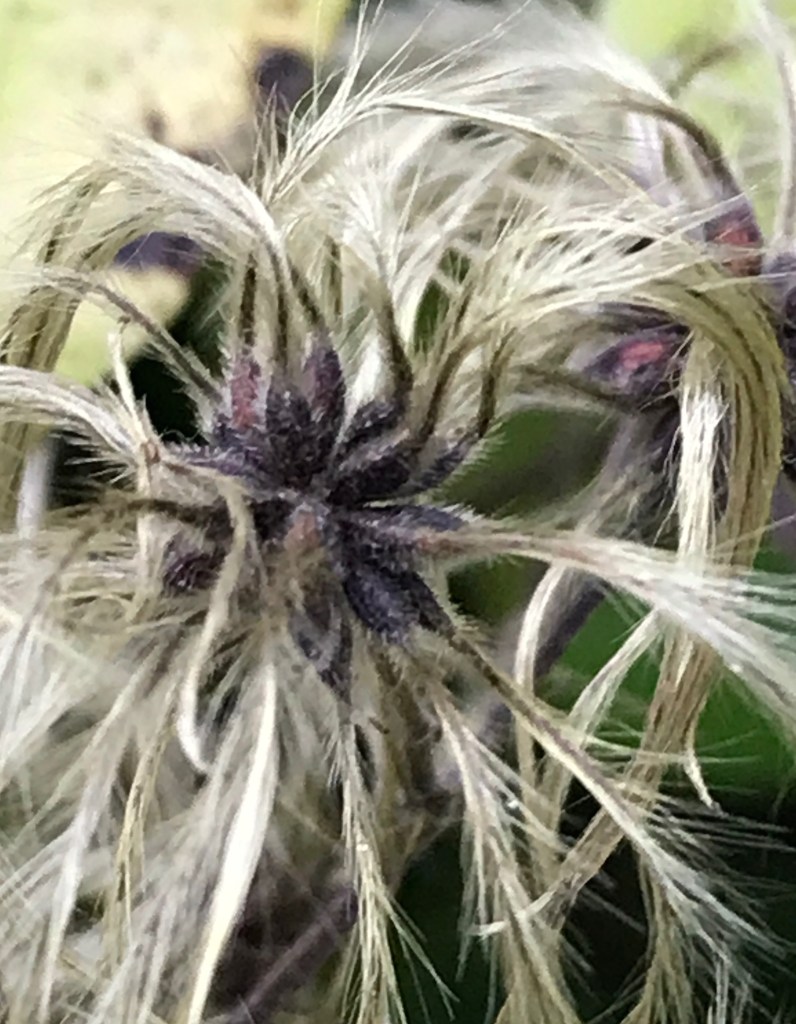
DAY 189 (11 OCTOBER) – Old man’s beard (Clematis vitalba) (Farnham)
This is one of those plants that looks a helluva lot more interesting close up. Probably not the best pictures to look at, though, if you are an arachnophobe. These seed clusters are entwined in a hedge close to Waitrose – a hedge that is always very alive with birdsong during summer (though the birds are invisible). It’s also called traveller’s joy but I’m not sure why.






 365 DAYS OF NATURE